
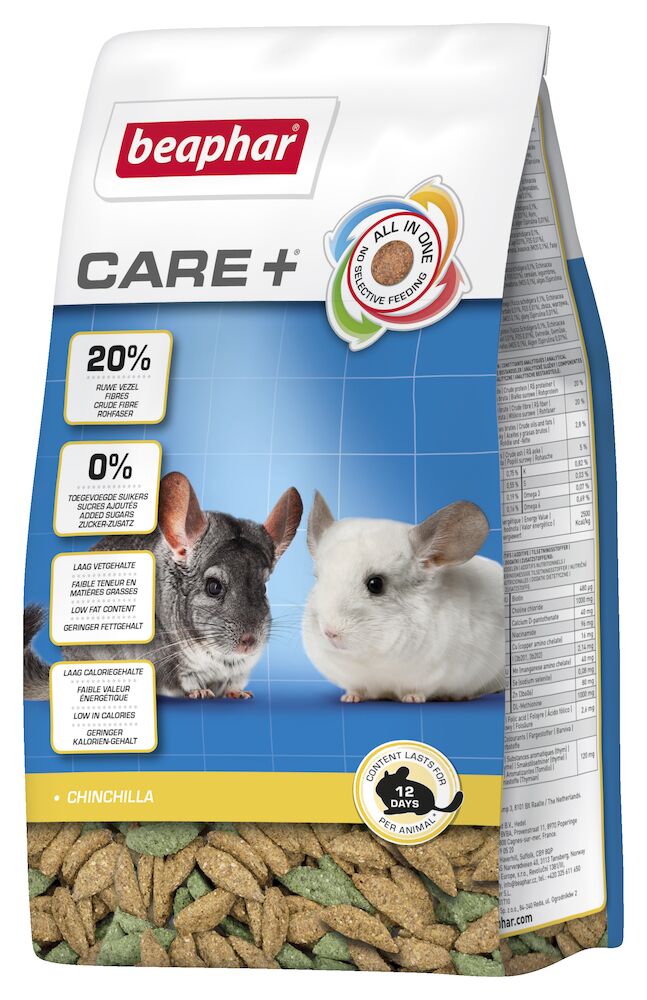
Beaphar Care+ Chinchilla, 1.5 kg is a complete extruded food from the Dutch brand Beaphar for chinchillas. Its key features are high crude fibre (20%) and low fat (2.8%), matching a herbivorous rodent's digestion. All pellets have the same composition (all-in-one), so a chinchilla can't pick out the tasty bits and miss what it needs. The hard pellet helps wear down ever-growing teeth. It contains yucca, echinacea, green tea extract, spirulina and FOS and MOS prebiotics. The daily amount is 20–30 g.
What it is and who makes it
Beaphar is a Dutch company making pet food and care products. The Care+ range consists of extruded all-in-one foods for rodents and rabbits. This matters especially for chinchillas: with seed mixes they often pick out seeds and sweet pieces, leading to obesity and digestive problems.
Ingredients and analysis
Vegetable derivatives (yucca schidigera 0.1%, echinacea 0.03%, green tea extract, FOS), cereals, vegetables, minerals, seeds, yeasts (MOS 0.1%) and algae (spirulina). Vitamins A, D3, E, C and B are added.
| Parameter | Value |
|---|---|
| Protein | 20% |
| Fibre | 20% |
| Fat | 2.8% |
| Ash | 5% |
| Calcium / phosphorus | 0.75% / 0.55% |
| Energy | 250 kcal per 100 g |
Pros
- High fibre. 20% — the basis of healthy chinchilla digestion.
- Low fat. 2.8% — no obesity risk.
- All-in-one pellets. No selective eating.
- For teeth. The hard texture helps wear down incisors.
- Prebiotics and plants. FOS, MOS, yucca, echinacea and spirulina.
Cons and what to keep in mind
- No exact recipe. Ingredient groups are listed, not specific herbs and percentages.
- Contains cereals. It isn't grain-free.
- Doesn't replace hay. Without unlimited hay, teeth and gut will suffer.
- Switching food. Chinchillas must be switched very gradually — their gut is sensitive.
A chinchilla's diet
Hay is the foundation of a chinchilla's diet and should always be available in unlimited amounts. Pellets: 20–30 g a day depending on size and activity. Treats: dried herbs and flowers in small amounts. Avoid raisins, nuts, seeds, fruit and sweets — chinchillas are prone to digestive and metabolic problems. Fresh water at all times, ideally from a drinker bottle. More on hay in hay for rabbits and guinea pigs — the same rules apply to chinchillas.
Switching to a new food
For the first few days, mix the old food with Care+, gradually increasing the new over 1–2 weeks. Watch the droppings: they should be dry and well formed. Soft droppings, refusing food or bloating mean an urgent visit to an exotic-pet vet. Feed at the same time each day — chinchillas value routine.
What else matters for chinchilla health
Chinchillas need dust baths 2–3 times a week, a cool room without overheating (they cope poorly above +25 °C) and a spacious cage with shelves. During moulting, when a chinchilla swallows a lot of fur, a hairball paste helps — for example, Krug Malt Paste. Treats and vitamins are in rodent vitamins and treats.
Who it suits
Adult chinchillas as their main pellet alongside unlimited hay, and chinchillas that pick only the tasty bits out of seed mixes. Other foods are in food for ferrets and rodents.
Verdict
Beaphar Care+ Chinchilla is an all-in-one pellet with high fibre and low fat that supports a chinchilla's digestion and teeth. It's a good foundation, but only alongside unlimited hay and without sweet treats.
Frequently Asked Questions
How much should a chinchilla eat a day?
20–30 g depending on size and activity.
Is hay needed if there are pellets?
Yes, hay is the basis of the diet and must always be available.
How much fibre does it contain?
20%.
Can a chinchilla have raisins and nuts?
Better not — sweet and fatty foods harm its digestion.
Is it suitable for degus?
It's made for chinchillas; degus are better on a dedicated food.
How do I switch a chinchilla to Care+?
Gradually, over 1–2 weeks, mixing it with the old food.

