
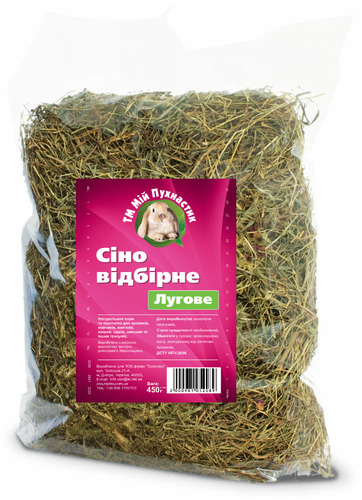
Hay is the basis of a rabbit's and guinea pig's diet: it should always be available and make up about 80% of everything the animal eats. The coarse fibre in hay keeps the gut moving and wears down the teeth, which grow throughout these animals' lives. Good hay is green, fragrant and dry, with no dust or mould. Pellets are given in small amounts as directed on the pack, fresh vegetables and greens daily, and guinea pigs must get vitamin C from their food.
Why hay is so important
- Teeth. Rabbits' and guinea pigs' teeth grow constantly. Long chewing of hay wears them down evenly. Without hay the teeth overgrow, develop sharp edges and cause eating problems.
- Digestion. Their gut is designed for a constant flow of coarse fibre. If there is too little, digestion slows down — a dangerous condition that needs a vet.
- Keeping busy. Foraging and chewing hay take up most of the day — without it the animal gets bored and chews the cage.
Which hay to choose
| Type | Features |
|---|---|
| Meadow hay | A mix of grasses, a good everyday option |
| Timothy hay | High in fibre, low in calcium — excellent for adults |
| Mountain hay | Aromatic, from mixed herbs — popular with fussy eaters |
| With herbs, flowers, vegetables | Boosts interest in hay, but plain hay should be the basis |
| Alfalfa | High in protein and calcium — for young, pregnant and nursing animals; not a main food for adults |
For example, Miy Pukhnastyk selected meadow hay works for every day, while Versele-Laga Natural Hay suits those used to premium hay.
How to check hay quality
- green or light green colour, not brown or yellow;
- a pleasant grassy smell, not musty;
- dry but not crumbling into dust;
- long stems and leaves, little fine debris;
- no mould, white coating or rubbish.
Musty or dusty hay is best thrown away: it can cause breathing and digestive problems.
How to give hay
Hay should be in the cage at all times, without breaks. It's best served in a hay rack rather than on the floor — it stays cleaner and doesn't mix with bedding. A zinc hay rack or the hanging Trixie hay ball, from which the animal pulls out strands, works well — and it's also a game. Replace the hay daily and throw away leftovers.
What else goes in the diet
- Pellets — a small portion as directed on the pack. Pellets are better than grain mixes: the animal can't pick out only the tastiest bits. For example, Versele-Laga Complete Cuni Adult for rabbits.
- Fresh vegetables and greens — daily, in small amounts. Introduce new foods one at a time.
- Water — always fresh, in a bottle or bowl.
- Treats — fruit and dried treats — only occasionally and in tiny amounts: they are high in sugar.
Vitamin C for guinea pigs
Guinea pigs, like people, cannot produce vitamin C and must get it from food. Good sources are bell peppers, leafy greens and special guinea pig pellets with vitamin C. A guinea pig lacking vitamin C becomes lethargic and its joints, gums and coat suffer. Food for guinea pigs, rabbits and other small pets is in the food for ferrets and rodents section.
Storing hay
Store hay in a dry, cool, well-ventilated place: in a cardboard box or a fabric bag. In tightly sealed plastic it can sweat and go mouldy. Don't buy too large a supply for a single animal — hay loses its aroma and vitamins over time.
Hay racks, water bottles, houses and other accessories are in the ferret and rodent accessories section, and cages in cages and carriers. Nova Poshta delivery across Ukraine.
Frequently Asked Questions
How much hay does a rabbit need per day?
As much as it will eat: hay should be in the cage constantly. As a rule of thumb, a day's hay is roughly the size of the rabbit itself.
Can I feed my rabbit only hay?
Hay is the basis, but a complete diet also needs a few pellets plus fresh vegetables and greens.
Why won't my rabbit eat hay?
Often because it fills up on pellets and treats, or the hay is tasteless and dusty. Cut down the pellets and try a different hay. If your rabbit stops eating completely or has dental problems, see a vet urgently.
Does a hamster need hay?
Hay isn't a main food for hamsters, but it is useful for nesting and as extra fibre.



