
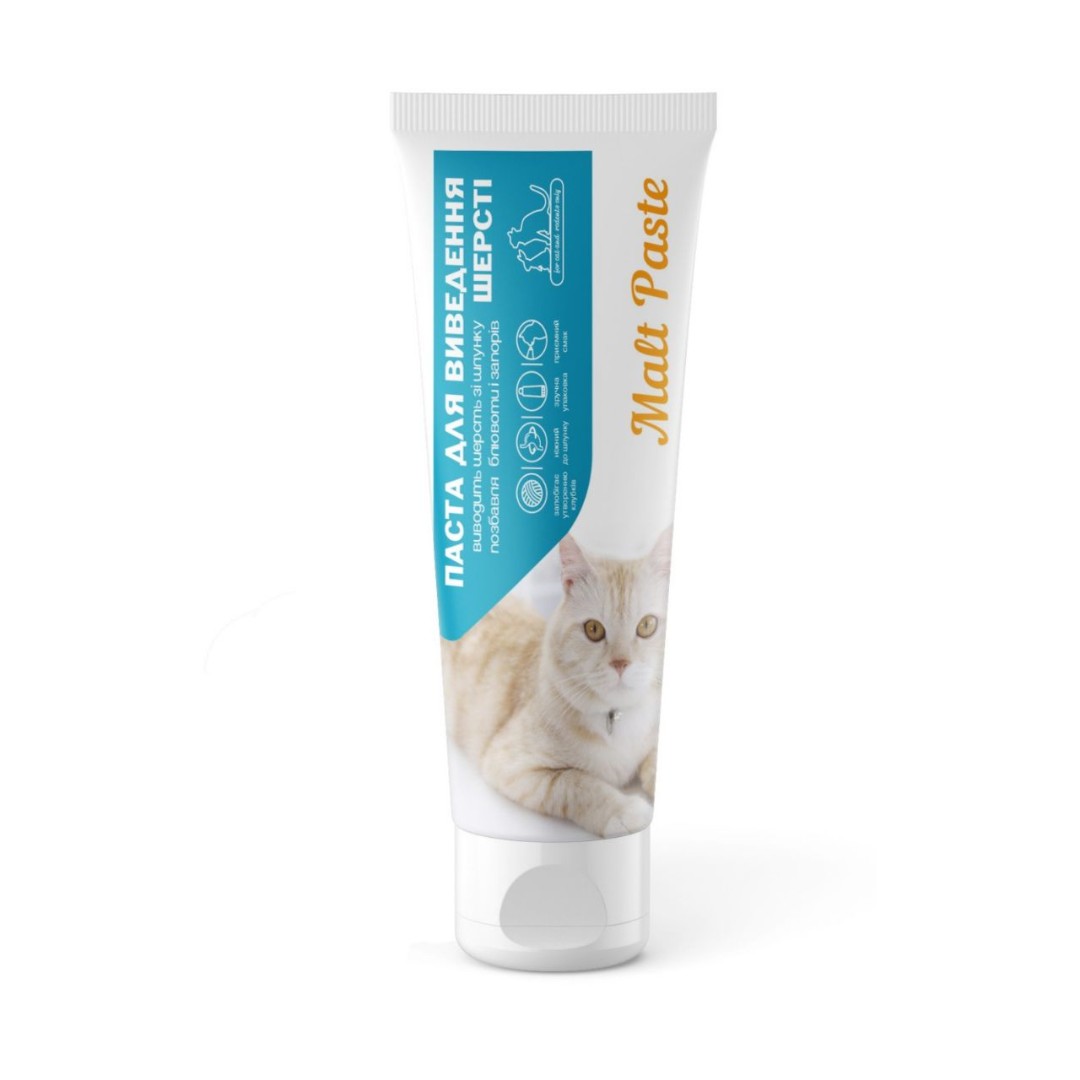
Krug Malt Paste, 60 ml is a feed paste from the Ukrainian maker Krug for passing swallowed hair in cats, ferrets, long-haired rabbits, hamsters and other rodents. It's based on malt extract (43.7%), oils and fats (31%) and fibre (4% cellulose). Malt makes it tasty, the oils coat hair in the stomach and gut, and the fibre helps it pass in the stool. It also contains yeast with beta-glucan and biotin for skin and coat. The paste can be given from 4 weeks of age.
What it is and who makes it
Krug is a Ukrainian maker of feed supplements and pet care products. Malt Paste is a budget alternative to imported malt pastes: the same malt + oils + fibre principle at a lower price. The 60 ml tube is handy for daily use.
Ingredients
| Ingredient | Purpose |
|---|---|
| Malt extract, 43.7% | Taste and a mild laxative effect |
| Oils and fats, 31% | Coat the hair and help it move along |
| Cellulose, plant fibre | Carries hair out in the stool |
| Yeast (beta-glucan), 1% | Immune support |
| Dairy products, cheese, lactose | Taste |
Dosage
- Cats — 4–6 cm of paste a day (1 cm is about 0.5 g).
- Mice, rats, chinchillas, small guinea pigs and dwarf rabbits — 1–1.5 cm once or twice a week, 3–4 times a week during moulting.
- Large guinea pigs and rabbits — 2–4 cm.
Give it by hand, straight from the tube or squeezed onto food. Warm it to room temperature before feeding. Fresh water must always be available.
Pros
- Tasty. Malt and cheese — most cats lick it up willingly.
- For many species. Cats, ferrets, rabbits and rodents.
- From 4 weeks. Suits young animals too.
- Affordable. Cheaper than imported equivalents.
- Simple dosing. Measured in centimetres from the tube.
Cons and what to keep in mind
- Contains lactose and dairy. Sensitive animals may get softer stools.
- High in fat. At 31%, count the calories with daily use.
- Doesn't replace brushing. Less hair in the stomach starts with less hair on the pet.
- Storage. Keep an opened tube in the fridge and warm it before use.
- Doesn't treat blockages. With frequent vomiting, constipation and refusing food, see a vet straight away.
Hairballs in cats
Cats swallow hair when grooming. Usually it passes in the stool or the cat brings up a hairball. Problems start during shedding and in long-haired breeds: hairballs build up and cause vomiting, constipation and loss of appetite. Prevention means regular brushing, paste during shedding and fibre-rich food. More in hairballs in cats: what to do and autumn shedding in dogs and cats. For comparison, see our Beaphar Duo Active paste review.
Rabbits and rodents
Rabbits and rodents can't vomit, so hair in the stomach is more dangerous for them than for cats and can cause a blockage. In rabbits, prevention is based on unlimited hay and brushing during moults; paste is an extra measure. If a rabbit stops eating and passing droppings for more than 12 hours, it's an emergency — see a vet. More in pet rabbit care and feeding.
Who it suits
Long-haired cats, cats during shedding, ferrets, Angora rabbits and hamsters, chinchillas and other long-haired rodents. Other supplements are in vitamins and mineral supplements.
Verdict
Krug Malt Paste is an affordable, tasty malt paste that helps pass hair in cats, ferrets, rabbits and rodents. It works as prevention alongside brushing; with lactose intolerance or signs of a blockage, take care and see a vet.
Frequently Asked Questions
How much paste should a cat get?
4–6 cm a day, which is about 2–3 g.
Can a kitten have it?
Yes, from 4 weeks.
Can a rabbit have it?
Yes: 2–4 cm for large rabbits, 1–1.5 cm once or twice a week for dwarf rabbits.
How should an opened tube be stored?
In the fridge; warm it to room temperature before use.
How often during shedding?
Daily for cats, 3–4 times a week for small rodents.
What if the paste doesn't help and my cat keeps vomiting?
See a vet: frequent vomiting can signal illness or a blockage.

