Autumn shedding is a normal process: your pet drops the light summer coat and grows a dense undercoat for winter. It usually lasts 2–4 weeks, and the most useful thing you can do is brush out the dead hair regularly with the right tool. For dogs and cats with a thick undercoat a slicker brush and a deshedding tool work best, for smooth-coated pets a rubber grooming glove, and for long silky coats without undercoat a comb and a pin brush. Brushing 2–3 times a week (daily for 5–10 minutes at the peak of shedding) removes most of the hair that would otherwise end up on your furniture.
Why pets shed in autumn
Coat change is triggered by shorter days and colder weather. Dogs with a double coat (huskies, shepherds, spitz breeds, Labradors, corgis) shed especially heavily: the undercoat comes out in tufts. Cats shed seasonally too, but indoor cats that live under artificial light in a warm flat often lose hair little by little all year round, and more than usual in autumn.
Dead hair should be brushed out: it forms mats, keeps the skin from breathing, and cats swallow it while grooming and later bring up hairballs.
Which tool to choose for each coat type
| Coat type | Example breeds | Main tool | Extra |
|---|---|---|---|
| Short, almost no undercoat | Dobermann, Boxer, smooth Dachshund | Rubber glove or brush | Natural bristle brush for shine |
| Short with a dense undercoat | Labrador, Pug; British and Scottish cats | Deshedding tool for short hair | Soft slicker brush, glove |
| Medium or long with undercoat | Husky, Spitz, Shepherd; Maine Coon, Siberian cat | Slicker brush, undercoat rake | Long-hair deshedding tool, comb |
| Long without undercoat | Yorkshire Terrier, Maltese | Comb and pin brush | Dematting tool for tangles |
| Curly | Poodle, Bichon | Slicker brush | Comb, professional trim |
All brushes and combs are collected in our dog brushes and combs and cat brushes and combs selections.
Deshedding tool: when you need it and when you don't
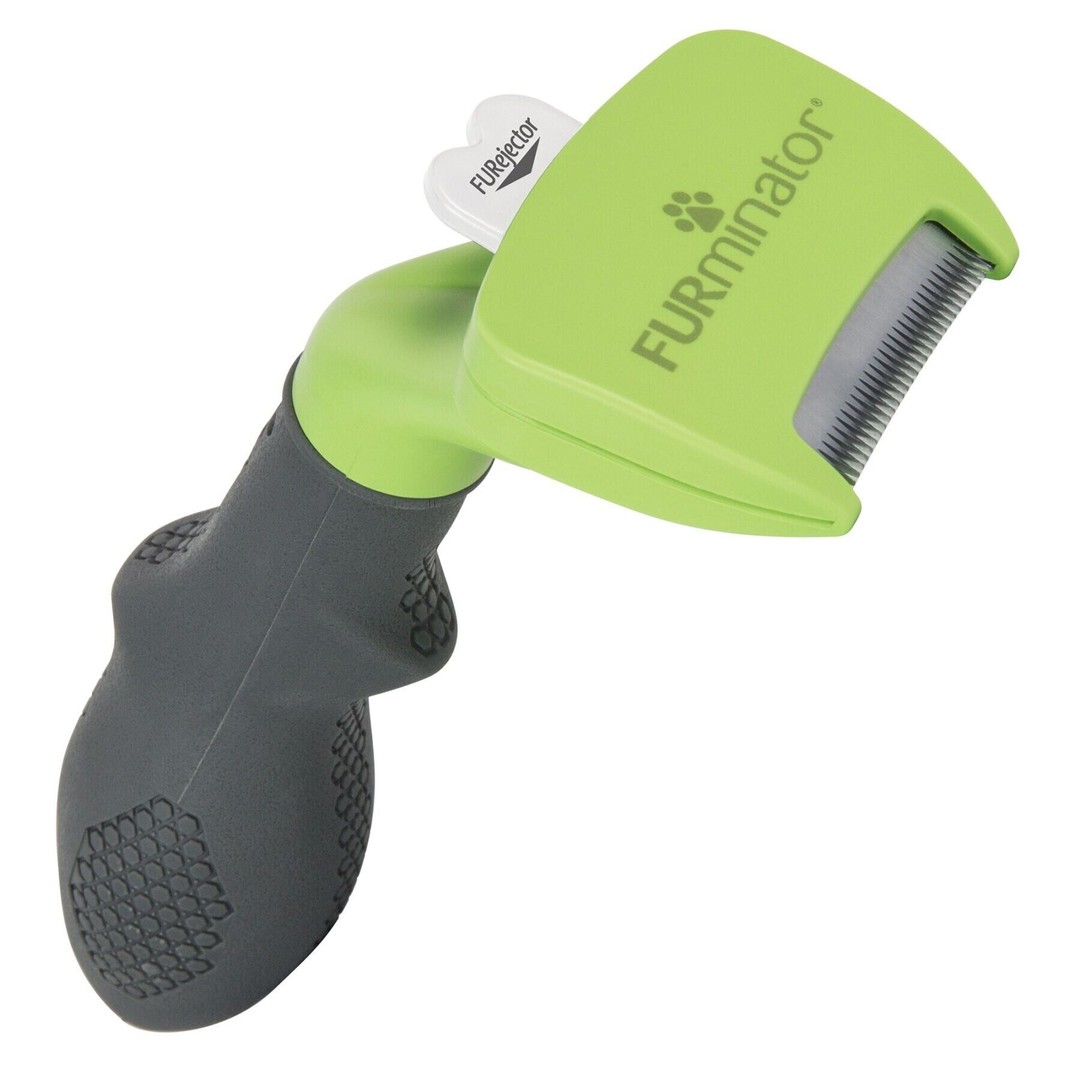
A deshedding tool is a comb with fine teeth under a blade that grabs and pulls out dead undercoat without cutting live hair. For dogs and cats with a dense undercoat it is the fastest way through shedding season. For example, a FURminator for small short-haired dogs suits a Pug or a Corgi, while long coats need a separate model with longer teeth.
Do not use a deshedding tool on breeds without undercoat or with silky or curly coats (Yorkie, Maltese, Poodle), or on skin with wounds or irritation. Use it 1–2 times a week for 10–20 minutes, follow the direction of hair growth and don't press — the skin should not turn red afterwards.
Slicker brush, comb and glove
- Slicker brush — a brush with thin bent pins. It removes undercoat and small tangles in medium- and long-haired pets. A double-sided model is handy, for example a Trixie slicker brush with protective tips — the balls on the pins don't scratch the skin.
- Comb — for finishing and checking: if the comb goes through the coat down to the skin without snagging, you have done a good job. For long hair and cats try a Luyi comb with long teeth.
- Rubber glove or brush — collects loose hair on smooth-coated dogs and cats and gives a light massage; many pets love it.
- Dematting tool — cuts through matted hair when a tangle can no longer be undone with fingers and a comb.
How to brush properly
- Pick a calm moment — after a walk or a play session when your pet is tired.
- Go over the back and sides with a slicker brush or deshedding tool first, then gently over the chest, hind legs and tail.
- Work out tangles behind the ears and under the legs with your fingers, then with a comb; cut large mats with a dematting tool.
- Finish by combing through the whole length of the coat.
- Praise your pet and give a treat: short and frequent sessions are better than one long one.
A bath speeds up coat change: shampoo and conditioner soften dead undercoat so it brushes out more easily. Suitable products are in the shampoos and conditioners section. Always dry the coat thoroughly — damp undercoat mats quickly.
Diet and supplements for the coat
Coat quality depends a lot on diet: protein, omega-3 and omega-6 fatty acids, zinc and biotin. If your pet eats a complete food, extra supplements are usually not needed, but during shedding vets often recommend a course of omega-3 or coat vitamins. For cats that bring up more hairballs while shedding there are pastes and products such as Beaphar Laveta Super. Other supplements are in the vitamins and mineral supplements section.
When shedding is a reason to see a vet
- bald patches appear or hair falls out in clumps with scabs;
- your pet scratches all the time, the skin is red, flaky or smells;
- heavy shedding goes on for months, out of season;
- the coat has become dull and brittle, your pet is lethargic or losing weight.
These signs can mean fleas, allergies, fungal or hormonal problems — they need treatment, and a brush won't help.
Wonderful.pet stocks slicker brushes, deshedding tools, combs, dematting tools, grooming gloves and shampoos for dogs and cats, with Nova Poshta delivery across Ukraine.
Frequently Asked Questions
How long does autumn shedding last?
Usually 2–4 weeks. With regular brushing dead hair comes out faster and the shedding period is noticeably shorter.
Can I shave my dog so it sheds less?
Shaving double-coated dogs (huskies, spitz breeds, shepherds) is not recommended: the undercoat protects against both cold and overheating, and after shaving the coat may grow back unevenly. Regular brushing is the better option.
How often can I use a deshedding tool?
During shedding — 1–2 times a week for 10–20 minutes, the rest of the year — once every 1–2 weeks. More often is not needed and may irritate the skin.
Why does my indoor cat shed all year round?
Artificial light and a warm flat smooth out the seasons, so hair falls out a little all the time. If there are no bald patches or itching, this is normal — just brush your cat 1–2 times a week.