Hairballs (trichobezoars) form when a cat swallows a lot of hair while grooming and it doesn't pass through the gut in time. Bringing up a hairball now and then — once a month or less, especially in long-haired cats during shedding — is usually not dangerous. Regular brushing, malt-based hairball paste, hairball control food and enough water all help. If your cat vomits more than once a week, is constipated, off food or lethargic, see a vet: a hairball can cause a blockage.
Why hair builds up in cats
- Shedding — in spring and autumn more hair falls out, so cats swallow more.
- Long hair — Persians, Maine Coons, Siberians and Norwegian Forest cats are at risk.
- Over-grooming due to stress, boredom, itching, fleas or allergy.
- Slow gut — in older and inactive cats, and with too little fibre and water.
How to tell it's a hairball
Before bringing up a hairball, a cat makes typical retching sounds, coughs and stretches its neck. What comes out is an elongated, wet clump or sausage of hair, sometimes with a little food. That distinguishes it from vomiting due to illness. A dry cough with no hairball looks like an asthma attack and should be checked by a vet.
When to see a vet urgently
- retching keeps happening but no hairball comes out;
- vomiting more than once a week or several times a day;
- no stool for over two days, straining;
- refusing food, lethargy, a painful or swollen belly.
These signs may point to an intestinal blockage — pastes don't treat it; diagnosis is needed.
Hairball paste
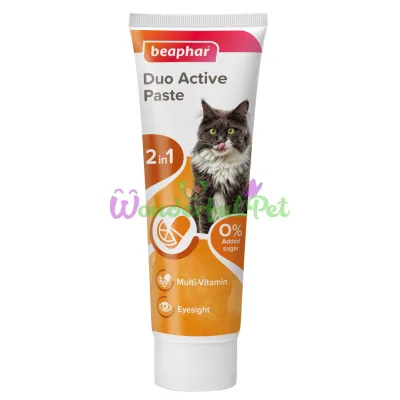
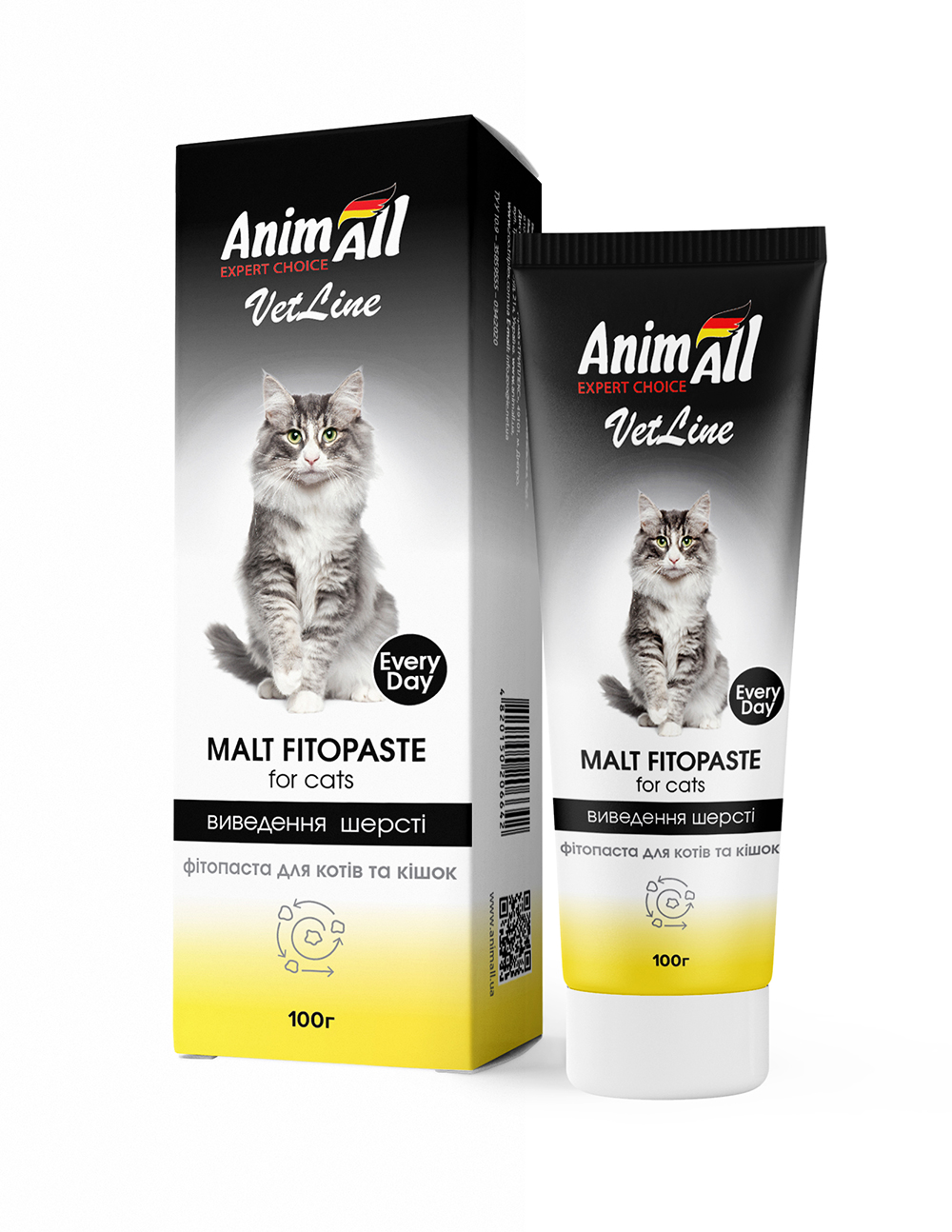
Malt pastes contain malt extract, vegetable oils and fibre: they coat the hair in the stomach and help it pass naturally. Most cats happily lick the paste off a finger or a paw. Popular options are AnimAll VetLine Malt Pasta and Beaphar Cat DUO Active; there are also filled treats with malt paste inside, such as Beaphar Malt Bits. Follow the manufacturer's dosage and frequency: usually a few times a week for prevention and daily during shedding. Pastes don't treat illness; with warning signs, see a vet first.
Hairball control food
Foods labelled hairball or hairball control contain more fibre to help hair pass through the gut, plus fatty acids for healthy skin so less hair falls out. For example, Happy Cat Minkas Hairball Control. If your cat has a constant hairball problem, this can be the main food. More options are in dry cat food.
Brushing is the best prevention
Every loose hair you brush out is one your cat won't swallow. Short-haired cats need brushing once a week (2–3 times during shedding), long-haired cats every other day or daily. Rubber brushes and gloves, slicker brushes and deshedding tools are handy. Find the right tool in cat brushes and combs, and read how to brush during the shedding season in autumn shedding in dogs and cats.
What else helps
- Water and wet food — hair passes through the gut more easily.
- Cat grass — many cats like chewing it, which helps clear hair.
- Play and less stress — a bored or anxious cat grooms more.
- Flea protection — itching makes cats groom and pull out hair.
How to give paste if your cat refuses it
- Squeeze a 2–3 cm strip of paste onto your finger and offer it — most cats eat it straight away.
- If not, put the paste on a front paw: the cat will lick it off while grooming.
- You can mix the paste with a little wet food.
- Give the paste between meals, not instead of food, and don't exceed the dose in the instructions.
Frequently Asked Questions
How often should I give my cat hairball paste?
As the manufacturer directs: usually 2–3 times a week for prevention and daily during shedding.
Is it normal for a cat to throw up hairballs?
Occasional hairballs — once a month or less — are normal. If it happens more than once a week, talk to your vet.
Can I give my cat petroleum jelly or mineral oil?
Not without a vet's advice: oil can easily get into the airways. Ready-made cat pastes are safer.
Does hairball control food work?
Yes, in most cats it reduces hairballs, especially combined with regular brushing.