
Chinchillas come from the high Andes, where it's cool and dry and the grass is tough. That explains their key traits: dense fur that mustn't get wet, sensitivity to heat, a digestive system built for coarse plant food and teeth that never stop growing. If you account for these, a chinchilla lives a long time — 10–20 years — and rarely falls ill.
Cage and location
Chinchillas are very active and love to jump, so they need a tall cage with several shelves at different levels, a hide and wooden ledges. They quickly chew plastic parts, so a metal cage and wooden accessories work best. Line the floor with wood litter or pellets. Keep the cage away from radiators, sunlight and draughts. Suitable cages and bedding are in rodent cages and rodent bedding.
Temperature is the main rule
A comfortable temperature for a chinchilla is about 18–22 °C. Its dense fur makes it hard to lose heat, and from 25 °C upwards there's a risk of overheating: the animal becomes lethargic, lies flat and its ears turn red. In summer without air conditioning, put a cooling tile (granite or ceramic) in the cage and keep it away from the window. Overheating is an emergency — see a vet at the first signs.
What to feed a chinchilla
- Unlimited hay — the basis of the diet, wearing down teeth and keeping the gut working.
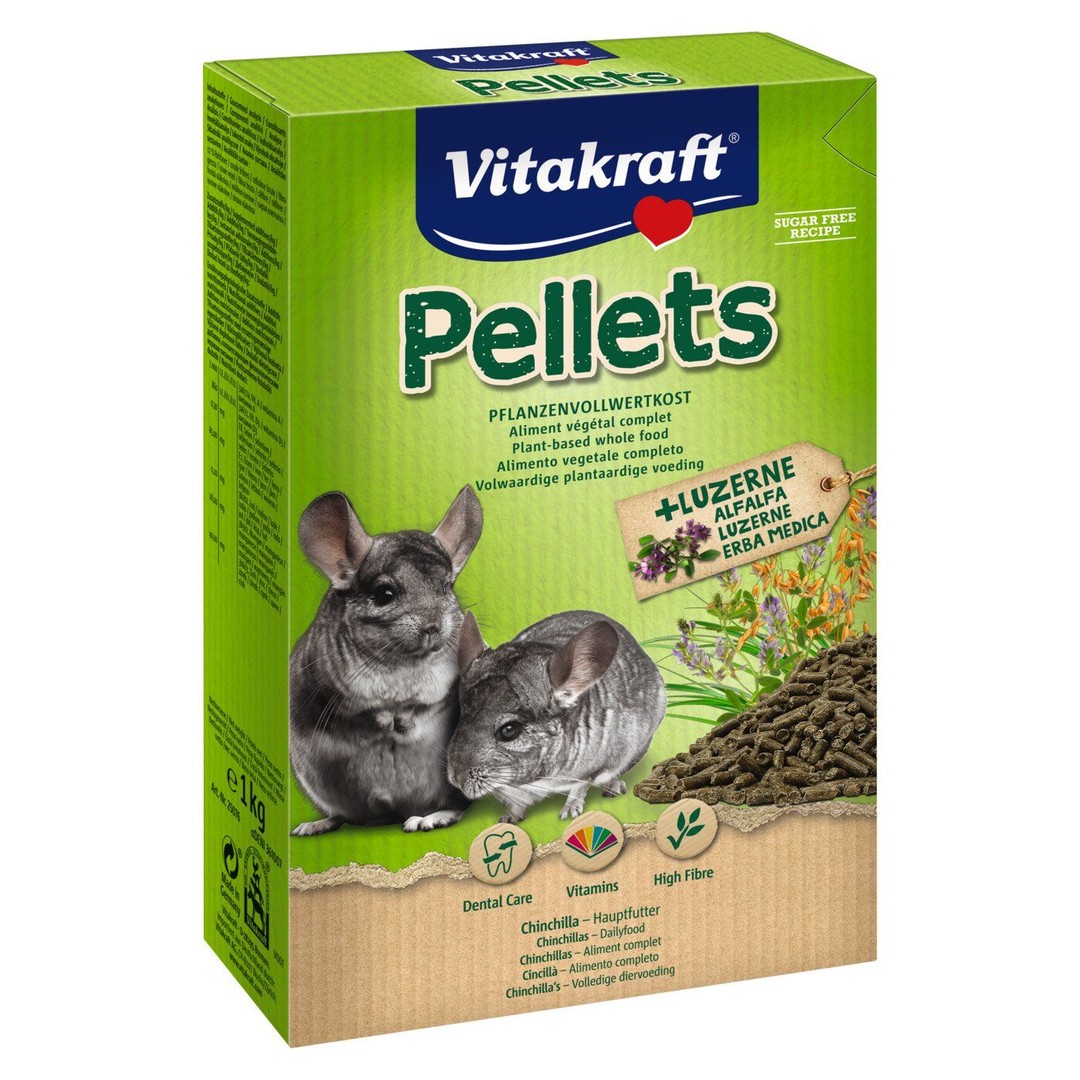
- Chinchilla pellets — usually 1–2 tablespoons a day, as advised on the pack.
- Fresh water in a bottle, changed daily.
- A mineral stone and fruit-tree twigs for the teeth.
Foods are collected in chinchilla food, for example Beaphar Care+ Chinchilla. Choosing hay is covered in hay for rabbits and guinea pigs; the same rules apply.
Treats: what's safe and what isn't
Chinchillas have sensitive digestion, and sugar harms them even in small amounts. Suitable treats are dried rosehip, dried herbs, or a small piece of dried apple or carrot, no more than a couple of times a week. Nuts, seeds, lots of fresh sweet fruit, bread, biscuits and table food are off limits. Choose sugar-free rodent treats in vitamins and treats.
Dust baths
Never bathe a chinchilla in water: the dense fur takes ages to dry, and the animal gets chilled or develops fungal skin problems. Instead, chinchillas bathe in special fine dust: offer a bath 2–3 times a week for 15–20 minutes, then remove it to keep the dust clean. Ordinary building or river sand isn't suitable, as it scratches the fur.
Temperament and handling
Chinchillas are active in the evening and at night and usually sleep during the day. They're timid, so tame them patiently: talk to them and offer treats from your palm first, then lift them gently, supporting the chest and hind legs. Never grab the tail, and note that a badly frightened chinchilla can shed a clump of fur. Let it run only in a safe room without cables.
Teeth: what to watch
A chinchilla's teeth grow throughout its life and are worn down only by tough food. If the diet has little hay and lots of soft food, the teeth overgrow and develop sharp edges; the animal starts picking soft bits, loses weight, gets a wet chin and drools. That's a reason to see a vet who treats rodents right away. To prevent it, always keep hay in the cage and give pellets only in the amount stated on the pack. Apple, pear or willow twigs, a mineral stone and wooden toys help too.
What to buy before your chinchilla arrives
- A tall metal cage with shelves and a hide.
- A water bottle and a heavy bowl for pellets.
- A hay rack and a supply of hay.
- Chinchilla pellets.
- A bath house and special bathing dust.
- Wood litter for the cage floor.
- A mineral stone and wooden toys.
- A carrier for the trip home and vet visits.
Frequently Asked Questions
How long do chinchillas live?
With good care, 10–20 years.
Can I bathe a chinchilla in water?
No, only in special bathing dust.
What temperature does a chinchilla need?
About 18–22 °C; above 25 °C there's a risk of overheating.
What should a chinchilla eat daily?
Unlimited hay, chinchilla pellets and fresh water.
Can chinchillas have nuts and fruit?
No nuts or seeds; sweet fruit only dried, rarely and in small pieces.
Does a chinchilla need a mineral stone?
Yes, along with hay and twigs it helps wear down the teeth.

