
Puppies chew everything because that's how they explore the world, relieve itching while teething (roughly from 3 to 6–7 months) and cope with boredom. Forbidding chewing is useless — you need to provide allowed items: chew toys suited to size and age, chews and puzzle toys. At the same time, clear dangerous things off the floor (cables, shoes, small items), treat furniture with a bitter-tasting spray, redirect the puppy to a toy and praise it when it chews the toy. Give enough walks and play — a tired puppy chews less.
Why puppies chew
- Teething. Milk teeth fall out, adult teeth come in, gums itch — the puppy physically needs to chew.
- Exploration. A puppy's mouth is like a child's hands: it learns taste, shape and texture this way.
- Boredom and excess energy. Especially in active breeds that don't get enough walks and play.
- Loneliness and anxiety. If the puppy destroys things only when left alone, it may be separation anxiety.
Which toys to give a puppy
Puppy toys are softer than adult dog toys and safe for milk teeth. These work well:
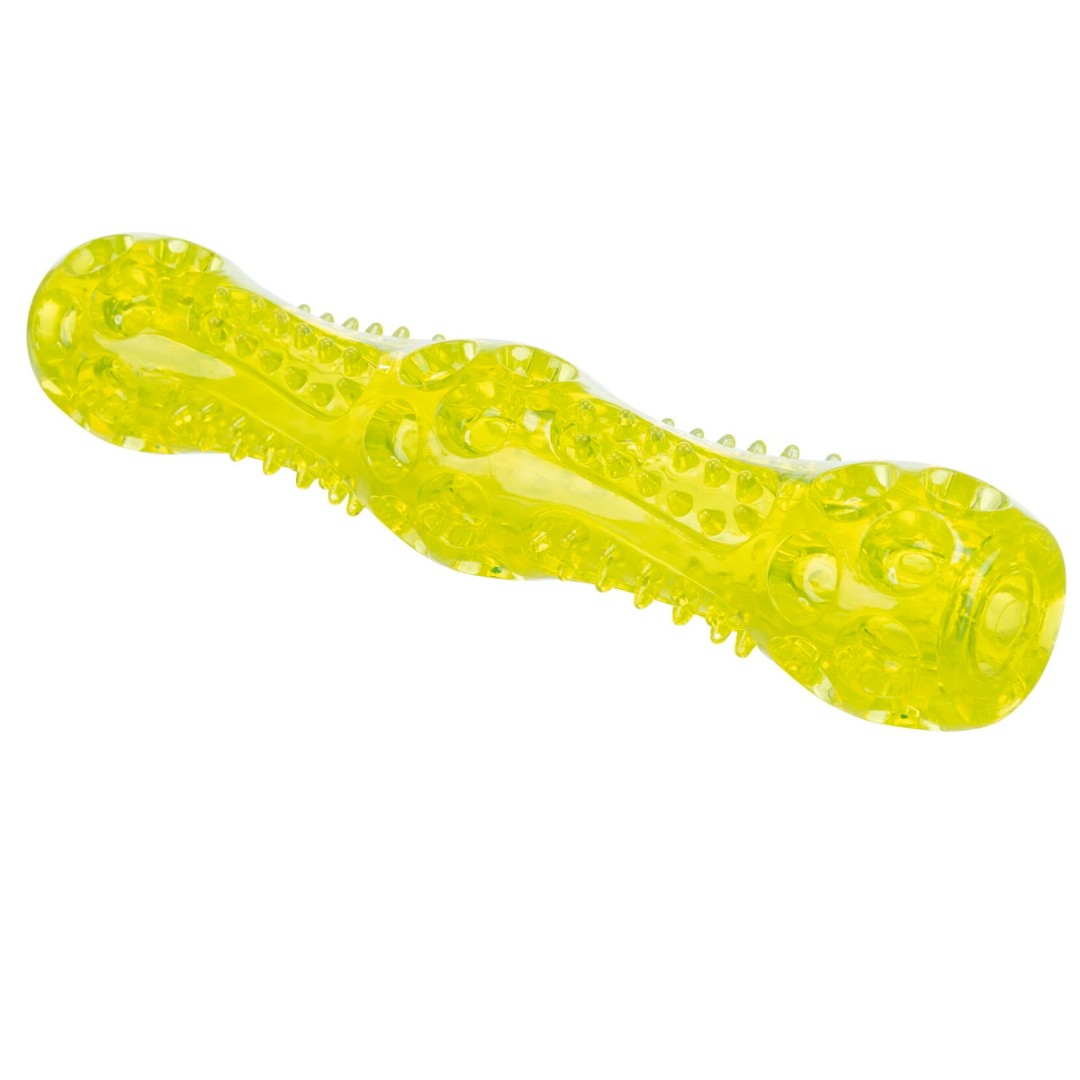
- rubber and TPR chew toys with a texture that massages the gums, such as the Trixie Chewing Stick;
- puppy toys with different textures — the Trixie Junior Dummy;
- spiky latex rings and balls, like the Trixie ring;
- treat-dispensing toys — the puppy spends a long time working for food and gets bored less.
Rotate toys every few days: a new toy is more interesting than an old one. A wide range is in the dog toys section.
How to ease teething
- Chill a rubber toy in the fridge or give a frozen wet cloth under supervision — the cold soothes itching.
- Give chews suited to the puppy's age and size. What's safe to chew is covered in our article on dog chews.
- Don't give cooked bones, hard antlers or very hard chews — the puppy may break a tooth.
- If a milk tooth hasn't fallen out while the adult tooth is already growing next to it, see your vet.
How to stop chewing furniture and belongings
- Remove temptations. Shoes in the wardrobe, cables in covers, children's toys off the floor.
- Make forbidden things taste bad. Sprays with a taste and smell dogs dislike put them off chewing: FIPROMAX HomeCare anti-chew or the all-purpose GILL'S repellent spray. Test on a hidden area of fabric first.
- Redirect. Caught the puppy on a chair leg? Calmly say “no”, offer a toy and praise as soon as it takes it.
- Limit space when you can't supervise: a playpen or a safe room with toys.
- Keep the puppy busy. Age-appropriate walks, games, training, snuffle mats. Ideas are in how to keep a dog busy at home.
What not to do
- Punish after the fact — the puppy doesn't link punishment to what it chewed an hour ago.
- Give old shoes or socks as toys — a puppy can't tell an old slipper from a new one.
- Play bitey games with your hands — the puppy learns that biting people is OK.
- Leave the puppy alone for long periods with nothing to do.
When it will pass
The most intense period is from 3 to 7 months, during teething. Many dogs keep an adolescent urge to chew until 1–1.5 years, especially active breeds. If an adult dog keeps destroying things, especially when alone, see a trainer or a veterinary behaviourist.
If your puppy chews when left alone
Teach your puppy to be alone gradually: first leave for a few minutes, then half an hour, then an hour. Before leaving, walk the puppy well and give it something to do — a toy stuffed with treats or a chew. Leave and come back calmly, without long goodbyes. If the puppy still howls, whines and destroys the door or things by the exit, it looks like separation anxiety — discuss it with your vet or a trainer.
Frequently Asked Questions
At what age do puppies lose their milk teeth?
Roughly from 3–4 to 6–7 months. That's when the urge to chew is strongest.
Can I give my puppy bones?
Not cooked or hollow bones. Size-appropriate chews and puppy toys are better.
Do anti-chew sprays work?
Yes, as part of a plan: the spray makes an item unattractive, but the puppy must have an allowed alternative.
My puppy chews cables — what should I do?
Hide the cables in covers or behind furniture straight away — it's dangerous. Spray exposed sections and redirect the puppy to toys.



