
A safe chew is one your dog can't swallow whole or break into sharp splinters: dental sticks and spirals of the right size, natural dried chews under supervision and durable chew toys. Cooked bones and hollow poultry bones are off-limits — they splinter into sharp fragments. Choose the treat size by your dog's weight, take away the last small piece, and keep all treats to no more than 10% of your dog's daily calories.
Why dogs need to chew
- Stress and boredom relief. Chewing calms a dog and helps it cope with being alone, thunderstorms and loud noises.
- Teeth. Hard and ridged chews mechanically remove some of the soft plaque.
- Puppy teething. Between 3 and 7 months the gums itch and puppies chew everything — it's better to offer them approved items.
- Saving your furniture. A dog that has something to chew is less likely to go for shoes and chair legs.
Types of chew treats
| Type | Pros | What to watch |
|---|---|---|
| Dental sticks and spirals | Ridged shape helps clean teeth, suits most dogs | Size for your dog's weight, calories |
| Natural dried chews (ears, trachea, tendons) | Single ingredient, dogs love them | Fat content, give under supervision |
| Soft chew strips | Suit puppies and senior dogs | Eaten quickly, count them in the diet |
| Chew toys | Not eaten, last long, no calories | Durability and size, replace when damaged |
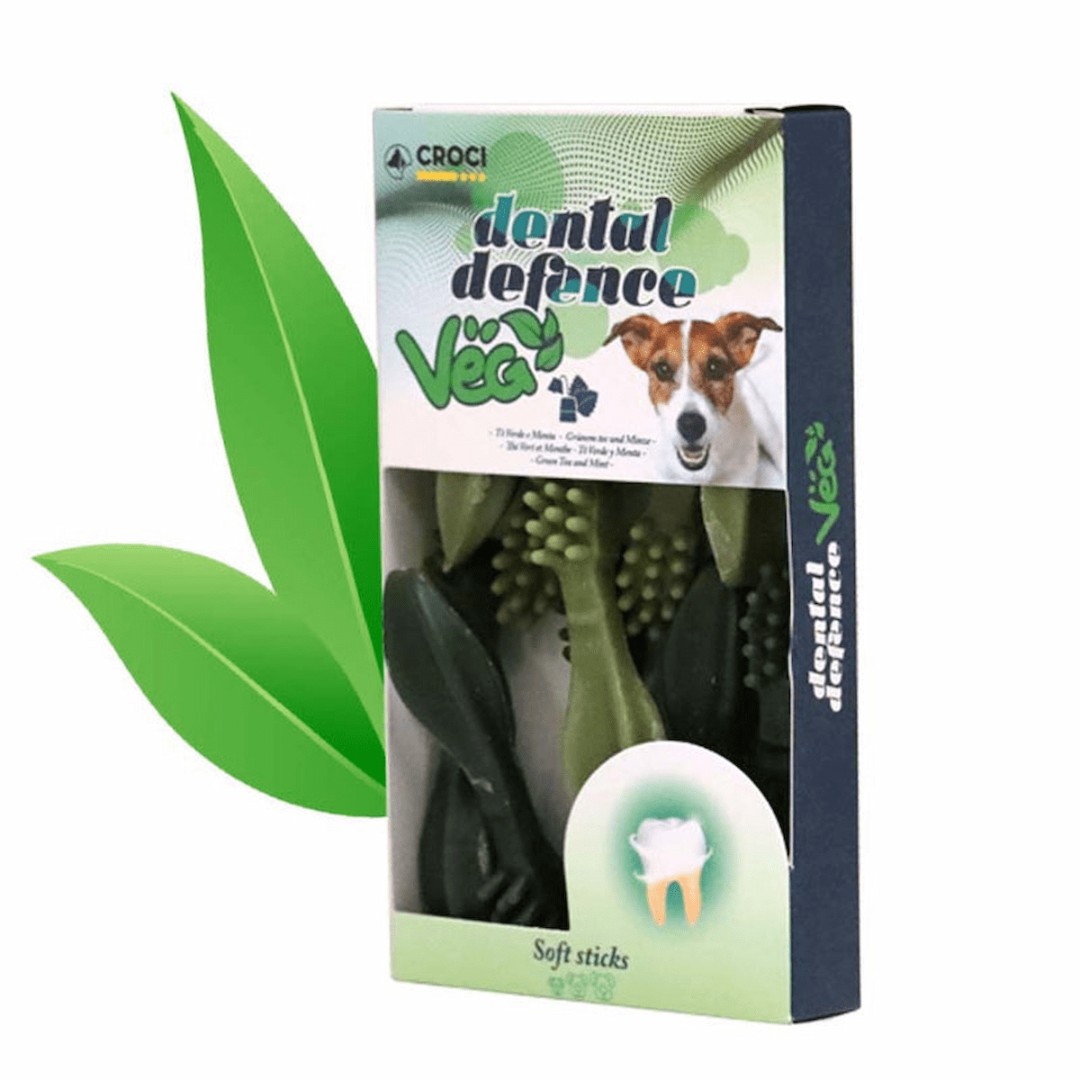
A plant-based dental chew example is the CROCI Dental-Veg toothbrush-shaped chew with green tea and mint. Trixie Denta Fun duck sticks are popular too, and for longer chewing try Denta Fun chew spirals.
What not to give
- Cooked bones and hollow poultry bones — they splinter into sharp fragments that injure the mouth, throat and gut.
- Very hard objects (stones, very hard bones) — can break a tooth.
- Treats that are too small for a large dog — the dog may swallow them whole and choke.
- Food from your plate — salty, smoked or sweet food and foods that are dangerous for dogs: grapes and raisins, chocolate, onion, garlic, xylitol.
How to choose size and hardness
- Check the weight guidance on the packaging.
- The treat should be longer than your dog's mouth so it can't be swallowed whole.
- A simple hardness rule: if you can't make a mark on the treat with your fingernail, it may be too hard for the teeth, especially in small and senior dogs.
- Give puppies soft treats designed for their age.
How many treats to give
Vets advise that treats should make up no more than 10% of daily calories. Otherwise your dog gains weight and loses interest in its main food. If you train a lot with treats, reduce the food portion slightly. Dental sticks are usually given one a day — the exact amount is on the pack.
An alternative: chew toys
If your dog is prone to weight gain or allergies, durable rubber or nylon chew toys are a good replacement for edible chews, such as the Trixie chew stick. Many toys can be smeared with pate or stuffed with food — the interest lasts long and there are almost no calories. See the dog toys section.
Safety rules
- Give chews under supervision, especially new ones.
- Take away the last small piece — dogs often try to swallow it whole.
- If your dog gulps, choose larger, harder chews or toys.
- For allergic dogs pick single-protein treats and check the ingredients.
- Watch the reaction: an upset stomach after a new treat is a reason to stop giving it.
Dental sticks, natural and training treats for dogs of all sizes are in the dog treats section. Nova Poshta delivery across Ukraine.
Frequently Asked Questions
Can I give my dog bones?
Cooked bones and hollow poultry bones — no: they splinter into sharp fragments. Purpose-made chew treats and toys of the right size are safer.
Do dental sticks replace brushing?
No. They help reduce plaque but don't replace regular brushing with a dog toothbrush and toothpaste or check-ups at the vet.
How many dental sticks can a dog have per day?
Usually one, depending on the dog's size. The exact amount is on the pack, and the calories should be counted in the daily diet.
Which treats suit a puppy?
Soft ones labelled for puppies and of the right size. During teething, soft rubber chew toys help a lot.



