When rain or frost cuts a walk short, you can tire your dog out at home with mental work: scent games, toys with treats inside, puzzles and short training sessions. 15–20 minutes of this kind of work tires a dog as much as a long walk. A treat ball or treat dumbbell, chew toys, a tug rope and a game of "find it" all work well. The key is to rotate toys, choose them for your dog's size and not leave your dog alone with a toy it can chew apart and swallow.
Why dogs need exercise even in bad weather
Without physical and mental exercise dogs get bored: they bark, demand attention, chew shoes and furniture, and young active breeds (Border Collie, Jack Russell, Husky, Labrador) can wreck a flat. Yet in rain and frost walks are often shortened, especially with small, short-haired and older dogs. Indoor games don't fully replace walks — your dog still needs to go out to toilet and walk — but they help channel its energy in the right direction.
Scent games: the easiest way to tire your dog
Smell is a dog's main sense, and tracking a scent takes a lot of concentration. Start simple:
- Ask your dog to sit, place a treat a couple of steps away while it watches and say "Find it!".
- Once your dog gets the idea, hide treats in another room, behind a door, under a rug or in boxes.
- Make it harder: hide treats at different heights and lay a scent trail.
Another option is to roll treats up in a towel: your dog will unroll it with its nose and paws. Dry food from the daily ration works for scent games too — that way the game adds no extra calories.
Treat toys and puzzles
These are toys your dog has to get food out of by rolling, chewing or flipping them. They keep a dog busy for 10–30 minutes and are handy when you need to get on with your own tasks.
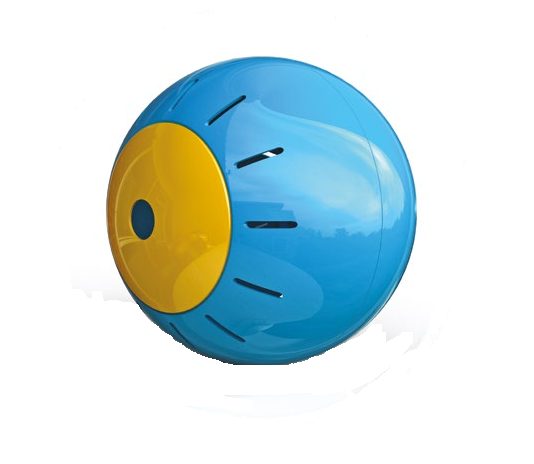
- Treat ball — your dog rolls it and kibble drops out little by little, for example the Gorplast RollingBall with an adjustable opening.
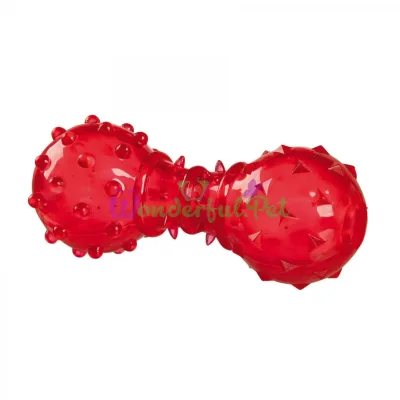
- Treat dumbbell — made of tough rubber, filled with pate or small pieces: the Trixie treat dumbbell.
- Puzzle toys — boards with compartments and lids to slide or lift. Start at the easiest level so your dog doesn't get frustrated.
Tip: stuff a toy with wet food and freeze it for a couple of hours — a frozen filling keeps a dog busy much longer.
Chew toys
Chewing calms dogs and relieves stress, and helps puppies get through teething. Choose durable rubber or nylon toys of the right size, such as the Trixie thermoplastic rubber chew stick. The toy should be bigger than your dog's mouth so it can't be swallowed whole.
Active indoor games
- Tug of war — a great release of energy and a self-control exercise: your dog lets go on the cue "Drop it", then the game goes on. Try the BE NORDIC play rope.
- Fetch in the hallway — with a soft toy so nothing gets broken.
- Hide and seek — one person hides while another holds the dog, then calls it by name.
- Toys by name — teach your dog to bring the "ball", "duck" or "rope": good memory training.
Watch the floor: on slippery laminate or tiles a dog can injure its paws and joints, so put down a rug for active games.
Short training sessions
5–10 minutes of learning a new cue tires a dog as much as a walk. Try "paw", weaving between your legs, "go to bed", "bow", or waiting calmly with a treat on the floor. Use small treats — you'll find plenty in the dog treats section — and end the session on a successful repetition.
Game and toy safety
- Match the toy to your dog's size: a small ball is dangerous for a large dog.
- Throw away toys with torn pieces, loose threads or cracks.
- Don't leave your dog alone for long with soft toys and ropes if it tears them: threads and stuffing are dangerous to swallow.
- Count treats as part of the daily food ration so your dog doesn't gain weight.
- Rotate toys: put some away and bring them back after a week — interest lasts longer.
Treat toys, puzzles, balls, ropes and chew toys are all in the dog toys section. Nova Poshta delivery across Ukraine.
Frequently Asked Questions
How much should I play with my dog at home if the walk was short?
Usually 2–3 sessions of 10–15 minutes are enough: scent games, a treat toy and a short training session. Young active breeds need more.
Can I skip walks altogether in heavy rain?
Short toilet trips are still needed. Small dogs can be trained to use a pad, but even they benefit from going outside at least briefly.
Which toys can I leave with my dog when I'm not home?
Durable chew toys and treat toys of the right size that your dog cannot chew apart. Give soft toys and ropes only under supervision.
Why does my dog lose interest in toys so quickly?
Novelty matters: if all the toys are always on the floor, they get boring. Put some away and swap them every few days.