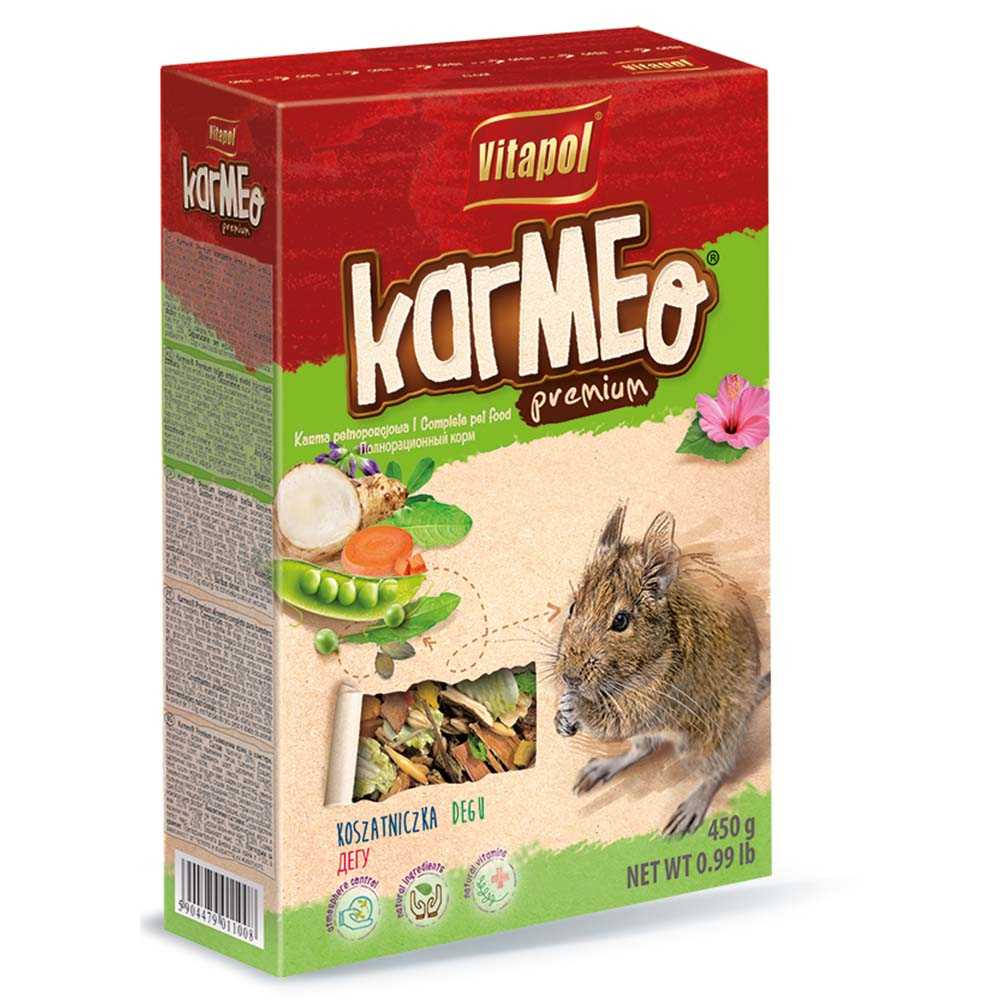
Vitapol Karmeo for degus, 450 g is a premium food from the Polish manufacturer Vitapol. The Karmeo range contains less whole grain: it's replaced with pellets based on meadow hay, so the food has more fibre, which improves digestion. It's enriched with extruded ingredients, which the manufacturer says make protein and fibre easier to absorb. The pellets and extrudates are combined with dried herbs, vegetables and flowers: thyme, parsnip, carrot, artichoke, celery, parsley, dandelion leaves, hibiscus flowers, birch twigs and willow bark.
What to feed degus
In the wild, degus eat dry grasses, bark, roots and seeds. Their digestion is built for coarse, high-fibre food, while sugar and excess starch are harmful — degus are prone to diabetes. So unlimited hay forms the base of the diet, with food given in small portions. Sweet fruit, raisins and sweets must not be given to degus. On feeding herbivorous rodents, see chinchilla care and feeding — many of the principles are similar for degus.
Key specs
| Parameter | Value |
|---|---|
| Type | premium staple food |
| For | degus |
| Base | alfalfa meal, hay pellets, cereals |
| Herbs and vegetables | thyme, parsnip, carrot, artichoke, celery, dandelion |
| For teeth | birch twigs, willow bark |
| Weight | 450 g |
| Manufacturer | Vitapol, Poland |
Pros
- Less whole grain. Replaced with hay pellets.
- More fibre. For degu digestion.
- Alfalfa listed first.
- Herbs and vegetables. Thyme, parsnip, dandelion and more.
- Birch twigs and willow bark. For tooth wear.
- Extrudates. Easier to digest.
Cons
- Contains wheat and maize flour. Sources of starch.
- No analysis on the site. Fibre and protein levels are unknown.
- No feeding guide. Check the pack.
- Doesn't replace hay.
Ingredients
Alfalfa meal, wheat flour, wheat bran, pelleted hay, maize flour, pea flakes, corn flakes, dried parsnip, linseed, thyme, hulled pumpkin seeds, dried birch twigs, willow bark, hibiscus flower, dried carrot, artichoke, celery, oat greens, parsley, dried alfalfa, dandelion leaves, sunflower meal, soybean meal, beet pulp, pea fibre, monocalcium phosphate and calcium carbonate. Ingredients are listed in descending order: the base is alfalfa and cereal flour, with herbs and vegetables added in small amounts.
How to feed
Give a small portion once a day following the amount on the pack, and don't top up until the previous portion is eaten. Hay and fresh water should always be available without limit. Introduce low-sugar fresh greens and vegetables gradually. Treats should be unsweetened only, such as herbal mixes: Zelena Zoo Meadow Flower Mix.
Switching foods
Change food gradually over 1–2 weeks, mixing it with the old one. Watch the droppings, which should stay dry and well formed. If they become soft or your degu eats less, slow down the switch and, if needed, see a vet who treats rodents.
Storage
Keep the food somewhere cool and dry in a tightly sealed pack. Moisture and heat spoil pellets and herbs, and insects may get into an open bag.
Other foods
For degus and chinchillas there's also Versele-Laga Complete Chinchilla & Degu. The same range for chinchillas is Vitapol Karmeo for chinchillas. All foods are in the food for ferrets and rodents section, and hay is in the hay for rodents collection.
Who it suits
Degu owners who want a premium food with reduced whole grain, herbs and vegetables, as a supplement to unlimited hay.
Verdict
Vitapol Karmeo for degus is a food based on alfalfa and meadow-hay pellets with reduced whole grain, extrudates, herbs, vegetables, birch twigs and willow bark. The downsides are wheat and maize flour in the recipe, no analysis or feeding guide on the site, and the fact that hay still forms the base of a degu's diet.
FAQ
Who is this food for?
Degus.
What's the base of the food?
Alfalfa meal, cereal flour and pelleted hay.
Does it contain whole grain?
Less than usual — it's replaced with hay pellets.
Can I feed only this food?
No, unlimited hay is the core of the diet.
Can degus have sweet things?
No, degus are prone to diabetes; treats must be unsweetened.
How should I switch foods?
Gradually, over 1–2 weeks.
How much does the pack weigh?
450 g.