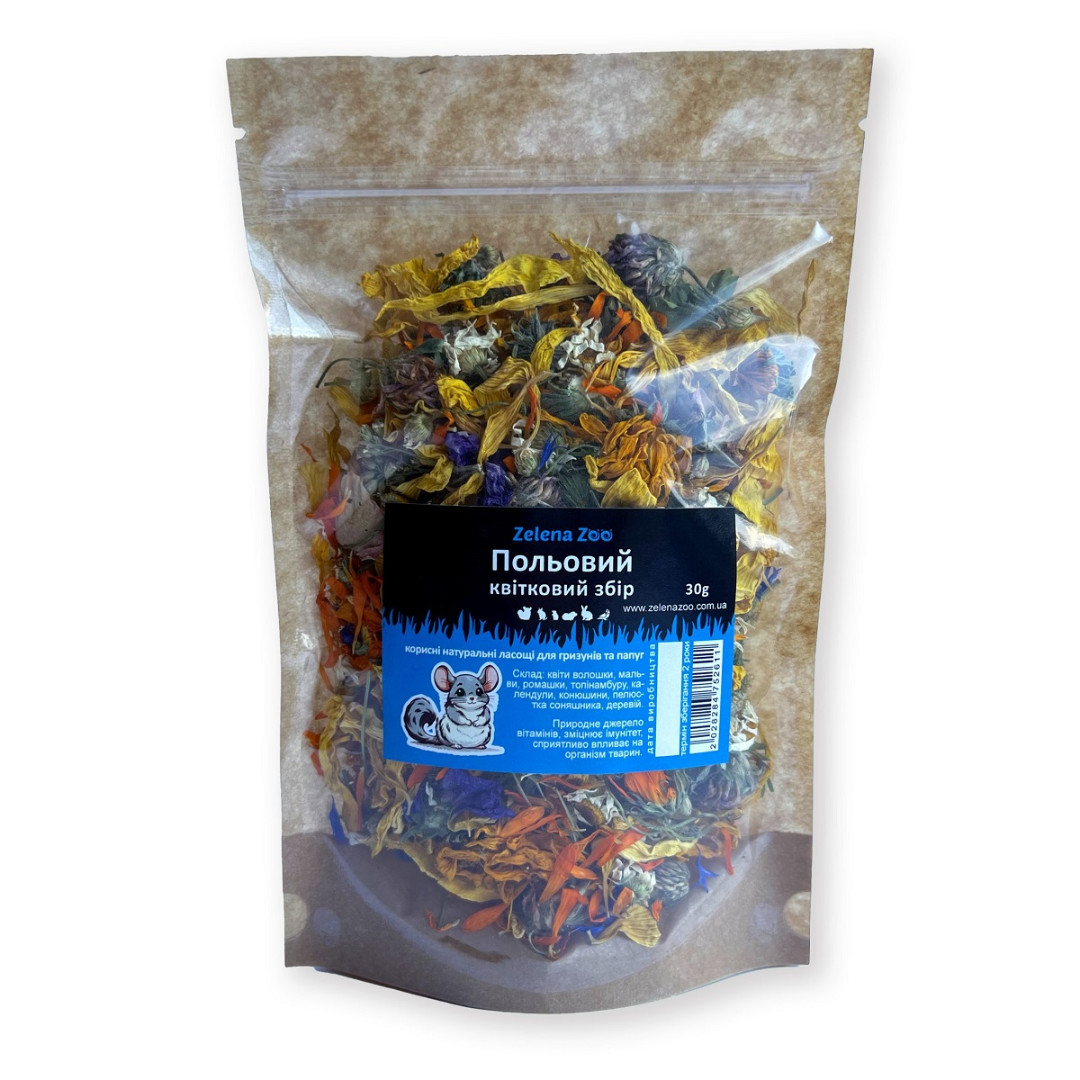
ZelenaZoo Field Flower Mix, 30 g is a natural treat of dried flowers for rodents and parrots. According to the manufacturer, it's 100% natural and made from selected flowers that add variety to the diet and spark your pet's interest. It contains cornflower, Mauritanian mallow, calendula, Jerusalem artichoke, chamomile, clover, sunflower petals and yarrow. For rodents, the mix is added to their food 2–3 times a week, and for parrots it replaces a small part of the daily ration.
Why dried flowers are good
In the wild, herbivorous rodents and birds eat not just grass and seeds but also flowers, leaves and flower heads. Dried flowers add variety in taste and texture, fibre and natural plant compounds. According to the manufacturer, the mix supports digestion and contains vitamins and trace elements, and plants such as chamomile and calendula are traditionally considered calming. Picking through the flowers is also an interesting activity that relieves boredom in the cage.
Key specs
| Parameter | Value |
|---|---|
| For | rodents and parrots |
| Ingredients | cornflower, mallow, calendula, Jerusalem artichoke, chamomile, clover, sunflower, yarrow |
| Rodents | a small amount 2–3 times a week |
| Parrots | replaces 10–15% of the daily food |
| Weight | 30 g |
| Brand | ZelenaZoo |
Pros
- Natural ingredients. Only dried flowers and plants.
- Eight plants. A variety of tastes and textures.
- For rodents and birds. One pack for different pets.
- Something to do. Pets enjoy sorting through the flowers.
- Clear guidance. How much and how often is stated.
- No sugar. Unlike dried fruit and berries.
Cons
- A small pack. 30 g won't last long with regular use.
- Manufacturer's claims. Dental benefits and "anti-stress" are general statements without figures.
- A treat, not a food. It doesn't replace hay or the main diet.
- Individual reactions. Introduce a new plant gradually.
How to feed it
Rodents: add a small amount to their usual food 2–3 times a week. Parrots: put the mix in a separate dish or mix it with their main food, replacing 10–15% of the daily ration. The first time, give just a little and watch your pet's digestion. Keep the pack closed in a dry place so the flowers don't get damp. For guinea pigs, rabbits and chinchillas, hay remains the basis of the diet — see hay for rabbits and guinea pigs.
Which pets it suits best
Guinea pigs, rabbits, degus and chinchillas love flower mixes — for them it's natural, sugar-free food. For hamsters and rats it adds variety and activity. Budgies and lovebirds find the bright petals interesting to examine and dig through in their feeder — diet tips in budgies: food and care. If you want to give something sweet, offer berries less often and in smaller amounts — compare with our review of ZelenaZoo Wild Berries.
Rodent diets: what matters
For herbivorous rodents, the diet is based on hay and fresh greens, then pellets, with treats in small amounts. Guinea pigs need vitamin C every day — see guinea pig care and feeding — and hamsters need a balanced grain mix, covered in hamsters: care and feeding.
Who it suits
Owners of guinea pigs, rabbits, chinchillas, degus, hamsters and parrots who want to vary the diet with a natural, sugar-free treat. More treats are in the bird treats and vitamins and treats for rodents sections.
Verdict
ZelenaZoo Field Flower Mix is a natural mix of eight dried flowers for rodents and parrots with clear feeding guidance. It adds variety and gives your pet an interesting activity without extra sugar. The downsides are the small pack and general claims of benefit without specific figures.
FAQ
Which flowers are in it?
Cornflower, mallow, calendula, Jerusalem artichoke, chamomile, clover, sunflower petals and yarrow.
How often should rodents have it?
A small amount 2–3 times a week.
How much should a parrot get?
Replace 10–15% of the daily food with the mix.
Can guinea pigs have it?
Yes, as a treat alongside hay and their main food.
Does it contain sugar?
It contains only dried flowers and plants.
Can degus have it?
Yes, the sugar-free mix suits degus as a treat in small amounts.
Can it be given every day?
For rodents, the manufacturer recommends 2–3 times a week rather than daily.
How should it be stored?
In a closed pack, somewhere dry.