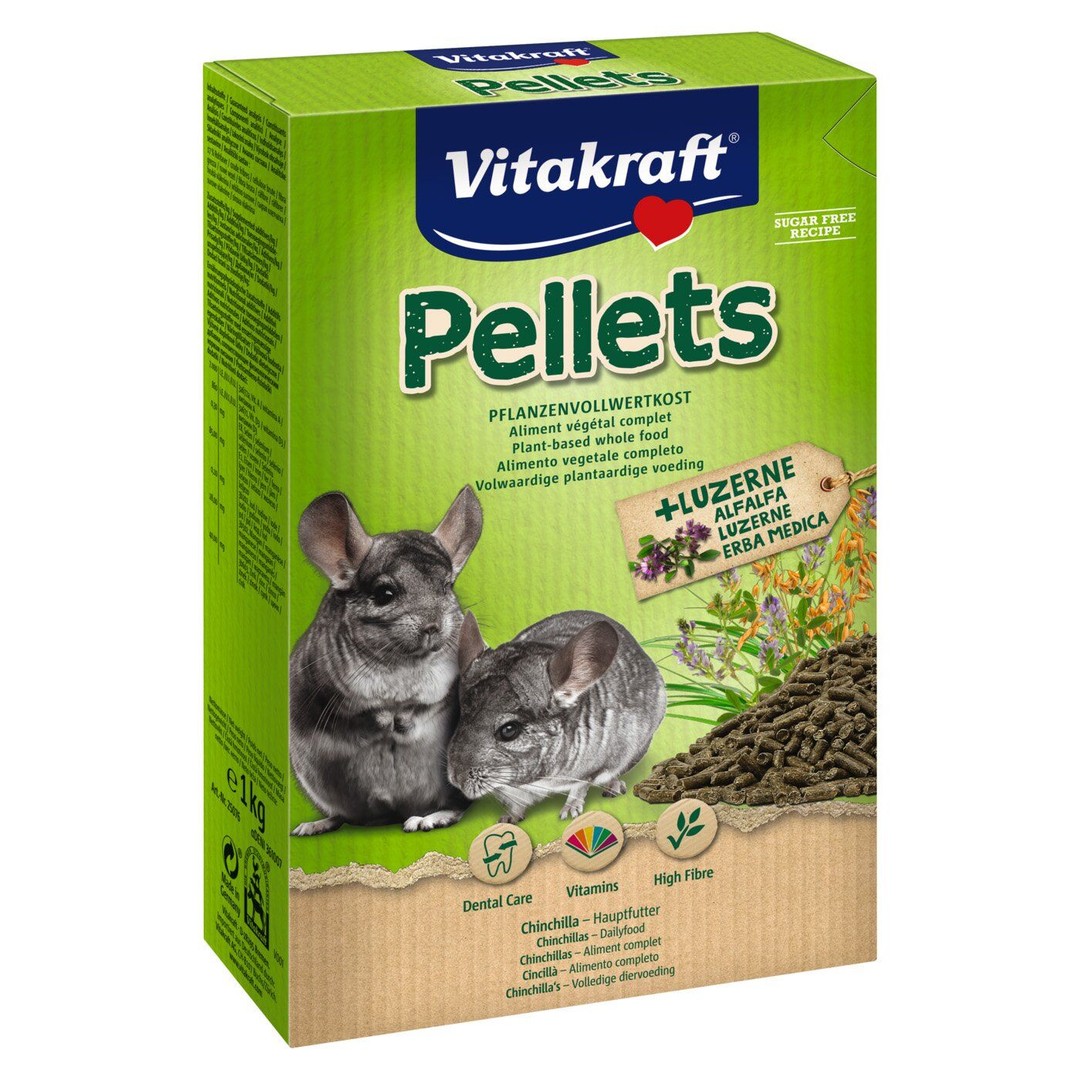
Vitakraft Pellets, 1 kg is a pelleted food for the basic feeding of a pet chinchilla. According to the description, the recipe contains all essential nutrients and plenty of fibre for good digestion, and each pellet is enriched with vitamins and minerals. It suits fussy animals: with pellets a chinchilla cannot pick out only some ingredients. There are no artificial flavourings, colourings or preservatives. The manufacturer highlights malt as a feature of the recipe and recommends 1–2 tablespoons per animal per day.
Ingredients
Vegetable by-products (including 4% malt), cereals, minerals. Crude fibre 17.0%.
Additives per kg: vitamin A 7000 IU, vitamin D3 860 IU, selenium 0.30 mg, iron 85 mg, iodine 0.10 mg, manganese 28 mg, zinc 40 mg.
The ingredients are given as general categories: which plants make up the "vegetable by-products" and how much cereal there is are not specified. The card also has no protein or fat analysis.
Key specifications
| Parameter | Value |
|---|---|
| Type | pelleted staple food |
| For | chinchillas |
| Crude fibre | 17.0% |
| Malt | 4% |
| Vitamins per kg | A 7000 IU, D3 860 IU |
| Amount | 1–2 tablespoons a day |
| Weight | 1 kg |
Pros
- Pellets. The chinchilla cannot pick out only the tasty bits.
- No artificial additives. No flavourings, colourings or preservatives.
- Vitamins and minerals listed with amounts.
- Clear feeding amount. 1–2 tablespoons a day.
- Economical. At that rate 1 kg lasts a long time.
- For fussy animals.
Cons and what to watch
- "High malt content" is 4%. The description and ingredient list disagree.
- Contains cereals. A low-starch diet is preferable for chinchillas.
- Vague ingredients. "Vegetable by-products" are not broken down.
- No protein or fat figures. The analysis on the card is incomplete.
- Less fibre than some rivals. 17% versus 20% in several foods.
How to feed
Give 1–2 tablespoons of pellets per chinchilla per day, ideally in the evening when the animal is active. Hay should be available at all times and form the basis of the diet. Fresh water must always be available. Give treats, especially sweet ones, rarely and in small amounts. Introduce a new food gradually by mixing it with the old one over 1–2 weeks. More in chinchilla care and feeding.
Hay is the basis of the diet
A chinchilla's digestion is built for coarse fibre, and its teeth grow throughout life and are worn down by chewing hay. Pellets are a supplement that covers vitamin and mineral needs. See the hay for rabbits and rodents collection.
Compared with other pellets
If more fibre and no grain matter to you, compare it with the grain-free Versele-Laga Nature Chinchilla or Beaphar Care+ Chinchilla with 20% fibre. All options are in the chinchilla food collection.
Signs of feeding problems
If a chinchilla eats less, its droppings shrink or change shape, or bloating or drooling appear, see a vet who treats rodents. Drooling and refusing hard food are often linked to dental problems, and bloating to a sudden change of food or too many sweet treats.
Cage and activity
Chinchillas need space, shelves and a daily dust bath in special sand. An example of a suitable cage is in the review of the Priroda Chinchilla cage.
Storage
Keep the food in a closed bag or container in a cool, dry place away from direct sunlight.
Who it suits
Vitakraft Pellets suits adult pet chinchillas as a staple pelleted food alongside hay, especially fussy animals that pick through mixes. Other foods are in the food for ferrets and rodents section.
Verdict
Vitakraft Pellets are chinchilla pellets with malt, 17% fibre and listed vitamin and mineral amounts, free of artificial flavourings, colourings and preservatives, fed at 1–2 tablespoons a day. The downsides are that the claimed "high malt content" is actually 4%, the food contains cereals, the raw materials are described only in general terms, and there is no protein or fat analysis.
FAQ
How much per day?
1–2 tablespoons per animal.
How much fibre?
17% crude fibre.
How much malt?
4%.
Does it contain grain?
Yes, cereals are listed.
Does it contain preservatives?
According to the description, no.
Is hay needed?
Yes, hay should be the basis of the diet.
What does it weigh?
1 kg.