
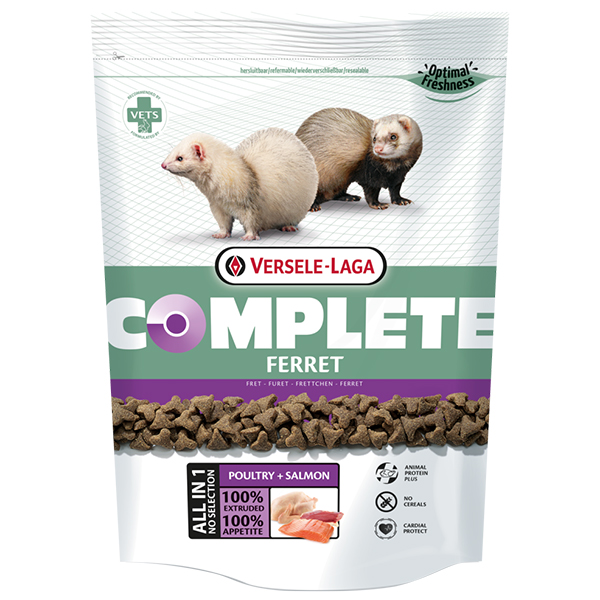
Versele-Laga Complete Ferret, 750 g is a complete pelleted food from the Belgian brand Versele-Laga for pet ferrets. It's based on poultry — 42% chicken, 6% turkey and 2% duck — plus salmon (4%) and salmon oil. It has 40% protein, 90% of it from animal sources, and 20% fat, the balance ferrets need given their short gut and fast metabolism. There are no grains or gluten; potato and peas are used instead. The daily amount is 50–80 g depending on the ferret's size and age.
What it is and who makes it
Versele-Laga is a Belgian maker of food for birds, rodents and small carnivores. The Complete range consists of extruded all-in-one pellets: every pellet has the same composition, so the animal can't pick out tasty bits and miss essential nutrients. The food is packed with inert gas to keep it fresh.
Ingredients and analysis
Poultry (chicken 42%, turkey 6%, duck 2%), potato, animal fat, peas, beet pulp, cellulose (1%), salmon (4%), salmon oil (1%), brewer's yeast, montmorillonite clay (0.5%), dried egg, FOS (0.3%), calendula, yucca, rosemary and green tea. Vitamins A, D3, E and C, trace elements and L-carnitine are added.
| Parameter | Value |
|---|---|
| Protein | 40% (90% animal) |
| Fat | 20% |
| Fibre | 2% |
| Ash | 6.5% |
| Calcium / phosphorus | 1.2% / 1% |
| Taurine | 0.3% |
Pros
- Lots of animal protein. 40% protein, 90% from meat and fish.
- The right fat level. 20% fuels an active ferret.
- No grains or gluten. Ferrets digest grain poorly.
- Taurine and L-carnitine. For the heart and fat metabolism.
- All-in-one pellets. No selective eating.
Cons and what to keep in mind
- Peas and potato. Plant ingredients make up a noticeable share.
- Mostly chicken. Not suitable for a ferret that reacts to chicken.
- Dry food. Ferrets need to drink a lot — water must always be available.
- Small bag. 750 g lasts a ferret about 10–14 days.
How to feed a ferret
Ferrets have a fast metabolism: food passes through the gut in 3–4 hours, so they eat little and often. It's best to keep food in the bowl at all times, measuring out the 50–80 g daily amount and refreshing it every day along with the water. Switch foods gradually over 7–10 days. Treats should be meat-based, without sugar, fruit or dairy — ferrets tolerate sugar and lactose poorly.
What ferrets must not eat
Rodent and rabbit food, seed mixes, sweets, fruit, chocolate, onion, garlic, dairy, raw pork and bones that can splinter. Cat food is sometimes used as a substitute, but it often has less protein and more grain than a ferret needs; a dedicated food is more reliable. Ferrets moult twice a year and groom themselves, so a hairball paste helps during moults — for example, Krug Malt Paste.
How to tell the food suits your ferret
The ferret is active, its coat is shiny and doesn't fall out in clumps outside moults, and stools are firm without a strong smell — the yucca helps reduce odour. If your ferret loses weight, has diarrhoea or a dull coat, take it to a vet experienced with exotic pets.
Who it suits
Pet ferrets of all ages as their main food. How to read a label — see how to read pet food ingredients; how to store dry food — see how to store dry food. Other foods are in ferret and rodent food.
Verdict
Versele-Laga Complete Ferret is a balanced ferret food with the right protein-to-fat ratio, plenty of meat and no grains. The main protein is chicken, so an alternative is needed if your ferret doesn't tolerate it; water and fresh food must always be available.
Frequently Asked Questions
How much should a ferret eat a day?
50–80 g depending on size, breed and age.
Does it contain grains?
No, it's grain-free and gluten-free.
How much protein and fat does it have?
40% protein and 20% fat.
Can a ferret eat cat food?
It's sometimes done, but a dedicated ferret food better meets their protein and fat needs.
Can a young ferret eat it?
Yes, with the amount adjusted for size and age.
How often should the food be changed?
Every day, together with the water.

