To judge a food, look at three things: the ingredient list, the analytical constituents and the word "complete". Ingredients are listed in descending order by weight, so meat or fish should come first — ideally named specifically ("chicken", "salmon") rather than "meat and animal derivatives". Remember that fresh meat is about 70% water and shrinks once cooked and dried, while dehydrated meat is already concentrated. Protein and fat in dry and wet foods can only be compared on a dry matter basis. Most importantly, the food must be complete; otherwise it is a treat or a topper, not a main meal.
The ingredient list: order matters
Ingredients are listed in descending order of their share in the recipe. If corn or wheat comes first and meat is third or fourth, the food is based on cereals. Ideally the list starts with one or two specifically named animal ingredients.
| What it says | What it means |
|---|---|
| Fresh meat (chicken, salmon) | Raw meat including water; after processing its dry share is much smaller |
| Dehydrated meat, meat meal | Meat with the water removed — a concentrated protein source |
| Meat and animal derivatives | A mix without species named — hard to tell what exactly is inside |
| By-products | Liver, heart, lungs — nutritious in themselves; the species matters |
| Grains, potato, peas | Sources of carbohydrates and fibre; not harmful for most pets |
"With chicken" vs "chicken": what the name tells you
Under European labelling rules (FEDIAF), the wording in the product name determines the ingredient's share:
- "chicken flavour" — there may be very little chicken, just enough to give the taste;
- "with chicken" — at least 4%;
- "rich in chicken", "high in chicken" — at least 14%;
- "chicken" as the name of the food (chicken as the main ingredient) — at least 26%.
Good manufacturers state the percentage next to the ingredient, e.g. "salmon (26%)", which makes comparison easy.
Analytical constituents: protein, fat, fibre, ash
- Crude protein — usually 22–30% in dry food for adult dogs and 30–40% for cats.
- Crude fat — an energy source; higher for active animals, lower for those prone to weight gain and for neutered pets.
- Crude fibre — aids digestion; higher in weight-control and hairball foods.
- Crude ash — the mineral content. Not a "filler" but calcium, phosphorus and other minerals.
- Moisture — around 8–10% in dry food and 75–82% in wet food.
How to compare dry and wet food
A pouch may say "protein 9%" and dry food "protein 32%", but this doesn't mean wet food has a third of the protein — it just contains a lot of water. Convert to dry matter: protein ÷ (100 − moisture) × 100. For example, 9% protein at 80% moisture: 9 ÷ 20 × 100 = 45% protein on a dry matter basis — more than many dry foods.
Complete or complementary
The pack always states the type of food. A complete food covers all of your pet's needs and can be its only food. A complementary food covers treats and many pouches and cans meant as extras: they must not be fed long-term without a main diet. For cats, the food must contain taurine — an essential amino acid for them; complete cat foods always include it.
Food classes and what to look for
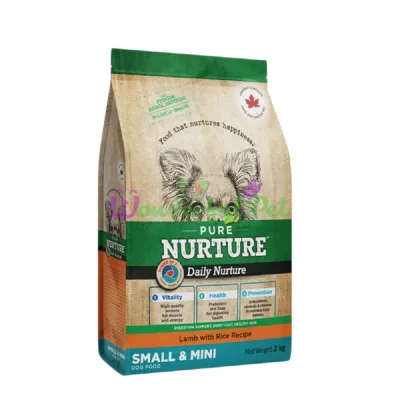
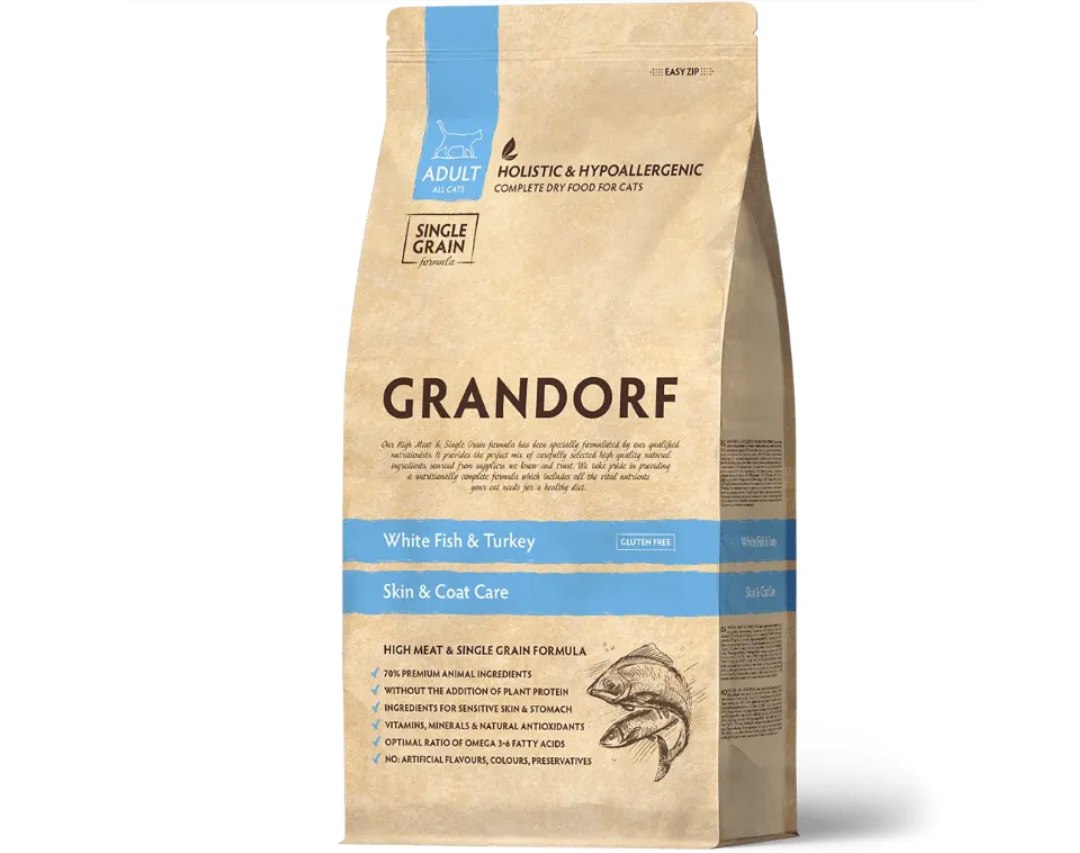
Super-premium and holistic foods tend to contain more specifically named meat and fewer unnamed ingredients. For example, Grandorf Cat Skin & Coat with white fish and turkey and Grandorf Cat Sterilized with rabbit and turkey list their animal ingredients specifically and at the top. For dogs with sensitive digestion, single-protein diets such as PURE NURTURE with lamb and rice work well. Selections: holistic cat food, holistic dog food, hypoallergenic food.
Red flags on the label
- meat isn't first and the leading ingredients are all cereals;
- lots of vague wording: "meat and animal derivatives", "vegetable protein extracts";
- sugar, caramel, artificial colours — your pet doesn't need them;
- no "complete" statement, yet it is sold as a main food;
- no manufacturer, best-before date or feeding table.
Wonderful.pet stocks dry and wet foods of every class for dogs and cats — see dry dog food and dry cat food. Nova Poshta delivery across Ukraine.
Frequently Asked Questions
Is a food with grains a bad food?
No. Most dogs and cats digest grains in a good-quality food well. Grain-free diets are mainly needed for a confirmed intolerance.
Why isn't "40% fresh meat" always better than "25% dehydrated meat"?
Fresh meat is 70% water. After processing, 40% fresh meat leaves much less protein than 25% dehydrated meat.
How much protein should cat food contain?
Dry food for adult cats usually has 30–40%. Besides the number, it matters that the protein source is animal and specifically named.
What is crude ash and is it harmful?
It is the mineral content of the food — calcium, phosphorus, potassium and others. Within normal limits (around 6–9% in dry food) it is perfectly fine.