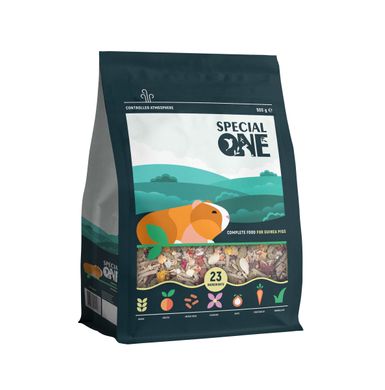
Special One for guinea pigs, 500 g is a food for pet guinea pigs from the Ukrainian brand Special One. The manufacturer says the recipe follows the latest international feeding standards and recommendations from guinea pig specialists. The mix has 23 ingredients: herb pellets, cereals, pulses, seeds, dried fruit, vegetables and berries, plus fennel, sesame, paprika and burdock root. According to the manufacturer, the red protein-mineral pellets support teeth, bones and fur, while paprika, apples and parsnip are sources of vitamin C.
What a guinea pig needs
The base of a guinea pig's diet is unlimited hay, which keeps digestion working and wears down ever-growing teeth. Guinea pigs can't make vitamin C and must get it from food — fresh vegetables, greens and dedicated pellets. Mixed food is given in small portions. More in guinea pig care and feeding.
Key specs
| Parameter | Value |
|---|---|
| Type | seed mix with pellets |
| For | guinea pigs |
| Ingredients | 23 |
| Base | compound feed, herb pellets, oats, sorghum |
| Vitamin C sources | paprika, apples, parsnip, rosehip |
| Weight | 500 g |
| Brand | Special One, Ukraine |
Pros
- Herb pellets. Fibre for digestion and teeth.
- Paprika and rosehip. Natural sources of vitamin C.
- Fennel. Traditionally used against bloating.
- Variety. 23 ingredients.
- Protein-mineral pellets.
- 500 g. A handy pack.
Cons
- Lots of cereals and seeds. Best in moderation for a herbivore.
- Contains peanuts and carob. Calorie-rich treats.
- No vitamin C data. The amount isn't stated.
- No analysis or feeding guide on the site.
Ingredients
Compound feed, assorted herb pellets, naked oats, white sorghum, ground carob, rolled peas, protein-mineral pellets, pumpkin seeds, linseed, puffed wheat, white sesame, red lentils, rosehip, burdock root, dried apple, carrot, parsnip, hibiscus, calendula flowers, peanuts, dried beetroot, fennel and dried paprika. The mix is varied, but a large share is cereals, pulses and seeds, which for a guinea pig are more of a supplement than a staple.
How to feed
Give a small portion once or twice a day following the amount on the pack, and keep hay in the cage at all times. Don't top up until the previous portion is gone, or your guinea pig will pick out peanuts and seeds and leave the pellets. Offer fresh vegetables and greens rich in vitamin C every day — bell pepper, parsley, lettuce. Water should always be available.
Vitamin C
The manufacturer says vitamin C comes from paprika, apples and parsnip but doesn't give the amount. So don't rely on the mix alone: fresh sweet pepper and greens are a dependable daily source. If you see signs of deficiency — lethargy, poor appetite or coat problems — see a vet.
Switching foods
Change food gradually over 1–2 weeks, mixing it with the old food. Guinea pigs have sensitive digestion, and a sudden change can cause bloating. If your guinea pig stops eating or its droppings change, see a vet.
Storage
Keep the food somewhere cool and dry in a closed pack — vitamins in dried vegetables and fruit break down with light, heat and moisture.
Other guinea pig foods
If you want a food with a bigger share of herb pellets, see Versele-Laga Complete Cavia or Vitakraft VITA Special. Hay is in the hay for rodents collection and the article hay for rabbits and guinea pigs.
Who it suits
Guinea pig owners who like a varied mix with herbs and vegetables — provided hay and fresh vegetables form the base of the diet and the mix is given in small portions.
Verdict
Special One for guinea pigs is a varied 23-ingredient mix with herb pellets, paprika, rosehip, fennel and burdock root. The downsides are a high share of cereals, pulses and seeds, peanuts and carob, and no stated vitamin C content, so hay and fresh vegetables remain an essential base.
FAQ
How many ingredients does it have?
23.
Does it contain vitamin C?
It has natural sources — paprika, apples, parsnip and rosehip — but no amount is given.
Can I feed only this mix?
No, hay and fresh vegetables are the core of the diet.
Why is fennel included?
It's traditionally used against bloating.
Does it contain nuts?
Yes, peanuts.
How should I switch foods?
Gradually, over 1–2 weeks.
How much does the pack weigh?
500 g.