
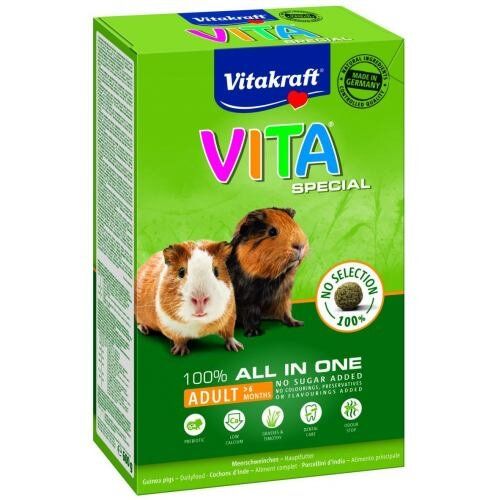
Vitakraft VITA Special, 600 g is a complete pelleted food from the German brand Vitakraft for adult guinea pigs. The key idea is that every nutrient is packed into each pellet, so the guinea pig can't pick out favourite bits and leave the healthy ones. It contains timothy grass (10%), herbs (red clover, plantain, yarrow), the prebiotic inulin and vitamin C at 607 mg per kg. Fibre is 20%, and calcium is reduced to 0.7%.
What it is and who makes it
Vitakraft is a German maker of food and treats for small animals and birds. The VITA Special range consists of complete pellets for rodents and rabbits. Unlike seed mixes, where a guinea pig picks out seeds and corn, every pellet has the same composition. That's especially useful for fussy animals.
Ingredients and analysis
Vegetable by-products (timothy grass 10%), vegetables, cereals (corn 10%), inulin (2.1%), oils and fats (rapeseed oil 1%), minerals and yucca extract. Per kg it adds vitamin A, vitamin D3, vitamin C (607 mg), selenium, iron, iodine, copper, manganese and zinc.
| Parameter | Value |
|---|---|
| Fibre | 20% |
| Calcium | 0.7% |
| Phosphorus | 0.4% |
| Vitamin C | 607 mg/kg |
| Inulin | 2.1% |
| Daily amount | 30–50 g |
Pros
- No selective feeding. Every pellet is equally balanced.
- Vitamin C. 607 mg/kg, since guinea pigs can't make it themselves.
- High fibre. 20% for digestion and tooth wear.
- Reduced calcium. 0.7% for a lower risk of urinary sludge.
- Herbs and inulin. Clover, plantain, yarrow and a gut-friendly prebiotic.
- Less odour. Yucca and an anti-odour blend for the cage.
Cons and what to keep in mind
- Contains corn. 10% cereal is no reason to exceed the daily amount.
- Doesn't replace hay. Unlimited hay is the basis of a guinea pig's diet.
- Plain-looking. A guinea pig used to a colourful mix needs time to switch.
- Adults only. It's designed for adult guinea pigs.
How to feed
The maker recommends 30–50 g of pellets a day depending on the guinea pig's size and activity, plus hay and fresh drinking water. It's handy to split the amount into two meals. If your guinea pig ate a seed mix before, switch gradually over 1–2 weeks by mixing the pellets into the old food. Don't keep the bowl topped up, as too many concentrates lead to obesity and dental problems.
Hay and fresh greens
Pellets are only part of the diet. A guinea pig should spend most of the day chewing hay, which wears down its ever-growing teeth and keeps the gut moving. Hay is given without limits and should always be fresh. Leafy greens and vegetables are useful every day in small portions, with new foods introduced gradually. More in hay for rabbits and guinea pigs and guinea pig care and feeding.
Why guinea pigs need vitamin C
Like humans, guinea pigs can't produce vitamin C and must get it from food every day. A shortage causes lethargy, poor appetite and problems with gums, joints and coat. Pellets with vitamin C are a good base, and fresh vegetables and greens complete the diet. Vitamin C breaks down over time, so keep the food tightly sealed somewhere cool and dry, and don't buy a large stock.
Who it suits
Adult guinea pigs, especially fussy ones that pick only the tasty bits from mixes. Another pellet option is Versele-Laga Complete Cavia. Other foods are in food for ferrets and rodents.
Verdict
Vitakraft VITA Special is a uniform pellet for guinea pigs with vitamin C, fibre, herbs and reduced calcium. A good dietary base alongside unlimited hay and fresh greens, especially for guinea pigs that pick only the tasty bits from mixes.
Frequently Asked Questions
How much Vitakraft VITA Special should I give?
30–50 g a day, plus hay and water.
Does it contain vitamin C?
Yes, 607 mg per kg of food.
How much fibre?
20%.
Can I skip hay?
No, hay is the basis of a guinea pig's diet.
Why pellets instead of a mix?
The guinea pig can't pick only the tasty bits and gets everything it needs.
How much calcium?
0.7%, a reduced level.
Is it suitable for a young guinea pig?
The food is designed for adult guinea pigs. For young animals, check the diet with a vet or choose a food for juveniles.
How should I store the pellets?
In a tightly sealed pack, somewhere cool and dry and out of the sun, which helps preserve the vitamin C.

