
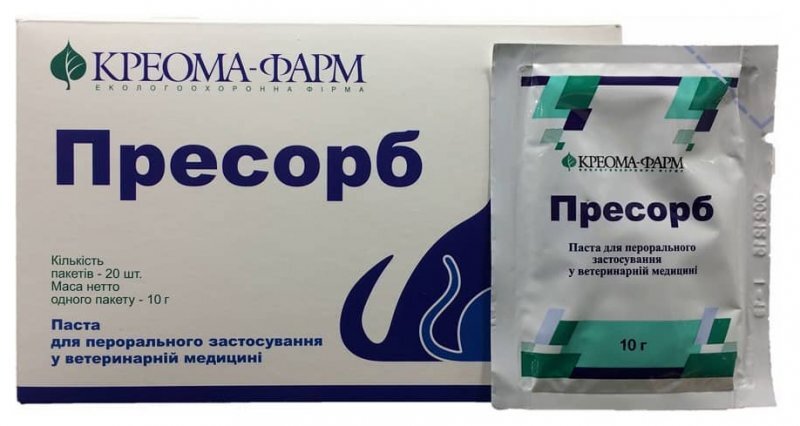
Presorb is an adsorbent gel for dogs and cats in 10 g sachets (20 per box). The active ingredient is methylsilicic acid hydrogel (70 g per 100 g): a porous “molecular sponge” that binds toxins, bacteria and their toxins, food allergens and incomplete metabolic products in the gut and carries them out naturally. The dose is 0.5–1 g per kg of body weight, given by mouth or mixed with food or water. Presorb helps with mild poisoning and digestive upsets, but a pet in a serious condition needs a vet, not just an adsorbent.
What it is and who makes it
Presorb is made by the Ukrainian company Kreoma-Pharm. It works like human enterosorbents based on the same substance. It isn't absorbed into the blood: it acts only inside the gut and leaves together with what it has bound. It can be used for dogs, cats and farm animals.
Dosing
| Animal weight | Single dose (0.5–1 g/kg) |
|---|---|
| 4 kg cat | 2–4 g (about a third of a sachet) |
| 10 kg dog | 5–10 g (up to 1 sachet) |
| 20 kg dog | 10–20 g (1–2 sachets) |
| 40 kg dog | 20–40 g (2–4 sachets) |
How to give it
- Measure out the right amount of gel.
- Mix it with a little wet food or water, or give it straight into the mouth from a needle-free syringe.
- Make sure your pet has access to water.
- Give it separately from other medicines, 1–2 hours apart: the adsorbent can bind them too.
- Agree the duration for digestive upsets with your vet.
When it's used
- mild food poisoning after eating something spoiled;
- diarrhoea after a food change or dietary indiscretion;
- as part of treatment for poisoning and infections prescribed by a vet;
- as a supportive aid with food allergy.
Pros
- Not absorbed. Works only in the gut and is passed naturally.
- Broad action. Binds toxins, bacteria, allergens and metabolic products.
- Handy sachets. 10 g each, easy to dose by weight.
- For dogs and cats. One product for the home first-aid kit.
- Long shelf life. 3 years at 2–30 °C.
Cons and what to keep in mind
- Doesn't replace treatment. Severe poisoning, blood in the stool, repeated vomiting and lethargy need urgent veterinary help.
- Binds medicines too. Keep a gap between Presorb and other drugs.
- Gel texture. Some cats are reluctant — mixing it with pâté helps.
- Don't freeze. Store at 2–30 °C, opened sachets tightly closed.
When to see a vet urgently
An adsorbent helps in mild cases. Go to a clinic immediately if your pet has eaten something toxic (human medicines, rodent poison, antifreeze, lilies for cats, grapes or chocolate for dogs), vomits more than twice, has blood in the stool, seizures, severe lethargy, refuses water, or is a puppy or kitten with diarrhoea. Lists of dangerous foods are in foods dogs can't eat and what cats can't eat.
Who it suits
Dog and cat owners — as a home first-aid product for mild digestive upsets, and as part of treatment prescribed by a vet. What else to put in the kit is in an emergency kit for cats and dogs. Other products are in veterinary products.
Verdict
Presorb is a convenient gel adsorbent for dogs and cats: it isn't absorbed, binds toxins and allergens and is easy to dose by weight. It's useful in a home first-aid kit, but with serious poisoning or a pet in poor condition, the time is better spent getting to a vet.
Frequently Asked Questions
How much Presorb should a dog get?
0.5–1 g per kg: a 20 kg dog gets 1–2 sachets of 10 g.
Can a cat have Presorb?
Yes, a 4 kg cat gets 2–4 g of gel.
Can it be given with other medicines?
Only 1–2 hours apart, otherwise the adsorbent will bind the medicine.
Does Presorb help with diarrhoea?
For mild diarrhoea after a dietary slip, yes. With blood in the stool, vomiting and lethargy, see a vet.
How should an opened sachet be stored?
Tightly closed at 2–30 °C; don't freeze it.
Can a puppy have it?
The dose is calculated by weight, but diarrhoea in a puppy is a reason to see a vet straight away.

