
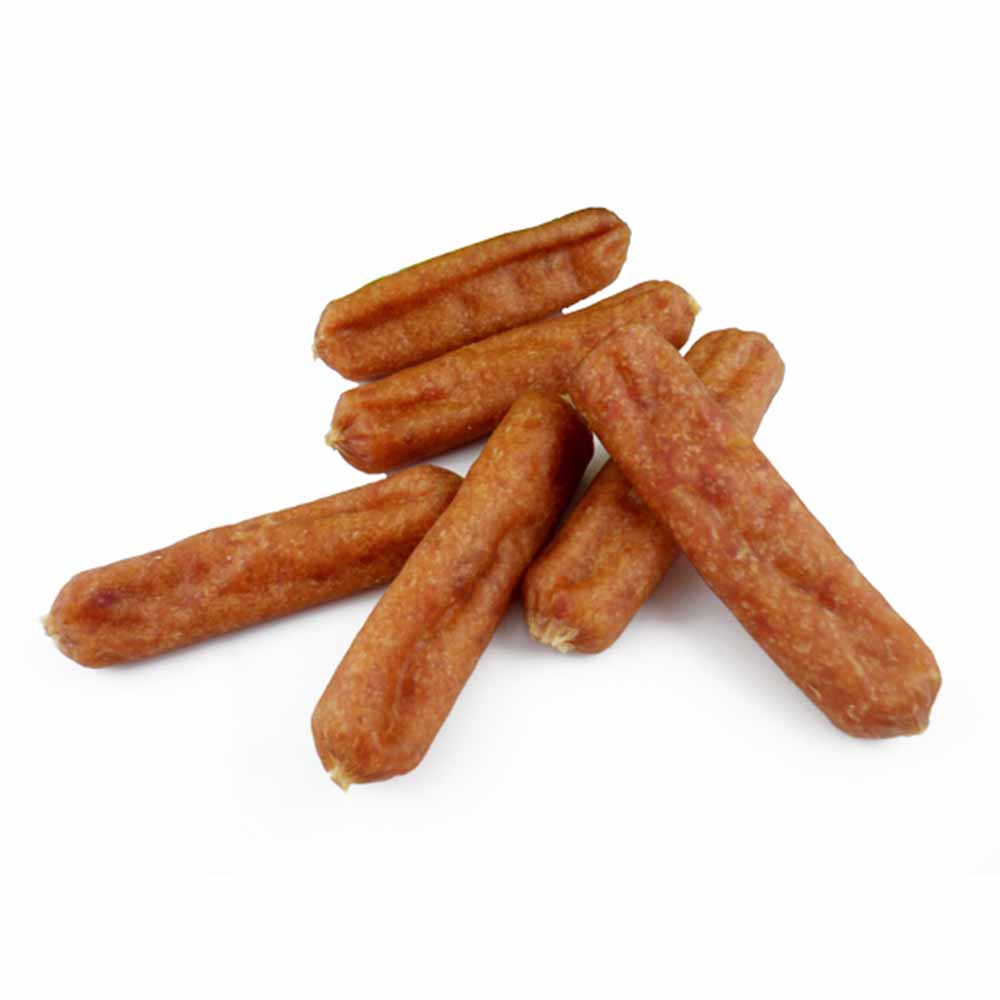
The great thing about homemade treats is that you know exactly what's in them: no colourings, sugar or salt. They're easy to make, and almost every recipe needs just 2–3 ingredients. The key is to follow two rules: use only dog-safe foods and don't overfeed. Below are three recipes plus everything you need to know about storage and portions.
The main rules
- No salt, sugar or spices. Dogs don't need them, and lots of salt is harmful.
- No dangerous foods: onion and garlic, chocolate and cocoa, grapes and raisins, macadamia nuts, xylitol (a sweetener found in some peanut butter and «sugar-free» baking). The full list is in what not to feed a dog.
- No more than 10% of daily calories for all treats combined. If your dog gets lots of treats, reduce its main food portion.
- Introduce new foods gradually, especially if your dog has a sensitive stomach or allergies.
Recipe 1: dried meat or liver
The most popular treat, and dogs love it.
- Take chicken or turkey breast, beef heart or liver.
- Partly freeze it to make slicing easier and cut into strips about 5 mm thick.
- Lay them in a single layer on a baking tray lined with parchment.
- Dry in the oven at 80–100 °C with the door ajar for 2–4 hours, or in a food dehydrator for 5–8 hours, until the pieces are dry and snap.
Liver is very rich in vitamin A, so give it as a treat rather than in large amounts every day. Handle raw meat on a separate board and wash your hands, as with any cooking.
Recipe 2: pumpkin and oat biscuits
- Mix 1 cup of oats blitzed in a blender, half a cup of pumpkin purée (baked or boiled, without sugar or spices) and 1 egg.
- If the dough is sticky, add a few more oats.
- Roll out to 5–7 mm thick and cut into shapes or squares.
- Bake at 160–170 °C for 20–25 minutes, then leave in the switched-off oven for another hour to dry out.
You can swap the pumpkin for carrot purée or baked apple without seeds.
Recipe 3: summer frozen bites
In hot weather dogs love chewing cold cubes. Pour plain yoghurt or kefir without sugar or additives into ice-cube trays, optionally with pieces of seedless apple or carrot, and freeze. If your dog doesn't tolerate dairy, use unsalted meat stock cooked without onion or spices. Give one or two cubes a day, or half a cube for small dogs.
How to store homemade treats
Homemade treats contain no preservatives, so they keep for less time than shop-bought ones. Store dried meat in a glass jar in the fridge for up to 2 weeks, or in the freezer for up to 3 months. Keep biscuits in a closed jar for up to a week, longer in the fridge. If you notice an odour, mould or the pieces turn moist, throw them out. It's handy to cook small batches and freeze some straight away.
Homemade or shop-bought?
Homemade treats are great for rewards, but ready-made ones are more convenient for training and travel: they don't crumble, keep for a long time and have exact calories on the pack. For training choose small soft pieces — see dog training treats. For teeth and long chewing sessions, chews are a good fit — see how to choose dog chews. All options are in dog treats. If your dog tends to put on weight, count treats in its daily allowance — more in overweight cats and dogs.
Frequently Asked Questions
Which dog treats can I make at home?
Dried meat or liver, pumpkin and oat biscuits, and frozen yoghurt or stock cubes.
Which ingredients must I avoid?
Salt, sugar, spices, onion, garlic, chocolate, grapes, raisins, macadamia nuts and xylitol.
How many treats can I give per day?
No more than 10% of the daily calorie intake.
How long does dried meat for dogs keep?
Up to 2 weeks in a closed jar in the fridge and up to 3 months in the freezer.
Can I give my dog liver every day?
Better not: liver is high in vitamin A, so give it as a treat in small portions.

