
An adult Chihuahua weighs just 1.5–3 kg, but its metabolism is fast and its stomach tiny. So the food should be energy-dense and easy to digest, with small, frequent portions. Two more breed traits matter: tightly packed teeth that build up tartar quickly, and a tendency to gain weight from table scraps. Good feeding tackles both.
Commercial food or home-made
The simplest option is a complete food for small or toy breeds: protein, fat, calcium and vitamins are already balanced, and the kibble suits a small mouth. A home-made diet is possible, but it's hard to get the balance exactly right for such a small dog, and mistakes (too little calcium, too much fat) show quickly. If you choose home-made, plan it with a vet. A comparison is in home-made or dry food.
Which food to choose
- Small-breed formulas labelled Mini, Small or Toy: small kibble and high energy.
- Meat first, with a clear protein source at the top of the list.
- By age: puppy food until a year, then adult, and senior food after 7–8 years.
- By needs: a single-protein food for sensitive digestion, a light food for dogs prone to weight gain.
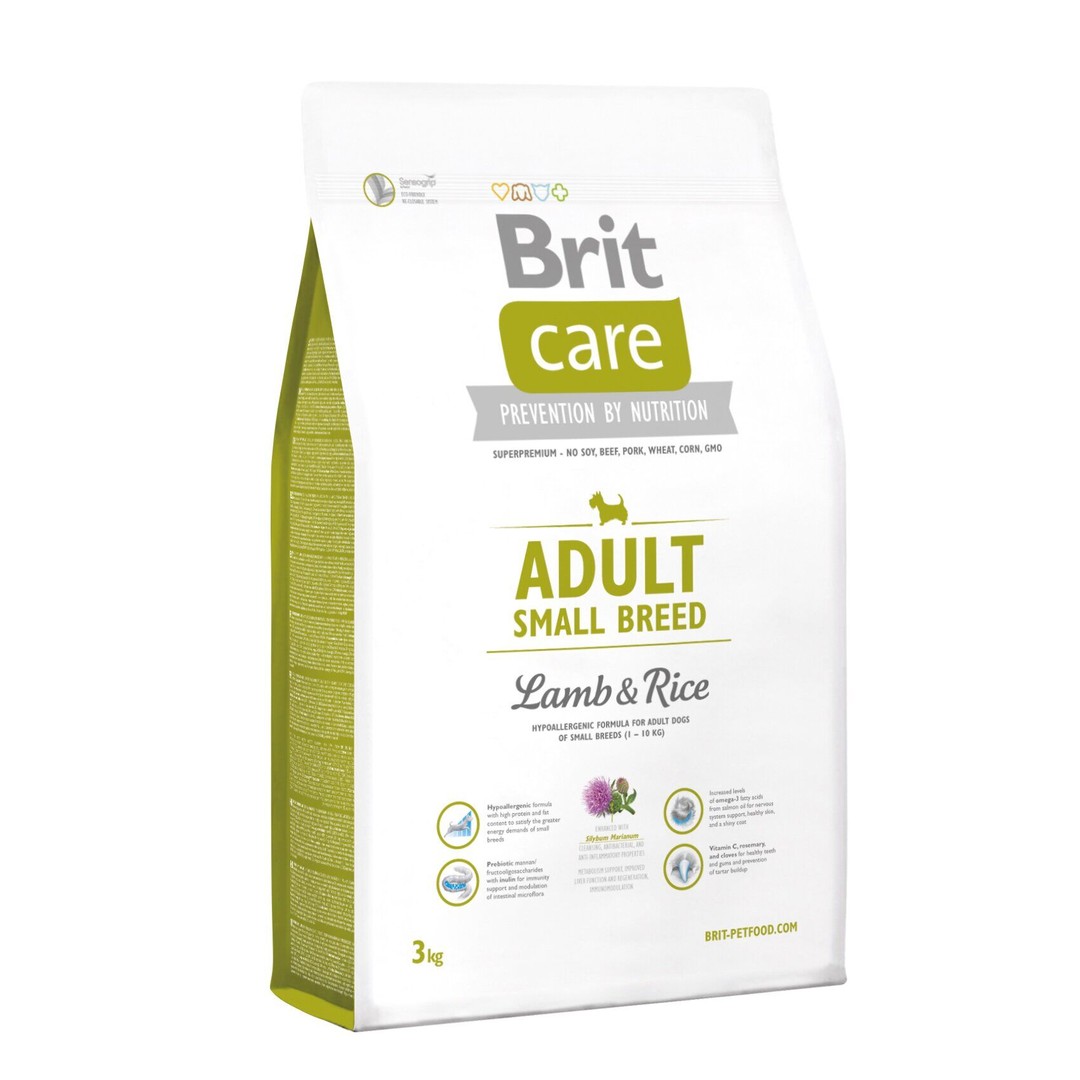
Options are in food for small-breed dogs, for example grain-free Brit Care Mini Adult Lamb, Brit Care Mini Sensitive with venison, or the more affordable Brit Premium Adult S.
How many meals a day
| Age | Meals a day |
|---|---|
| 2–3 months | 4–5 |
| 3–6 months | 3–4 |
| 6–12 months | 3 |
| Adult | 2–3 |
Take the daily amount from the table on the bag by your dog's weight and split it into meals. Weigh food on kitchen scales: for a 2 kg dog, a few extra pieces of kibble make a difference.
Chihuahua puppies: what to watch
Small puppies have almost no energy reserves, and a long gap between meals can make blood sugar drop. Signs include lethargy, trembling, wobbliness and losing interest in play. So feed puppies often and on schedule, and take food with you when travelling. If a puppy is weak and shaking, see a vet. Feeding by age is covered in what to feed a puppy.
What not to give
Chocolate, grapes and raisins, onion and garlic, xylitol, bones, and fatty, salty or sweet food are dangerous for any dog, and for a Chihuahua even a small amount can be a big dose. Don't share food from the table: a piece of sausage is a noticeable share of a 2 kg dog's daily calories. The full list is in what not to feed a dog.
Teeth and weight
Chihuahuas often develop tartar and lose teeth by middle age. Regular brushing, suitably sized chews and a yearly vet check help; see how to brush your dog's and cat's teeth. Watch the weight too: an extra 300–500 g is already obesity for such a small dog. Give treats in small pieces and subtract them from the daily amount.
Water and switching food
A Chihuahua should always have fresh water: small dogs lose fluid quickly, especially in hot weather and on dry food. Use a shallow bowl that's easy to drink from and change the water daily. Switch to a new food gradually over 7–10 days: a quarter new food at first, then half, then three-quarters. A sudden change often causes soft stools or vomiting, and such a small dog dehydrates quickly. If your Chihuahua refuses food for more than a day or has diarrhoea and vomiting, don't wait — see a vet.
Frequently Asked Questions
How many times a day should an adult Chihuahua eat?
2–3 small meals a day.
What's the best food for a Chihuahua?
A complete small- or toy-breed food with meat as the first ingredient.
Can I feed a Chihuahua a home-made diet?
Yes, but plan it with a vet to avoid calcium and vitamin deficiencies.
Why is my Chihuahua puppy trembling?
There are many causes, one being low blood sugar after a long gap between meals. Feed often and see a vet if the puppy is lethargic.
Can I give my Chihuahua treats?
Yes, in small pieces and within the daily calorie allowance.
Does a Chihuahua need wet food?
Not necessarily, but mixing it with dry food adds water to the diet.

