Dog clothes are cut to average patterns, and many breeds do not fit them. A jacket that fits a Dachshund's chest ends in the middle of its back; an overall chosen by back length will not close on a Frenchie's chest. So for "non-standard" breeds the rule is simple: choose the size by measurements, not by the letter or by weight, and look at several numbers at once. Below are the features of popular breeds and what to check on each.
Which measurements to take
The tape should lie against the body, but two fingers should slide under it. Measure the dog standing.
- Chest — around the widest part, right behind the front legs. The key measurement.
- Back length — from the withers to the base of the tail.
- Neck — where the collar sits.
- Waist — in front of the hind legs; important for Italian Greyhounds, sighthounds and overalls.
- Front leg length — from the armpit to the wrist, if you are buying an overall with sleeves.
A detailed measuring diagram is in our article how to choose the right clothing size for a dog. On clothing pages in our catalogue there is a size chart of all the model's sizes under the size selector, so you can compare your numbers with several sizes at once.
Dachshund: long back and low clearance
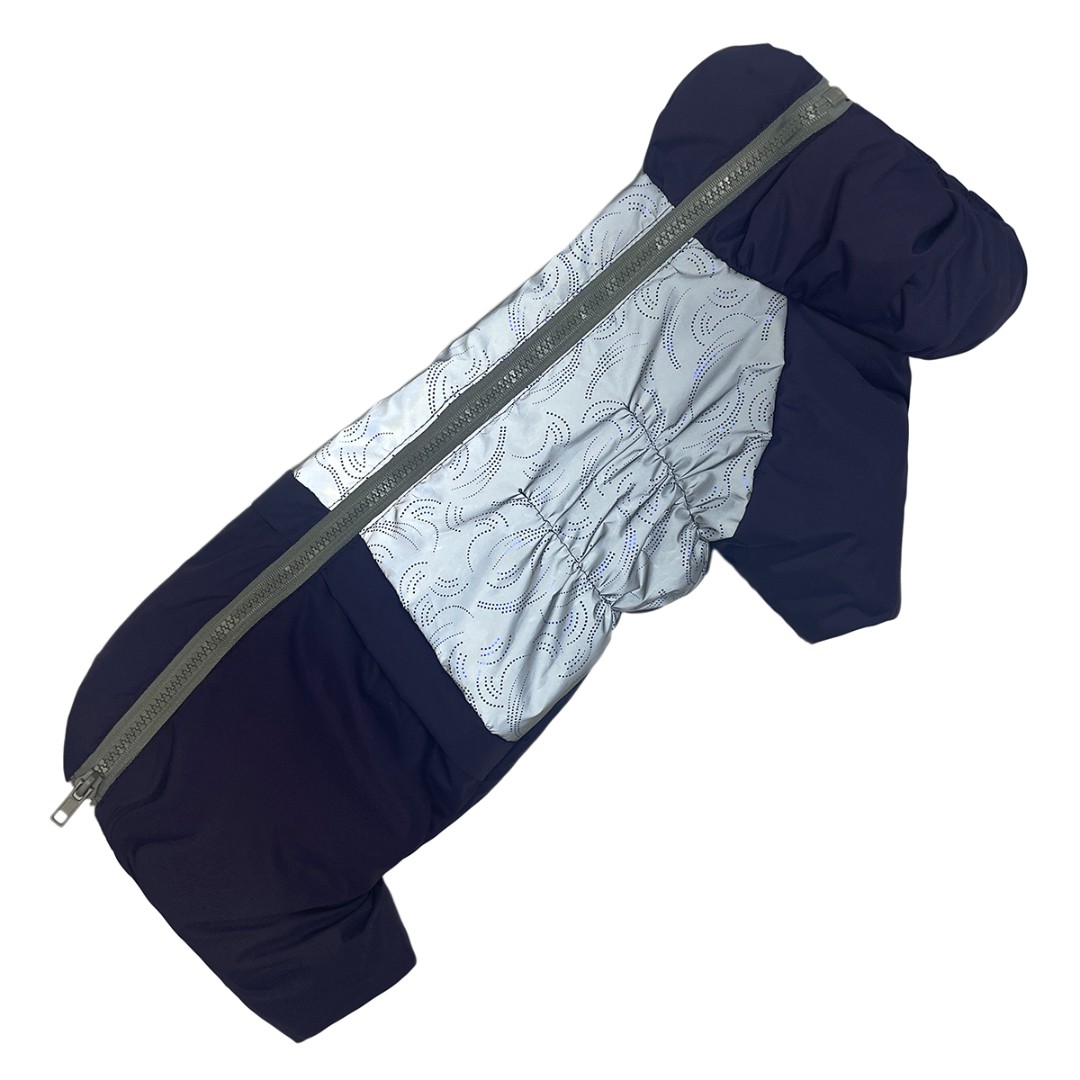
A Dachshund has a long body, short legs and a deep chest, and its belly almost touches the ground. Ordinary clothes chosen by chest turn out short, and those chosen by back length are too wide and hang loose. Look for models cut specifically for Dachshunds, with a longer back and a moderate chest, such as the Dogs Bomba Taksa Reflective overall; we looked at this cut in detail in our review of the Dogs Bomba Taksa Sport overall. Belly protection matters for a Dachshund: in slush and snow the belly gets wet first, so an overall or a jacket with a covered belly is more useful than a vest. Make sure the garment does not press on the back or stop the dog from jumping down from low heights — the breed's spine is vulnerable.
French Bulldog and Pug: wide chest and short back
Brachycephalic breeds have a powerful wide chest, a short back and a thick short neck. A garment chosen by back length will not close on the chest, while one chosen by chest is too long and bunches up. Choose the size by chest girth and make sure the garment does not cover the base of the tail. Some makers' size charts include sizes with a wider chest and a shorter back — you can see it by comparing neighbouring rows of the chart.
The second rule for Frenchies and Pugs is not to overheat them. They shed heat poorly, so for an active walk a light raincoat or an unpadded jacket is better, and a padded overall is for frost and a calm pace. The collar must not press on the throat: check that two fingers fit under it.
Chihuahua, Toy Terrier, Yorkie: small and easily chilled
Tiny dogs lose heat quickly, so they need clothes more often than large dogs. Their sizes are the smallest, and a 2–3 cm error is already noticeable, so measure especially carefully. Models with hook-and-loop or snaps along the back are easier: thin legs are easy to twist if you force a garment on. For a fluffy Yorkie add 1–2 cm to the chest girth.
Italian Greyhound, Whippet and sighthounds: deep chest and narrow waist
Sighthounds have a very deep chest, a slim waist and a long neck, with a short coat, so they get cold. Clothes chosen by chest hang loose at the waist, and those chosen by waist will not go over the chest. Look for models with an adjustable belt or elastic at the waist and a high collar that covers the neck.
How to check the fit
- Two fingers fit under the garment at the chest and neck.
- The dog walks, sits and lies down freely; the garment does not pull in the armpits.
- The back ends at the base of the tail.
- On an overall for a male dog the belly opening does not get in the way when he relieves himself: some makers sew separate models for boys and girls.
- The garment does not slide to one side when walking — if it does, the size is too big or the cut does not suit this build.
If your dog is between sizes
Look at chest girth: if it falls into both sizes, choose the larger one and take up the length with a belt or elastic, if there is one. For fluffy dogs and lined garments also choose the larger size. If no size of the model fits, choose a different cut: stretchy knitwear and adjustable jackets fit unusual builds better than dense overalls.
FAQ
Can I choose the size by my dog's weight?
No. Two dogs of the same weight can differ by 10 cm in chest girth. Weight is only a rough guide; measurements decide.
Does a Dachshund need an overall, or is a jacket enough?
In slush and snow an overall or a jacket with a covered belly is better: a Dachshund is low to the ground and its belly gets wet first. In dry, cool weather a jacket or vest is enough.
Why does the overall not close on my Frenchie although the length fits?
A French Bulldog's chest is wider than standard for its back length. Choose by chest girth, not by length.
Is a Pug too hot in a winter overall?
It can be during an active walk. Watch the breathing: if the Pug pants with its mouth open, take off the padded garment or switch to a light one.
How often should I re-measure a puppy?
Every 2–3 weeks while it is growing. Clothes bought "to grow into" slip and restrict movement.
What if two sizes fit according to the chart?
Go by chest girth and choose the larger size, especially for a fluffy dog and warm clothing.
Where can I see a model's size chart?
On the product page in our catalogue — under the size selector, in the "Size chart & how to measure" block.
Find warm clothes in our overalls, jackets and dog raincoats sections, and read about which dogs need clothes in winter in our article dog clothes for autumn and winter.