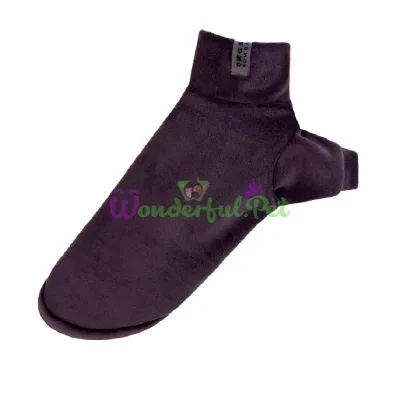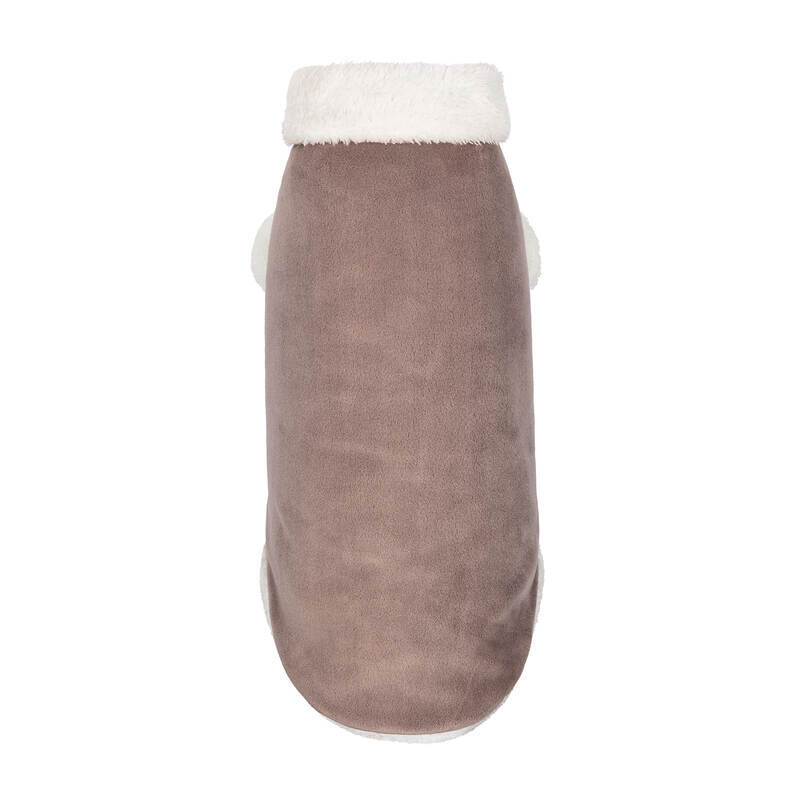
Most cats do not need clothes: fur keeps them warmer than any sweater, and an unfamiliar garment causes stress. But there are cases where clothing really helps — hairless breeds, elderly and thin cats, and cats after surgery or a shave. Then the size is what matters most: a tight garment presses and rubs, a loose one slips and gets in the way. Below is who needs what, how to measure a cat and how to get it used to a new garment.
Which cats really need clothes
- Hairless breeds — Canadian and Donskoy Sphynx, Peterbald. They have no coat, get cold faster in draughts and cool flats, and their thin skin dries out easily.
- Elderly and thin cats with little body fat and weaker temperature control.
- Cats after surgery — a recovery suit keeps the cat from licking the wound. Whether it can replace a protective cone is the vet's decision.
- Cats after a shave — for the first days, if the home is cool.
- Weakened animals — on a vet's advice.
If the cat is healthy, has a normal coat and the home is warm, clothes are not needed. Do not keep garments on for long "for the looks": a cat cannot tell you it is too hot or uncomfortable.
Types of cat clothing
- Cotton T-shirts and bodysuits — for Sphynx cats at home: they protect the skin from draughts and sun.
- Sweaters and knitted tops — a warm option for the heating season, such as the Pet Fashion TOM sweater or the Dogs Bomba Lilac sweater.
- Fleece vests — light, do not restrict movement, easy to put on.
- Recovery suits — cover the belly and the wound, tied or fastened on the back.
- Vest harness — this is walking gear rather than clothing; see our article on cat harnesses for how to choose one.
How to measure a cat
You need a soft tailor's tape. Measure a calm cat, ideally standing or sitting while you stroke it; if the cat gets nervous, take the measurements over several attempts. The tape should lie against the body without squeezing: you should be able to slide one finger under it.
- Neck — where a collar would sit, at the base of the neck.
- Chest — around the widest part of the rib cage, right behind the front legs. This is the key measurement: the size is chosen by it.
- Back length — from the withers (the point between the shoulder blades at the base of the neck) to the base of the tail.
Write down all three numbers. If the cat is fluffy or a warm sweater will go over a T-shirt, add 1–2 cm to the chest girth.
How to choose the size from a chart
Every maker has its own size chart, so S, M and L mean nothing without measurements. Compare your cat's chest girth with the chart: it should fall within the size range. If the cat is between two sizes, stretchy knitwear can be one size smaller, while dense garments should be one size larger. Back length tells you whether the garment will cover the base of the tail or end in the middle of the back. On clothing pages in our catalogue the size chart opens right under the size selector, together with a measuring diagram.
Many cats fit small dog clothes in sizes XS–S: go by the measurements only, not by who the garment is for. Check the tail opening and the sleeve length: a cat's legs are shorter than a dog's with the same chest girth.
What to look for when choosing
- Material — cotton, soft knit, fleece. Scratchy wool and smelly synthetics irritate the skin.
- Seams — flat, without rough stitching in the armpits.
- Fastening — hook-and-loop or snaps on the back are easier than pulling the garment over the head.
- No small parts — a cat can chew off and swallow buttons, pompoms and beads.
- Free belly and tail area — the garment must not get in the way of using the litter box.
How to get a cat used to clothes
Put the garment next to the cat's resting place so it picks up the smell of home. The first time, put it on for a minute, praise the cat and give a treat, then gradually increase the time. Many cats freeze or flop onto their side at first — a reaction to the unfamiliar pressure of the fabric that passes if you do not rush. Do not leave the cat unsupervised in a new garment until you are sure it walks, eats and uses the litter box freely.
Signs the clothes do not fit
- Redness or chafing in the armpits, on the neck or the belly.
- The cat spends hours trying to take the garment off and has stopped jumping and playing.
- Fast breathing or overheating — take the garment off at once.
- The garment slides to one side or bunches up on the back — the size is too big.
Wash the clothes regularly with a mild, fragrance-free detergent: sebum and sweat build up on hairless skin.
FAQ
Does a Sphynx need clothes all year round?
No. In summer and in a warm flat a warm bed is enough. Clothes are useful in draughts, in a cool flat during the heating season and to protect the skin from the sun.
Can a cat wear dog clothes?
Yes, if they fit the measurements: chest, neck and back length. Check the tail opening and make sure the garment does not get in the way of the litter box.
How long can a cat wear clothes?
A Sphynx in a cool flat can wear a cotton garment all day, but take it off at night and to check the skin. Other cats should wear clothes only when really needed.
After spaying, a recovery suit or a cone?
That is up to the vet who did the surgery. A suit is more comfortable for the cat but does not always protect the wound as reliably as a cone.
What size should I get for a kitten?
Kittens grow fast, so buy for the current measurements and re-measure every 2–3 weeks. Clothes bought "to grow into" slip and get in the way of play.
Why does my cat lie down and not move in clothes?
It is a common first reaction to the pressure of fabric. Take the garment off and try again later for a minute, with a treat. If nothing changes after several attempts, clothes are not for this cat.
How often should cat clothes be washed?
Garments worn by a Sphynx — every few days. Others — after each period of wear and whenever dirty.
Find clothes, harnesses and everything for cats in our "For cats" and "Equipment for cats" sections. Not sure about the size? Message us and we will help based on your measurements.