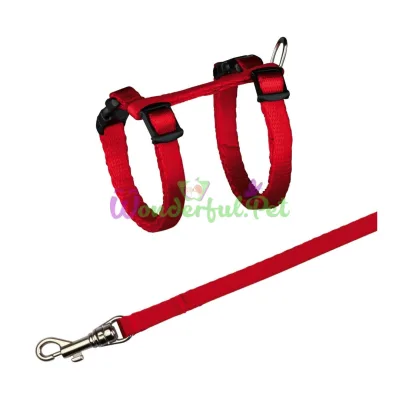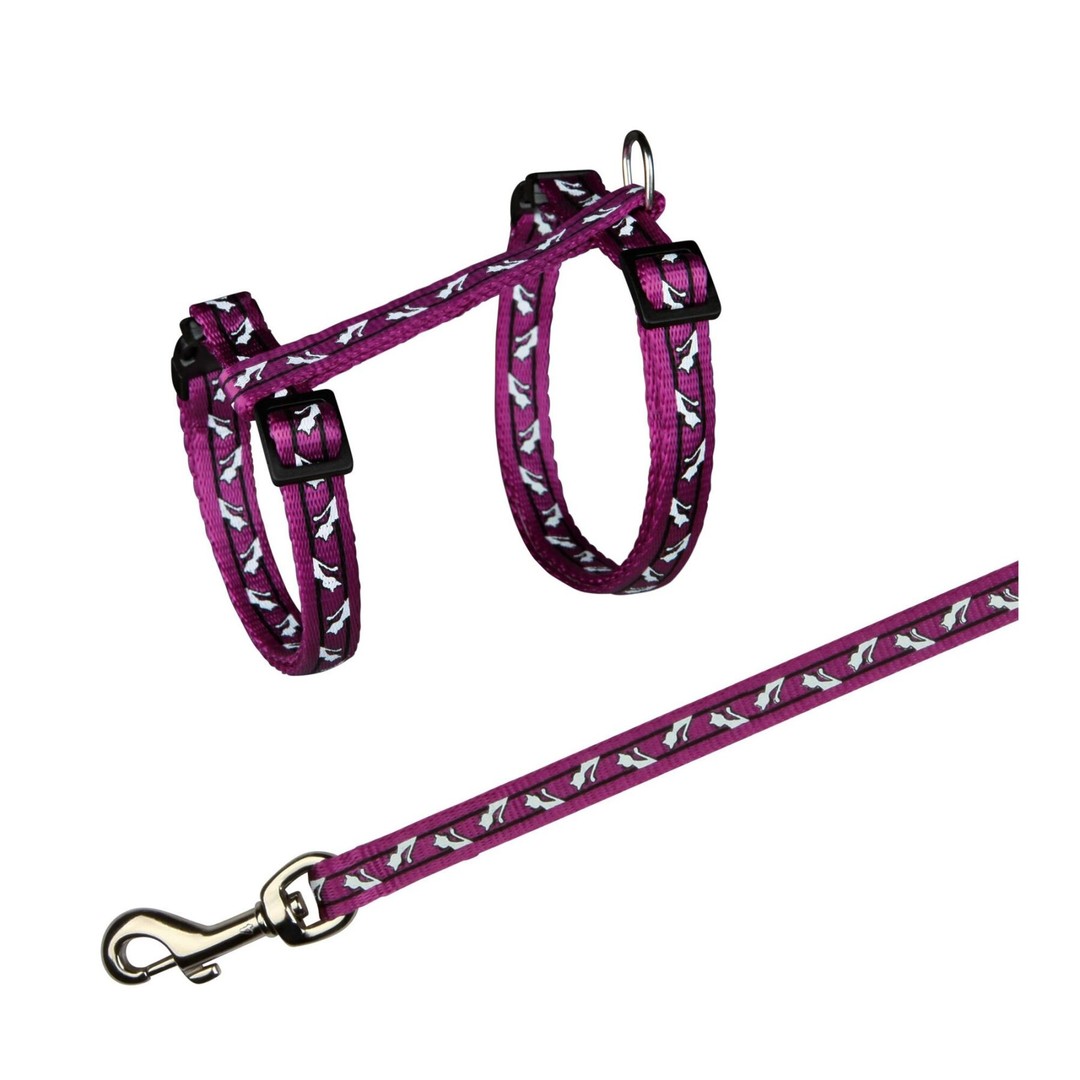
To walk a cat you need a harness, not a collar: a cat can easily twist out of a collar, and a sudden pull puts pressure on its throat. A classic H-shaped strap harness is fine to start with, while a vest harness is more secure for nervous, wriggly cats. Choose the size by chest girth so that two fingers fit under the harness. Introduce it gradually: first at home, a few minutes at a time with treats, and only then go out into a quiet yard once your cat is vaccinated and treated for parasites.
Why a cat needs a harness
- safe walks in the yard, at a country house or in a park;
- trips to the vet, a pet sitter, moving house or evacuation — you can keep your cat on a leash when you open the carrier;
- exercise and new experiences for cats that live indoors only.
Not every cat enjoys walks, and that's fine: there's no need to force it. But even a homebody benefits from getting used to a harness for travel.
Types of cat harnesses
| Type | Pros | Who it suits |
|---|---|---|
| Classic H-shaped | Light, covers little of the body, inexpensive | Calm cats, first introductions |
| Figure-eight | Simple design | Only calm cats: easier to slip out of |
| Vest | Spreads pressure, harder to wriggle out of | Nervous, wriggly cats, first walks outdoors |
It's convenient to buy a harness and leash as a set so they match in weight and clip size. For example, the Pushistiki harness and leash set, the Trixie nylon harness or the Trixie harness with cat print.
How to choose the size
- Measure the chest girth just behind the front legs.
- For adjustable harnesses choose a model where your cat's size is in the middle of the range.
- Put it on and check: two fingers should fit under the straps — no more. If it's looser the cat will slip out; if tighter it will rub.
- Gently try pulling the harness forward over the head: it should not come off.
The leash
Choose a light leash 1.2–2 metres long with a small clip. A heavy leash drags the harness down and frightens the cat. Retractable leashes aren't ideal for cats: a cat may suddenly bolt sideways, and the constant tension makes it nervous.
How to train your cat to a harness, step by step
- Introduction. Leave the harness next to the food bowl or bed for a couple of days so it smells of home.
- First fitting. Drape the harness over your cat without fastening it, give a treat and take it off. Repeat several times.
- Fastening. Fasten the harness for 1–2 minutes and distract your cat with play or treats. Many cats flop onto their side or crawl at first — that's normal, just wait.
- Walking indoors. Gradually increase the time to 15–20 minutes, then attach the leash and follow your cat around the flat without pulling.
- First walk outside. Choose a quiet place without dogs or cars: a yard, the garden of a private house, a country house. Carry your cat there in a carrier and open it on the spot — let your cat decide when to come out.
Getting used to a harness usually takes from a few days to a couple of weeks. Don't rush, and end every session on a positive note.
Safety on walks
- Before the first walks, vaccinate your cat and treat it for fleas and ticks — products are in the parasite control section.
- Never tie your cat up or leave it on a leash unattended.
- If you see a dog, pick your cat up or put it in the carrier.
- Avoid noisy places, roadsides and fireworks.
- Attach an ID tag with your phone number to the harness in case your cat breaks free.
- Take the carrier with you: your cat can hide in it if scared. See the cat bags and carriers section.
Harnesses, leashes and walking gear for cats are in the cat walking gear section. Nova Poshta delivery across Ukraine.
Frequently Asked Questions
Can I walk my cat on a collar?
Better not: cats slip out of collars easily, and a sudden pull presses on the throat. Use a harness for walks.
Why does my cat lie down and freeze in a harness?
It's a common first reaction to an unfamiliar feeling. Give your cat time and distract it with treats and play — after a few sessions it will start walking.
At what age can a kitten be harness-trained?
At home from 3–4 months, once the kitten has been vaccinated. Kittens get used to it faster than adult cats.
Does a cat that never goes out need a harness?
Yes, it's useful: a harness helps you hold on to your cat during travel, at the vet's or during an evacuation when you need to open the carrier.