A harness for a small pet is not a must-have but a way to let it out on the grass safely under supervision. For that it has to fit precisely: a ferret slips out of a loose harness in a second, and a rabbit in a tight one panics and can get hurt. Here is which small pets suit walks, how to take measurements and which type of harness to choose.
Which pets suit harness walks
- Ferret — curious and active; many ferrets enjoy walks. The main difficulty is the flexible body: a ferret gets out of a loose harness instantly.
- Pet rabbit — can walk in a quiet place on safe grass. But rabbits are easily frightened, and for some of them walks bring only stress; then a pen or a run in the garden is better.
- Guinea pig — harness walks are not recommended: it has a fragile back, it does not walk beside a person like a dog, and a leash and open space frighten it badly. In summer it is better to let a guinea pig into a fenced run on clean grass under supervision.
- Rats and hamsters — do not need harnesses: they are too small and fragile.
Before the first walks, take your pet to the vet: a rabbit needs the vaccinations your vet recommends, a ferret needs a distemper vaccination, and both need parasite treatment.
Types of harnesses
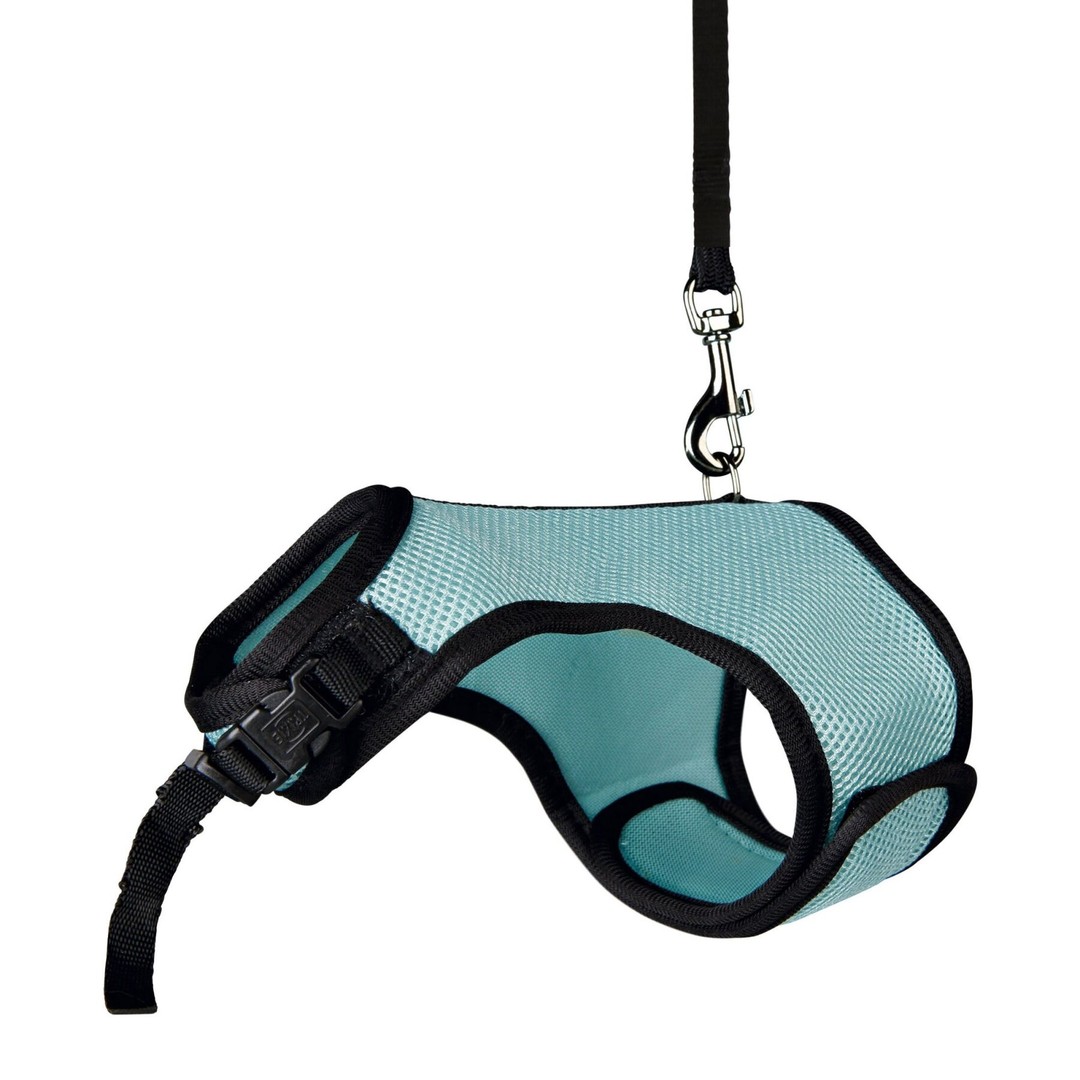
- Vest harness made of soft mesh — spreads the pressure over the chest and back and suits rabbits. Example: the Trixie Soft rabbit harness with leash; a similar model is covered in our review of the CROCI Parure Small Pet harness.
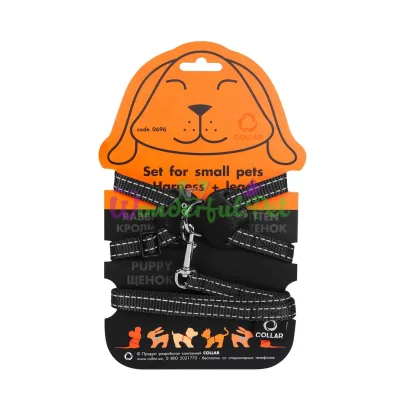
- H-harness — two loops (neck and chest) joined by a strap along the back. The classic choice for ferrets: it sits snugly on a flexible body and is adjustable.
- Nylon strap harness — light, adjustable by chest girth, such as the Dog Extreme rabbit harness.
Use a light leash of 1.2–1.5 m. Retractable leashes are heavy for small pets and jerk when they rewind — an ordinary leash is better.
How to take measurements
You need a soft tape. Measure a calm pet, ideally with two people: one holds and strokes, the other measures.
- Neck — at the base of the neck, where the harness loop goes.
- Chest — right behind the front legs, around the widest part. The size is chosen by this.
- Back length — from the base of the neck to the middle of the back, for a vest harness: it shows whether it will press on the lower back.
For small animals the rule differs from dogs: one finger should fit under the harness, not two. A rabbit's coat is thick — press the tape lightly, or the result will be 1–2 cm more than the real size. Measure a ferret more snugly: the harness must not come off over the head even if the ferret backs out.
How to choose the size
Compare the chest girth with the range on the harness: it is best when your measurement is in the middle of the range rather than at the edge, so there is room for adjustment. If your pet is between sizes, choose the larger one for a rabbit and tighten it, and the smaller one for a ferret if it fastens freely: a ferret will escape from a large harness. After the first fitting, wait 5–10 minutes and check the fit again: the pet calms down and relaxes, and the harness may loosen.
How to get your pet used to a harness
Start at home. Leave the harness next to the pet's house for a couple of days, then put it on for a minute and give a favourite treat. Increase the time gradually, and attach the leash only when the pet walks around the room calmly in the harness. Do not pull the leash: you follow the pet, not the other way round. Never lift a rabbit or a ferret by the harness and never tie the leash, even for a minute.
Rules for a safe walk
- Place — quiet, away from dogs, roads and chemically treated grass.
- Weather — rabbits and ferrets tolerate heat poorly: walk in the morning or evening, in the shade, with water. In cold and rain it is better to stay home.
- Time — 10–20 minutes to start, then longer if your pet enjoys it.
- Signs of stress — a rabbit freezes, flattens itself or thumps its hind legs, a ferret tries to twist out of the harness. Go home.
Do small pets need clothes
No. Rabbits, ferrets and guinea pigs do not need clothes, and clothing interferes with their temperature control: they overheat faster than they get cold. Even a hairless guinea pig needs not a sweater but a warm, draught-free room, soft bedding and a hideout. Small pets are not walked in cold weather.
FAQ
Can a ferret wear a cat harness?
Yes, if it fits the neck and chest girth and adjusts so that the ferret cannot climb out. More often an H-harness for ferrets or small animals is more convenient.
How long should a rabbit walk?
Harness walks are optional. If your rabbit enjoys them, 15–30 minutes in a quiet place at a cool time of day is enough. What it needs daily is not outdoor walks but free movement at home or in a run.
Why did my rabbit freeze and stop moving on a walk?
It is a sign of fear. Pick the rabbit up, supporting it under the chest and hind legs, and go home. Try again later in a quieter place or give up the walks.
How do I know the harness is too small?
A finger does not fit under it, it leaves marks on the skin, the pet breathes heavily or cannot walk freely. Loosen it or choose a larger size.
Can I walk a guinea pig on a leash?
It is not recommended: a guinea pig has a fragile back and the leash frightens it. A fenced run on clean grass in warm weather, under supervision, is better.
At what age can a ferret go outside?
After the vaccinations your vet prescribes, and once the ferret walks calmly in a harness at home.
How do I care for the harness?
Wash it in warm water with a mild detergent and check the buckles before every walk: a frayed strap or a cracked clip must be replaced at once.
Find harnesses, leashes, houses and everything for small pets in our "For ferrets and rodents" and "Accessories for ferrets and rodents" sections. Not sure about the size? Message us and we will help.