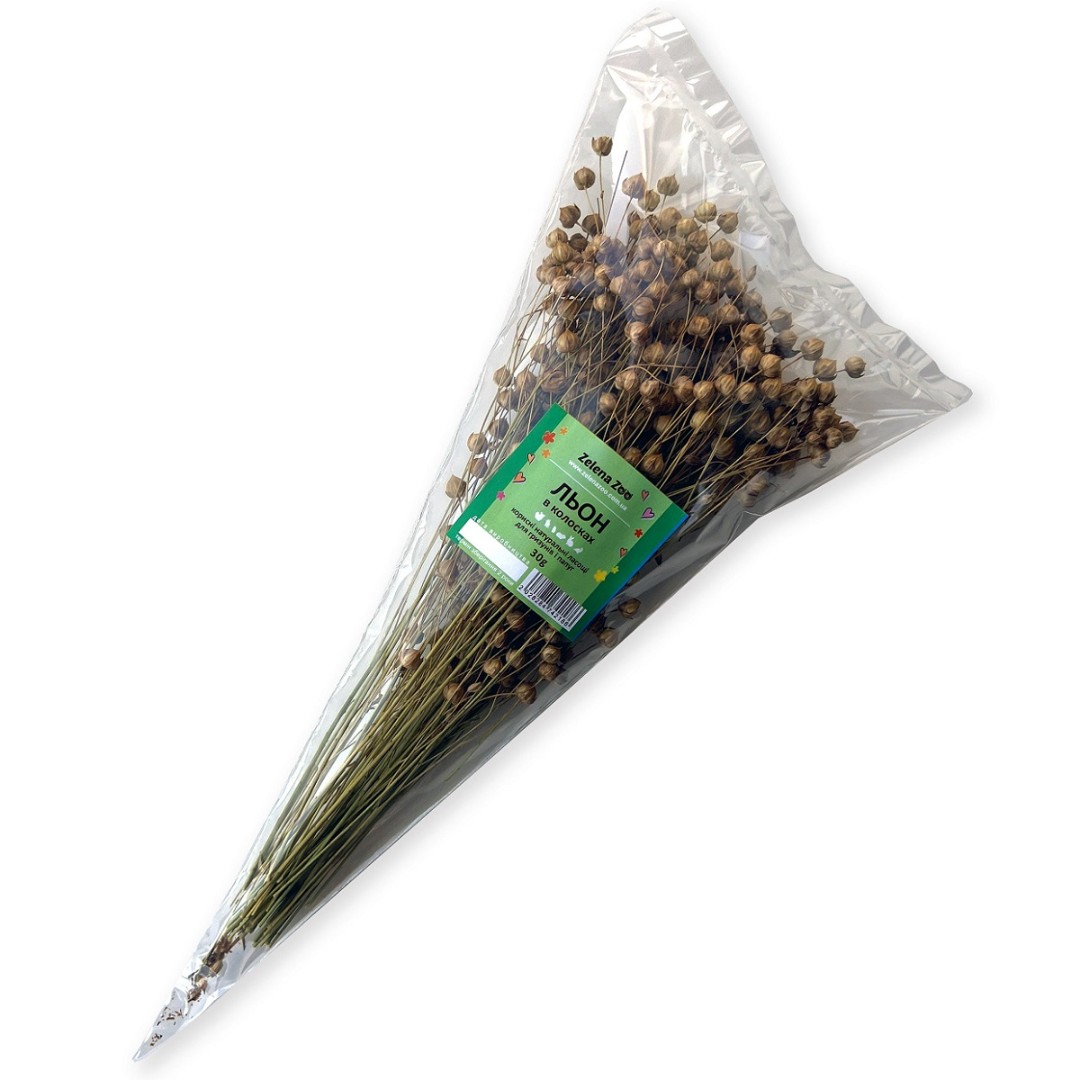
ZelenaZoo Flax on the Stalk, 30 g is a supplement for rodents and birds made of 100% flaxseed. According to the manufacturer, it contains up to 40% easily digestible omega-3 and omega-6 fatty acids, supports healthy skin, coat and feathers, and the fibre in flax aids digestion. The flax comes on the stalk, so your pet has to extract the seeds itself, turning feeding into an activity. It's given alongside the main diet, not instead of it.
Why flax is good
Omega-3 and omega-6 are essential fatty acids: the body can't make them and gets them only from food. They're involved in skin renewal, affect coat shine and feather quality, and support the immune and cardiovascular systems. According to the manufacturer, the fibre in flax aids digestion and regulates metabolism. The supplement is especially useful for birds during moulting and for rodents with a dull, brittle coat.
Key specs
| Parameter | Value |
|---|---|
| Ingredients | flaxseed 100% |
| Fatty acids | up to 40%, omega-3 and omega-6 |
| Form | on the stalk |
| Rodents | up to 2–3 teaspoons a day |
| Birds | up to 1 tablespoon per 1 kg of food |
| Weight | 30 g |
| Brand | ZelenaZoo |
Pros
- A single ingredient. Flaxseed only.
- A source of omega-3 and omega-6. For skin, coat and feathers.
- On the stalk. Your pet extracts the seeds itself — an activity.
- For rodents and birds. One pack for different pets.
- Clear dosage. Given separately for rodents and birds.
- Affordable. An inexpensive way to vary the diet.
Cons
- Very high in fat. Too much risks weight gain and digestive upset.
- "Up to" is a ceiling. For a hamster or mouse, 2–3 teaspoons a day is a lot — start with a pinch.
- Not for frequent feeding to herbivores. Chinchillas and guinea pigs only occasionally and sparingly.
- A small pack. 30 g is more of a trial size.
How to feed it
Rodents: give flax as a supplement to the main diet. The manufacturer gives an upper limit of up to 2–3 teaspoons a day; for small animals it's sensible to start with one stalk or a pinch of seeds and watch the response. Birds: add up to 1 tablespoon per 1 kg of food, mixing it into their main seed mix. Introduce it gradually, especially if your pet hasn't had fatty seeds before. Remove uneaten stalks after a day so they don't get damp in the cage.
When it's especially useful
Birds need more fatty acids during moulting, when new feathers are growing. In rodents, flax can help with dry skin and a dull coat if a vet hasn't found another cause. The stalks also work well as enrichment: a bird or hamster husks the seeds rather than just eating from a bowl. If feathers fall out in clumps or there are sores and scabs on the skin, that's a reason to see a vet, not just change the diet.
Which pets and how much
Hamsters, rats, mice and gerbils, which eat seeds in the wild, are the best fit for flax — but in moderation, as they gain weight easily. More on hamster diets in hamsters: care and feeding. Chinchillas get fatty seeds only rarely, as their diet is based on hay and pellets — see chinchillas: care and feeding. For budgies, canaries and lovebirds, flax is added to the seed mix — feeding tips in budgies: food and care.
Flax and other treats
Flax is a source of fat, while flower mixes and hay are sources of fibre, so it's handy to alternate them. For herbivores, ZelenaZoo Field Flower Mix is a better fit: it has no fatty seeds or sugar. For canaries, the diet is based on a complete seed mix such as Versele-Laga Prestige Canaries, with flax only as an addition.
Who it suits
Owners of hamsters, rats and mice, as well as budgies, canaries and other small birds, who want to add a natural source of omega-3 and omega-6 to the diet. More treats are in the bird treats and vitamins and vitamins and treats for rodents sections.
Verdict
ZelenaZoo Flax on the Stalk is a simple single-ingredient flaxseed supplement that gives rodents and birds omega-3 and omega-6 and keeps them busy husking the seeds. Good during moulting and for supporting coat and feathers. The key is to remember that flax is very fatty: give it sparingly and don't treat the upper dosage as a requirement.
FAQ
What's in it?
Flaxseed only (100%).
How much for rodents?
The manufacturer says up to 2–3 teaspoons a day; small animals need much less.
How much for birds?
Up to 1 tablespoon per 1 kg of food.
Can chinchillas have it?
Occasionally and only a little: chinchillas get fatty seeds in limited amounts.
What are the benefits of flax?
It's a source of omega-3 and omega-6 for skin, coat and feathers.
Can it be given daily?
Yes, but in small amounts and as a supplement to the main diet.
Will it help a moulting parrot?
Fatty acids support feather growth; if moulting is heavy, take the bird to a vet.
How much is in the pack?
30 g.