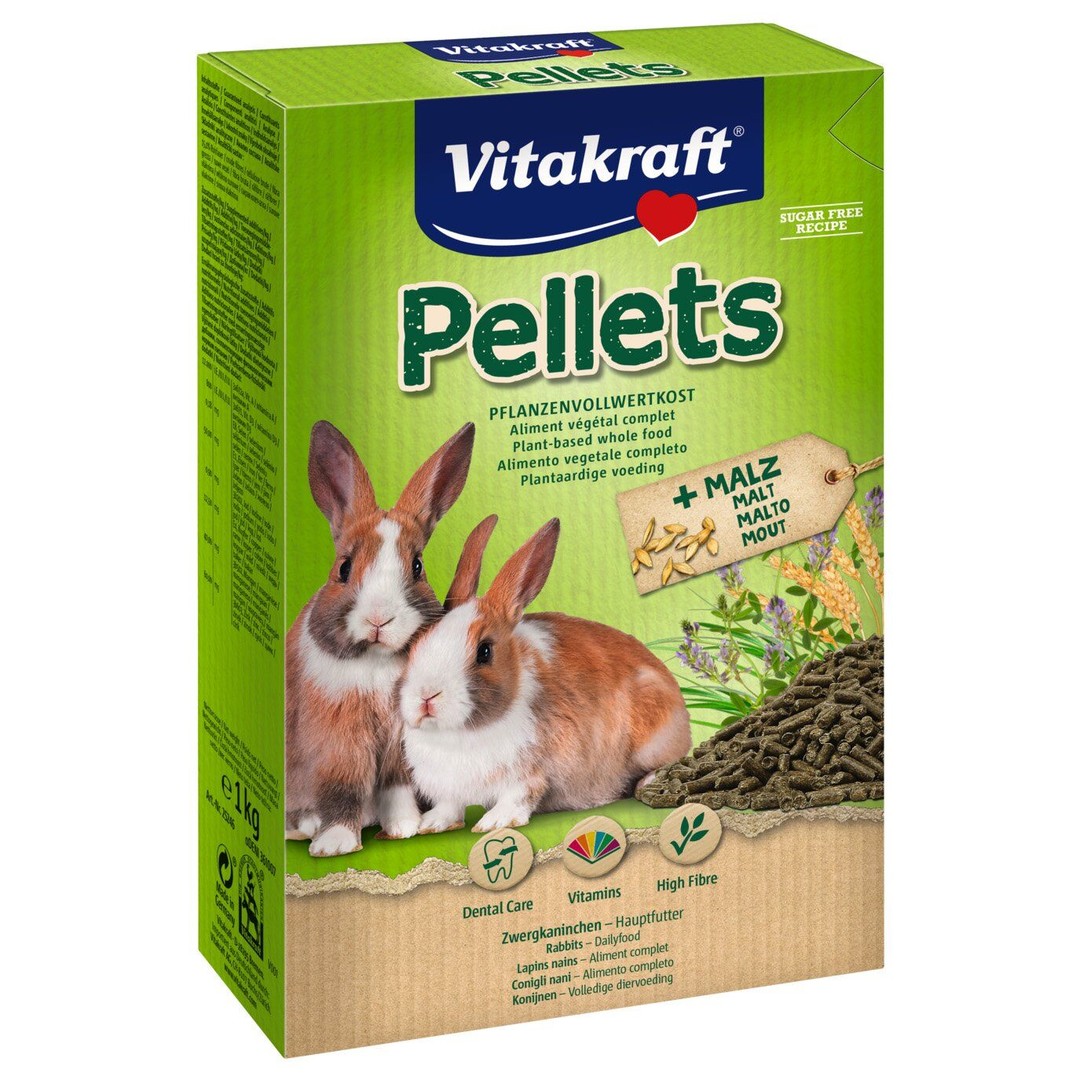
Vitakraft Pellets, 1 kg is a pelleted food for pet rabbits from the German brand Vitakraft. The pellets contain alfalfa (40%), a rich source of fibre for digestion, and malt (5%), and every pellet is enriched with vitamins and minerals. The manufacturer stresses that it suits fussy rabbits: they can't pick out individual ingredients, so they get everything they need. It's free of artificial flavourings, colourings and preservatives. The daily amount is 50–60 g together with hay.
Why pellets rather than a mix
From muesli-style mixes, rabbits often eat the tasty grains and flakes and leave the pellets and herbs — making the diet unbalanced, while excess carbohydrate leads to obesity and digestive problems. Uniform pellets rule out this selective feeding. On rabbit diets, see pet rabbit care and feeding.
Key specs
| Parameter | Value |
|---|---|
| Type | pelleted staple food |
| For | pet rabbits |
| Alfalfa | 40% |
| Malt | 5% |
| Cereals | 10% |
| Daily amount | 50–60 g plus hay |
| Weight | 1 kg |
| Brand | Vitakraft, Germany |
Pros
- Uniform pellets. No selective feeding.
- 40% alfalfa. Plenty of fibre.
- Vitamins and minerals. In every pellet.
- No colourings or preservatives.
- A clear daily amount. 50–60 g.
- For fussy rabbits.
Cons
- Alfalfa is high in calcium. Best in moderation for adults.
- Doesn't replace hay. Hay is the core of the diet.
- Ingredients not fully disclosed. Only alfalfa, malt and cereals are listed.
- Contains cereals. 10% of the recipe.
Ingredients and additives
Vegetable derivatives (alfalfa 40%, malt 5%) and cereals 10%. Additives per kg: vitamin A 12,000 IU, vitamin D3 800 IU, selenium 0.2 mg, iron 50 mg, iodine 0.9 mg, copper 12.5 mg, manganese 40 mg, zinc 60 mg. The manufacturer gives calcium at 0.15% and phosphorus at 0.1%. Malt improves taste, while alfalfa supplies fibre and protein.
How much to feed
The manufacturer recommends 50–60 g of pellets a day plus hay. Hay should be available at all times and without limit — it keeps the gut working properly and wears down the teeth. Pellets are a supplement, not the base. If your rabbit gains weight easily or is inactive, reduce the pellets. On hay, see hay for rabbits and guinea pigs.
Alfalfa in the diet
Alfalfa is rich in protein and calcium, so it's given more to young growing and nursing rabbits. For adults, base the diet on meadow hay and timothy and give pellets in the recommended amount. For alfalfa hay as a separate product, see Mij Pukhnastyk, though adult rabbits are better off with it mixed with meadow hay.
Switching foods
Change food gradually over 1–2 weeks, mixing the pellets with the old food. Rabbits have sensitive digestion, and a sudden change can cause bloating and stool problems. If your rabbit stops eating or droppings become soft and sparse, see a vet — it's dangerous.
Storage
Keep the pellets somewhere cool and dry in a closed pack or container so they don't absorb moisture. Offer fresh vegetables and greens in addition, introducing each new food gradually.
Other rabbit foods
For variety-lovers there's Vitakraft Menu Vital for rabbits. All foods are in the food for ferrets and rodents section, and hay is in the hay for rodents collection.
Who it suits
Owners of rabbits that pick only the tasty bits from a mix, and anyone who wants to portion food precisely and manage their rabbit's weight — always with unlimited hay.
Verdict
Vitakraft Pellets is a pelleted rabbit food with 40% alfalfa, malt, vitamins and minerals, free of colourings and preservatives: it prevents selective feeding and is easy to portion at 50–60 g a day plus hay. The downsides are an incompletely disclosed recipe, alfalfa's high calcium, and the fact that pellets can't keep digestion healthy without hay.
FAQ
How much should I feed per day?
50–60 g of pellets plus unlimited hay.
How much alfalfa does it contain?
40%.
Does it contain colourings or preservatives?
No.
Why malt?
For taste — 5% of the recipe.
Can I feed only pellets?
No, hay is the core of the diet.
Is it suitable for fussy rabbits?
Yes, they can't pick out individual ingredients.
How much does the pack weigh?
1 kg.