
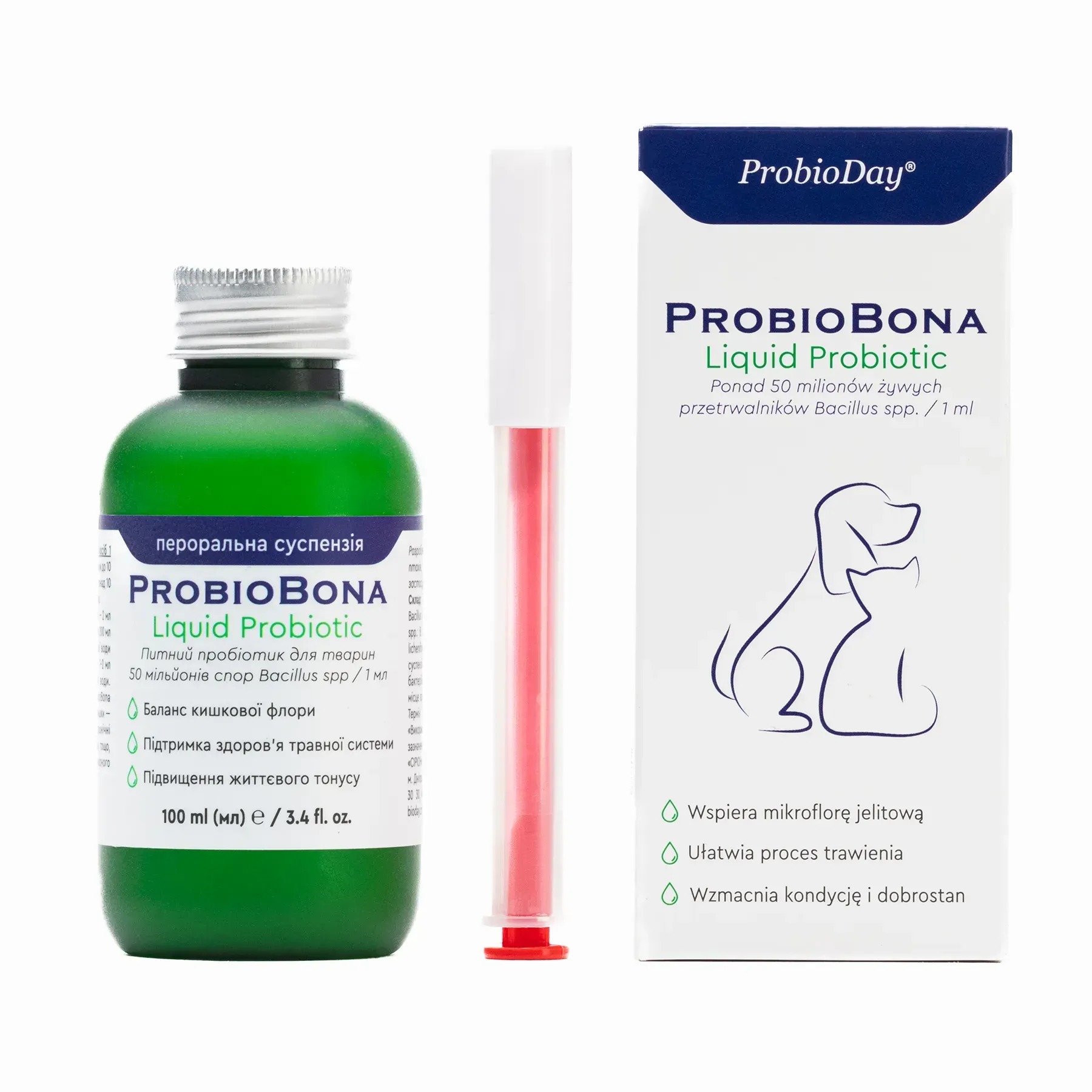
ProbioDay ProbioBona probiotic, 100 ml is a liquid oral probiotic for dogs, cats, rodents and other animals. It contains five Bacillus strains in spore form — Bacillus subtilis, B. amyloliquefaciens, B. licheniformis, B. pumilus and B. megaterium — at 50 million spores per ml. Spores resist stomach acid and activate in the gut. It's used for diarrhoea, bloating, constipation and dysbiosis, during and after antibiotics, after deworming and as part of treatment for intestinal infections. A dosing syringe is included.
What it is and who makes it
ProbioBona is made by the Ukrainian company Sirion under the ProbioDay brand. It has no noticeable smell or taste, so it's easy to give neat or in water. It can be stored at room temperature up to +25 °C, unlike many live probiotics that need refrigeration.
Ingredients
| Ingredient | Amount |
|---|---|
| Spores of Bacillus subtilis, B. amyloliquefaciens, B. licheniformis, B. pumilus, B. megaterium | 50 million spores per ml |
How to give it
| Method | Up to 10 kg | Over 10 kg |
|---|---|---|
| Neat by syringe, once a day | 2 ml | 4 ml |
| In water (per 500 ml, for long-term dysbiosis) | 2 ml | 4 ml |
The neat course lasts 3–5 days. The water method only works if the animal drinks the whole bowl within a day.
Pros
- Spore form. Bacteria pass through the stomach intact.
- Five strains. Different bacilli complement each other.
- No taste or smell. Easy to give even to a fussy cat.
- No fridge needed. Up to +25 °C.
- For all pets. Dogs, cats and rodents; a handy syringe included.
Cons and what to keep in mind
- Doesn't treat the cause of diarrhoea. Infection, worms or poisoning need a vet.
- The water method is imprecise. A pet that drinks little won't get the full dose.
- Short course. For chronic problems, a vet sets the plan.
- Only two weight bands. Doses for very small or very large animals are approximate.
When a probiotic makes sense
A probiotic helps restore gut flora after antibiotics, when changing food, after stress, moving or deworming, and with mild digestive upsets. For acute poisoning, an adsorbent is often used alongside it — see our Presorb review. For chronic GI problems, a vet may prescribe a therapeutic diet such as Brit VD Gastrointestinal.
When a vet is needed
If diarrhoea lasts more than a day, there's blood in the stool, the animal is lethargic, refuses food and water, is vomiting, or is a puppy or kitten, it needs a vet exam. In such cases a probiotic is only part of the treatment. Regular deworming also supports gut health — see worms in cats and dogs.
Probiotics and food changes
Soft stools when switching to a new food are common. A gradual 7–10 day switch and a short probiotic course help the gut adjust. More in how to switch your pet to a new food.
Who it suits
Dogs, cats and rodents with dysbiosis, mild diarrhoea or bloating, during and after antibiotics, after deworming and when changing food. Other products are in the veterinary pharmacy.
Verdict
ProbioBona is a convenient liquid probiotic based on spores of five Bacillus species: tasteless, no fridge needed and simple weight-based dosing. It supports the gut well but doesn't replace treatment for serious upsets.
How spore probiotics differ from regular ones
Many probiotics contain lactobacilli and bifidobacteria, which partly die in stomach acid and need refrigeration. Bacillus spores are protected by a tough coat: they survive acid and bile, then germinate in the gut and get to work — releasing enzymes, helping digest food and suppressing harmful microbes. That makes spore probiotics convenient when travelling and at home without special storage.
Frequently Asked Questions
How much ProbioBona for a cat?
Animals up to 10 kg: 2 ml once a day.
How much for a 20 kg dog?
4 ml once a day.
How long is the course?
3–5 days when given neat.
Can it be given with antibiotics?
Yes, the manufacturer lists use during antibiotic courses.
Does it need refrigeration?
No, it keeps at room temperature up to +25 °C.
Can rodents have it?
Yes, the manufacturer lists rodents among suitable animals.

