
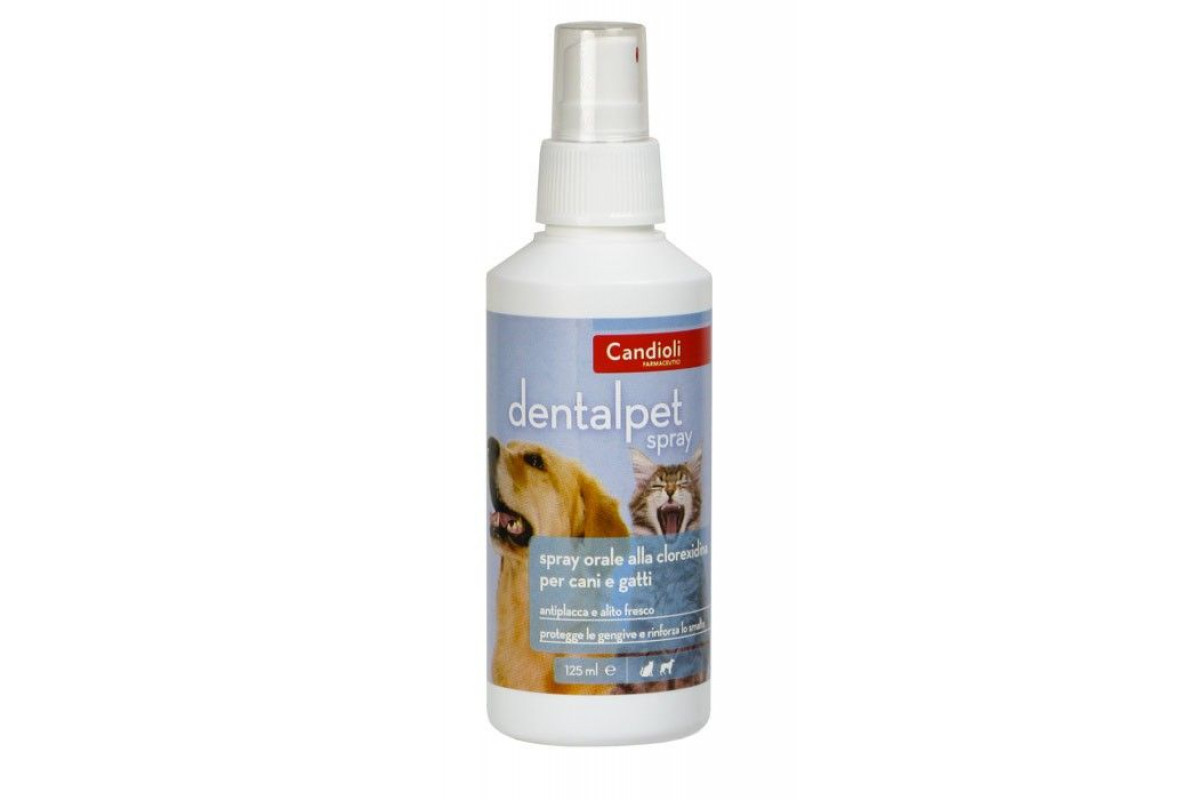
Candioli DentalPet spray is an Italian product for dogs' teeth and gums in a 125 ml bottle. It contains chlorhexidine (an antibacterial that slows plaque build-up), sodium fluoride to strengthen enamel, ginkgo biloba and common mallow extracts to soothe the gums, and the bioflavonoid troxerutin to support gum microcirculation. Spray it on the teeth and gums daily for a 21-day course; no rinsing is needed. The formula is alcohol-free, and the manufacturer states it's safe if swallowed. The spray helps against plaque and bad breath but doesn't remove tartar that has already formed.
What it is and who makes it
Candioli is an Italian pharmaceutical company making veterinary drugs and care products. DentalPet is part of its oral hygiene range. The manufacturer also says the spray suits cats; the product name refers to dogs, for whom it's more commonly used.
Ingredients
| Ingredient | Purpose |
|---|---|
| Chlorhexidine digluconate | Inhibits bacterial growth and plaque build-up |
| Sodium fluoride | Strengthens enamel |
| Ginkgo biloba and common mallow extracts | Soften and soothe the gums |
| Troxerutin | Supports gum microcirculation |
| Peppermint | Freshens breath |
| Propylene glycol, hydrogenated castor oil, imidazolidinyl urea | Base and preservative |
How to use it
- Lift your dog's lip at the side.
- Spray the teeth and gums on both sides of the mouth — one or two sprays per side.
- Keep your dog from eating or drinking for 20–30 minutes so it can work (a general recommendation for oral sprays).
- Repeat daily for a 21-day course. No rinsing needed.
Why oral care matters
Most adult dogs eventually develop plaque, tartar and gum inflammation. It's not just bad breath: inflamed gums hurt, teeth loosen, and bacteria from the mouth can burden the whole body. Small breeds with crowded teeth suffer more often. Daily care — a toothbrush, spray or dental chews — slows plaque formation and postpones a dental clean at the vet.
Pros
- Easy to use. No brush and no long restraint — just a few sprays.
- Antibacterial ingredient. Chlorhexidine slows plaque formation.
- Care for gums and enamel. Plant extracts and sodium fluoride.
- Alcohol-free, no rinsing. Nothing to wash off.
- Fresher breath. Peppermint reduces mouth odour.
Cons and what to keep in mind
- Doesn't remove tartar. Hard tartar is removed only at the vet; the spray helps after cleaning and for prevention.
- Needs consistency. It works with daily use; a one-off spray does little.
- Chlorhexidine taste. Some dogs dislike the taste and the sound of spraying — introduce it gradually.
- Doesn't treat inflammation. Bleeding, red gums and loose teeth mean a trip to the vet.
How to get your dog used to the spray
First just lift the lip and give a treat, then show the bottle and spray into the air away from your dog so it gets used to the sound. Do the first sprays on one side only, praising and rewarding. The best time is after the evening walk and dinner, when your dog is calm.
Who it suits
Dogs that won't accept a toothbrush, small breeds with crowded teeth, and dogs after a professional clean at the vet, to maintain the result. More on oral hygiene in how to brush a dog's and cat's teeth; bad breath is a common cause of dog smell at home — see why does my dog smell. Other products are in eye, ear and skin care.
Verdict
Candioli DentalPet is a convenient spray for daily canine oral care: chlorhexidine against plaque, fluoride for enamel and plant extracts for the gums. It doesn't replace a professional clean when there's tartar, but it helps keep teeth clean and breath fresh between vet visits.
Frequently Asked Questions
Does the spray remove tartar?
No. Tartar is removed at the vet, usually under sedation; the spray slows new plaque formation and helps the result of a clean last longer.
How long should DentalPet be used?
The manufacturer recommends a 21-day course of daily spraying; courses can be repeated.
Does the spray need rinsing off?
No, no rinsing is needed.
Is the spray suitable for puppies?
The description lists no age limits, but for teething puppies it's best to check with your vet.

