Doggy odour usually comes from sebum and bacteria on the skin and coat — and gets stronger when the coat is wet. A strong unpleasant smell is usually linked to one of these causes: ear inflammation, plaque and tartar, full anal glands, skin folds, dermatitis, or a dirty bed or collar. Regular washing with a suitable shampoo and thorough drying, brushing, cleaning ears and teeth, and washing the bed all help. If the smell is strong and appeared suddenly, see a vet.
7 causes of odour
| Source | How to tell | What to do |
|---|---|---|
| Skin and coat | The whole dog smells, more after rain | Washing, drying, brushing |
| Ears | A sour or sweetish smell from the ears, head shaking | Clean with an ear cleaner; if inflamed, see a vet |
| Mouth | Bad breath, yellow plaque on the teeth | Tooth brushing, dental chews, cleaning at the vet |
| Anal glands | A sharp fishy smell, scooting on the floor | Expression by a vet or groomer |
| Skin folds | Smell and redness in face or tail folds | Clean and dry the folds daily |
| Dermatitis, yeast | Greasy coat, itching, dandruff, redness | Diagnosis and a medicated shampoo as prescribed |
| Bed, collar, clothes | The smell stays even after bathing the dog | Regular washing |
How often to bathe a dog
Most dogs need a bath every 3–6 weeks or when dirty. Bathing too often with harsh products dries out the skin, and the sebaceous glands work harder — so the smell gets worse. Use a dog shampoo that suits the coat type and skin, and rinse it out thoroughly. Don't use human shampoo — it has a different pH. How to choose a product and bathe correctly is in dog shampoo: how to choose, and the range is in shampoos and conditioners.
Drying is half the battle
A damp coat and undercoat are ideal for bacteria. After a bath or a walk in the rain, towel your dog and finish with a hair dryer on a warm setting, especially dogs with a thick undercoat. Don't let your dog sleep on a damp bed.
Between baths
- Brush your dog 1–3 times a week: dirt and grease go along with dead hair.
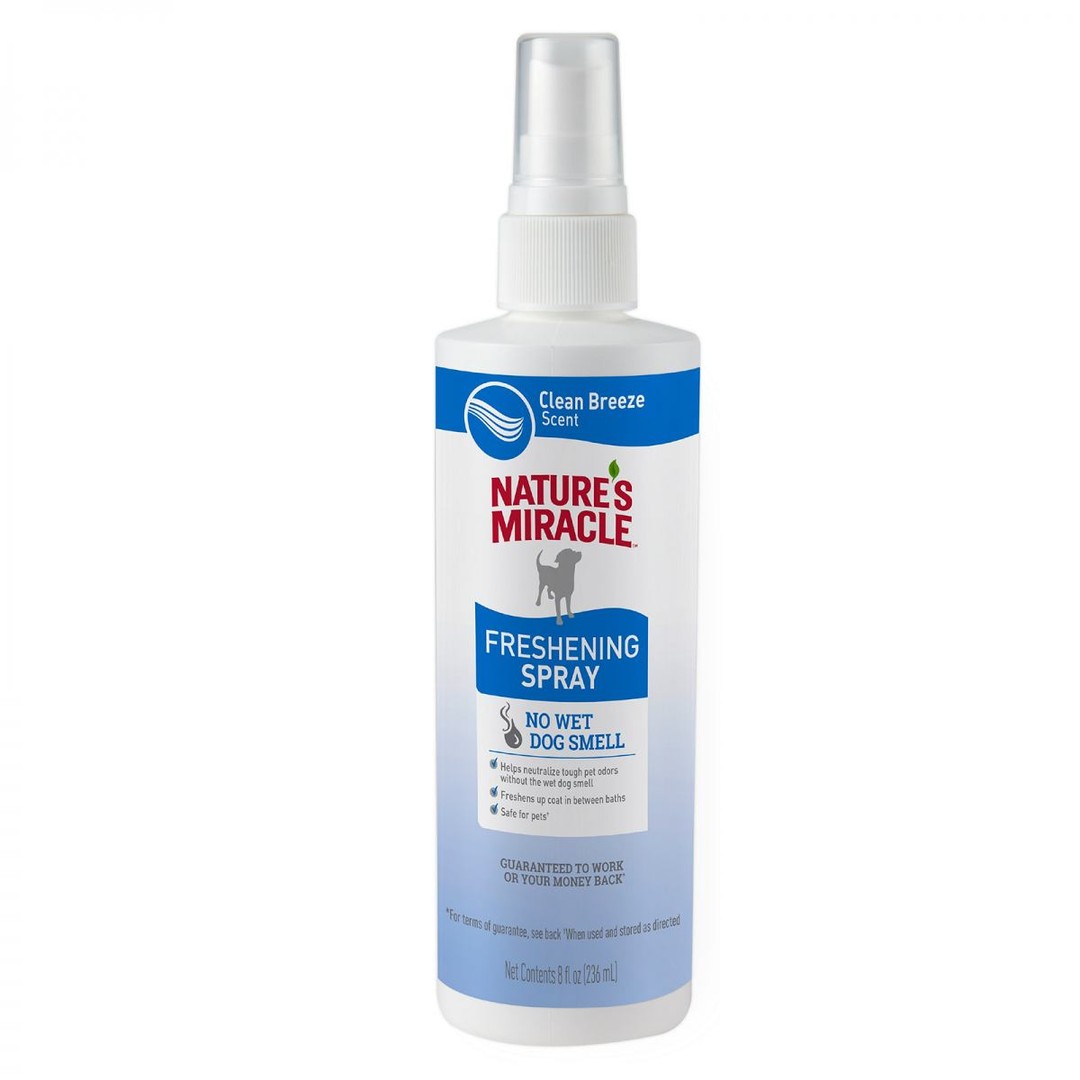
- Use coat-refreshing sprays such as Nature's Miracle: they neutralise odours without a bath. There's also dog perfume in the perfumes and deodorants section. But remember: a spray doesn't remove the cause.
- Wipe paws and belly after walks with pet wipes.
Ears and teeth
Clean the ears every 1–2 weeks with a special cleaner such as Beaphar Ear Cleaner. If the inside of the ear is red, has dark discharge or smells bad, see a vet — it may be otitis. More in how to clean your dog's ears.
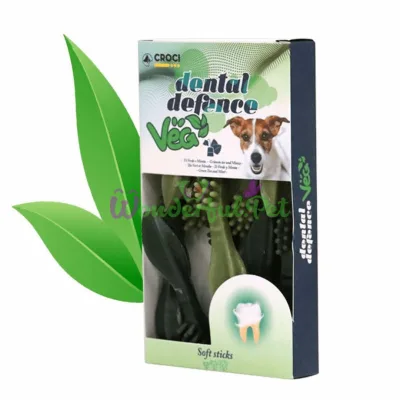
Bad breath is a common cause of dog smell in the home. Brush your dog's teeth with dog toothpaste several times a week and give dental treats, such as Croci Dental-Veg with green tea and mint. How to get your dog used to tooth brushing is in how to brush a dog's teeth. Tartar is removed at the vet.
Diet and weight
Food quality affects odour too: with an unsuitable diet or a food allergy, the skin becomes greasy, itching and dandruff appear, and gas becomes frequent. A balanced food with omega-3 and omega-6 fatty acids improves skin and coat. Overweight dogs have deeper skin folds and find it harder to groom themselves, so losing weight helps.
A home without dog smell
- Wash the bed, blankets and removable covers every 1–2 weeks.
- Wash the collar, harness and toys — they soak up sebum.
- Vacuum and air the rooms regularly.
- Use pet odour neutralisers on stains and spots where your dog likes to lie.
Frequently Asked Questions
Why does my dog smell after rain?
Water releases volatile compounds produced by bacteria and yeast on the skin. Drying well after a walk noticeably reduces the smell.
Can I bathe my dog every week?
Yes, with a gentle shampoo made for frequent use. But usually every 3–6 weeks is enough.
Which breeds smell more?
Dogs with a thick undercoat, oily coat and skin folds: spaniels, Basset Hounds, bulldogs, Shar-Peis, Labradors.
When is odour a reason to see a vet?
When it's strong and sudden, or comes with itching, redness, ear discharge or bad breath.