
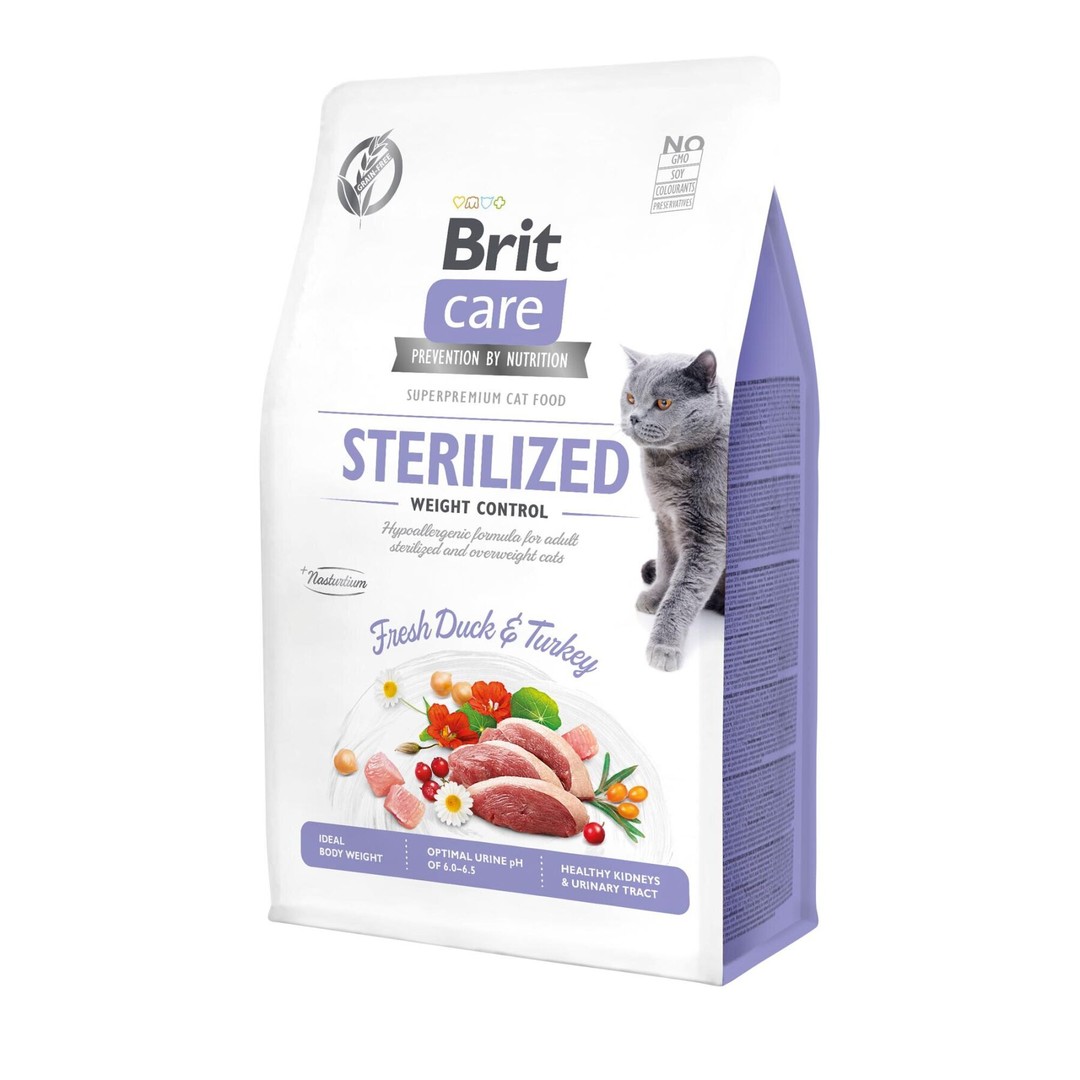
Brit Care Cat GF Sterilised Weight Control with duck and turkey, 2 kg is a grain-free dry food from the Czech brand Brit for adult neutered and overweight cats. It's based on 26% fresh duck and 26% dehydrated turkey. Compared with regular Brit Care foods, it has less fat (12%) and more fibre (4%) thanks to psyllium, which keeps cats feeling full. Energy: 352 kcal per 100 g. Low magnesium (0.04%) and L-methionine keep urine pH at 6.0–6.5, while sea buckthorn, cranberry and nasturtium support the urinary tract.
What it is and who makes it
Brit is a Czech pet food brand. The Brit Care range consists of grain-free hypoallergenic recipes with probiotics and herbs. Weight Control is for cats that find it hard to stay in shape after neutering. It isn't a therapeutic diet but an everyday reduced-calorie food.
Ingredients and analysis
Fresh duck (26%), dehydrated turkey (26%), yellow peas (16%), chickpeas (10%), dried apples (7%), poultry fat (4%), salmon oil (2%), hydrolysed chicken liver (2%), psyllium (2%), brewer's yeast (2%), linseed (1%), nasturtium, chamomile, sea buckthorn, cranberry, FOS and MOS prebiotics, yucca and inactivated lactobacilli.
| Parameter | Value |
|---|---|
| Protein | 32% |
| Fat | 12% |
| Fibre | 4% |
| Calcium / phosphorus | 0.9% / 0.7% |
| Magnesium | 0.04% |
| Omega-3 / omega-6 | 0.3% / 1.6% |
| Energy | 352 kcal per 100 g |
Pros
- Fewer calories. 352 kcal per 100 g and 12% fat make weight easier to manage.
- High protein. 32% and 52% meat help preserve muscle.
- Satiety. Psyllium and fibre mean less begging.
- Urinary tract. Low magnesium, L-methionine, sea buckthorn and cranberry.
- Duck and turkey. Suits cats tired of chicken-based food.
Cons and what to keep in mind
- Not a weight-loss diet. For obesity, a vet may prescribe a therapeutic food.
- Contains chicken. Chicken liver and poultry fat — not for a strict chicken allergy.
- Legumes. Peas and chickpeas make up 26%.
- More stool. The fibre may increase stool volume.
Weight Control or a therapeutic diet
If a cat has put on a little weight after neutering, a reduced-calorie food and portion control are enough. With clear obesity — when the ribs can't be felt and the belly hangs — a vet usually prescribes a therapeutic diet with even less fat and more fibre, such as Happy Cat VET Adipositas. Neutered cats of normal weight with sensitive digestion may suit Brit Care Sterilised Sensitive with rabbit.
Helping your cat manage weight
Weigh the daily amount from the table on the bag on kitchen scales — portions "by eye" are almost always bigger. Split it into 3–4 meals. Count treats within the total: no more than 10% of calories. Add 2–3 play sessions a day of 10–15 minutes with a wand toy and a puzzle feeder. Weigh your cat monthly. More in overweight cats and dogs, caring for a cat after spaying and how to entertain a cat at home.
Why neutered cats gain weight
After neutering, energy use drops while appetite often rises. If a cat keeps eating the same food in the same amount, it can gain noticeable weight within a year. Excess weight raises the risk of diabetes, joint disease and urinary stones, so a reduced-calorie food and portion control are the best prevention.
Who it suits
Neutered cats prone to weight gain, less active indoor cats and cats that are slightly overweight. Other foods are in dry cat food.
Verdict
Brit Care Cat GF Sterilised Weight Control is a grain-free duck and turkey food with reduced fat and calories, plenty of fibre and urinary support. It helps manage weight together with portion control and play; severe obesity needs a therapeutic diet.
Frequently Asked Questions
How many calories does Brit Care Weight Control have?
352 kcal per 100 g.
How much fat does it contain?
12% — less than regular Brit Care foods.
Is it a therapeutic diet?
No, it's an everyday reduced-calorie food.
Does it contain grains?
No, it's grain-free.
What urine pH does it support?
According to the manufacturer, 6.0–6.5.
Is it suitable for an unneutered overweight cat?
Yes, it's also designed for overweight cats.

