
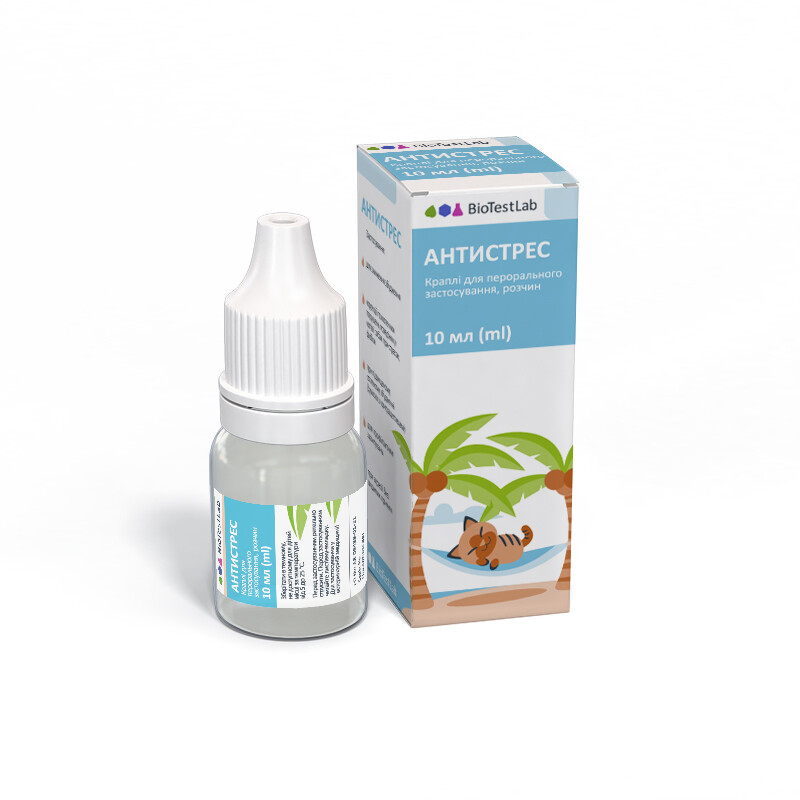
BioTestLab Antistress, 10 ml is an oral suspension from the Ukrainian maker BioTestLab for cats and dogs. The active ingredient is phenibut (100 mg per ml), a GABA derivative with calming (anxiolytic) and nootropic effects. It's prescribed to reduce agitation and correct behaviour in stress, phobias, unprovoked aggression, heightened sexual arousal (together with contraceptives) and to prevent motion sickness.
What it is and how it works
Phenibut strengthens inhibitory processes in the nervous system and restores the balance between excitation and inhibition. It's absorbed quickly, reaches the brain and is 80–95% broken down by the liver. Unlike strong sedatives, at the right dose it doesn't knock the animal out but lowers anxiety. It contains sucrose, so it's contraindicated in diabetes.
Dosage
Give the drops on the back of the tongue twice a day.
| Animal | Single dose | Example |
|---|---|---|
| Cats | 1 drop (4 mg phenibut) per kg | a 4 kg cat — 4 drops twice a day |
| Dogs | 2 drops (8 mg phenibut) per kg | a 5 kg dog — 10 drops twice a day |
The course is 10–15 days, or up to 20 days with severe agitation and marked behaviour problems. If the problem returns, repeat the course at the same doses.
Pros
- Reduces anxiety. Phenibut calms without heavy sedation.
- Stress prevention. A schedule for moves, shows and fireworks.
- Motion sickness. A single dose 1–2 hours before a trip.
- For cats and dogs. Clear per-kilogram drop dosing.
- Easy to give. A few drops on the back of the tongue.
Cons and what to keep in mind
- Contraindications. Kidney failure, diabetes, pregnancy and lactation.
- Must be started early. For stress prevention, begin 3–5 days ahead.
- Possible drowsiness. Occasionally drowsiness and nausea after the first dose.
- Small bottle. 10 ml won't last long for a large dog.
- Doesn't fix the cause. Aggression and fears also need behaviour work.
Preventing stress and motion sickness
Before an expected stressor (travel, a change of surroundings, fireworks, the owner leaving, shows and competitions), start the drops 3–5 days before and continue for 1–4 days after. For motion sickness, give a single normal dose 1–2 hours before the trip. Once vomiting has started it works poorly, so give it in advance. A properly packed bag helps too; see the list in an emergency go-bag for cats and dogs.
What else helps with stress
Medication works better alongside changes to the environment. Cats need hiding places, shelves and a predictable routine; dogs need a quiet spot, familiar toys and gradual exposure to frightening sounds. Pheromones help: for cats, the Feliway diffuser; for dogs, the Adaptil collar. There are also gentle supplements such as Zylkene. All options are covered in calming aids for dogs and cats.
When to see a vet
Sudden aggression, constant anxiety, licking to the point of wounds or refusing food all mean ruling out pain and illness first, since pets often behave badly because something hurts. Check kidney function before a course in older pets. If strong drowsiness, agitation, nausea or an allergy appears after the first dose, stop the drops and contact your vet.
Who it suits
Cats and dogs with anxiety, phobias, stress from travel and change, motion sickness, or heightened sexual arousal (with contraceptives), provided there are no contraindications. Other products are in the veterinary pharmacy.
Verdict
BioTestLab Antistress is a phenibut drop for reducing anxiety and preventing stress and motion sickness in cats and dogs. Its "before and after the event" schedule is handy, but it needs precise per-weight drop counts and attention to contraindications.
Frequently Asked Questions
How many drops of Antistress for a cat?
1 drop per kg of body weight twice a day.
How much for a dog?
2 drops per kg of body weight twice a day.
When should I start before a move?
3–5 days before the event and for 1–4 days after.
Does it help with motion sickness?
Yes, as a single dose 1–2 hours before the trip.
How long is the course?
10–15 days, up to 20 with severe agitation.
Who shouldn't take it?
Pets with kidney failure or diabetes, and pregnant or lactating females.

