
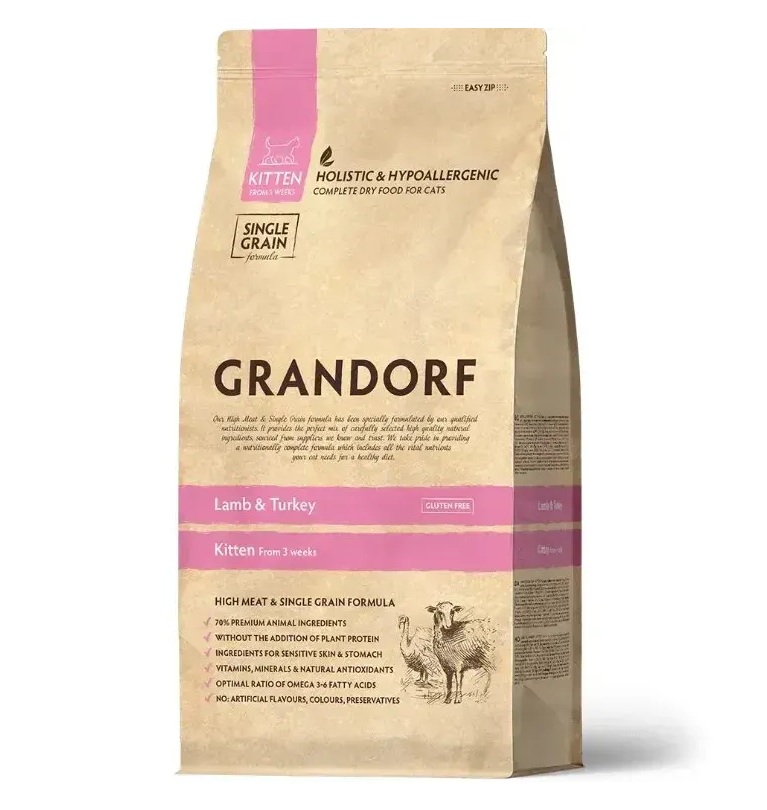
Dog and cat foods are usually split into classes: economy, premium, super-premium and holistic. The split is a marketing one: "holistic" has no legal definition or mandatory standard, and each maker decides what to call its range. So look at the ingredients, not the label. Still, foods sold as holistic usually share some features that make them easier to judge.
What "holistic" usually means
The word comes from "holistic" as in whole, and makers use it for nutrition close to a natural diet. In practice it most often means:
- Lots of meat or fish, named specifically — "fresh duck", "salmon" — rather than "meat and animal derivatives".
- No cheap fillers such as corn, wheat or soy at the top of the list; many holistic foods are grain-free.
- No artificial colourings, flavourings or preservatives, with natural antioxidants (tocopherols, rosemary) instead.
- Health additives — probiotics, joint support, berries, herbs, omega-3.
Food classes: the differences
| Class | Typical features |
|---|---|
| Economy | Little meat, lots of grains and by-products, flavour enhancers |
| Premium | More meat, but plenty of grains and often generic meat sources |
| Super-premium | Meat first, clear protein sources, fewer grains |
| Holistic | A high share of named meat, often grain-free, no artificial additives |
The line between super-premium and holistic is blurred: a good super-premium food can match another brand's holistic recipe.
How to check the label
Ingredients are listed in descending order by weight. Look at the first five: in a good food they're specifically named meat or fish with percentages. Note whether fresh or dehydrated meat is listed: fresh meat contains a lot of water, so after drying its share of the finished food is lower than stated. Check the guaranteed analysis: protein in dry adult dog food is usually 22–32%, and in cat food 30–45%. More in how to read pet food ingredients.
Does grain-free mean holistic?
No. Many holistic foods are grain-free, but leaving out grains doesn't make a food better on its own: grains are replaced by peas, potato or sweet potato, which are carbohydrates too. Grain-free food is mainly for animals that react to grains. More in grain-free food: facts and myths.
Who should choose holistic
- Pets with sensitive digestion or food allergies, thanks to clear protein sources.
- Active dogs and cats with high protein needs.
- Owners who want food without artificial additives.
Holistic foods cost more, but because they're energy-dense, the daily portion is often smaller than with economy food. If your pet does well on super-premium, there's no need to switch just for the label.
Holistic foods in stock
Our selections include Grandorf, Pure Nurture, Carnilove, Savory and other brands: holistic dog food and holistic cat food. Switch gradually over 7–10 days by mixing with the old food.
How to compare two foods
Put two bags side by side and compare point by point. First, what's in the top three ingredients and whether the meat percentage is stated. Second, protein and fat in the guaranteed analysis: an active dog or growing puppy needs more, an older or overweight pet less. Third, calories per 100 g, which determine how much food goes per day and therefore the real cost of feeding. Fourth, who the food is for: age, size, neutering, special needs. Finally, how it suits your own pet: after 3–4 weeks, check stools, coat, weight and energy. If all is well, the food suits, whatever the label says.
Frequently Asked Questions
Is holistic the best class of pet food?
Such foods usually have the highest meat content, but there's no strict standard, so compare ingredients.
Is holistic food always grain-free?
No, some holistic foods contain rice or oats.
How is holistic different from super-premium?
Usually a higher share of named meat and no artificial additives; the line is blurred.
Does a healthy pet need holistic food?
Not necessarily; a good super-premium food is complete too.
Why is holistic food more expensive?
Because of the high meat content and costlier ingredients, though portions are often smaller.
How do I switch to a holistic food?
Gradually over 7–10 days, mixing the new food with the old.
Is holistic food suitable for puppies and kittens?
Yes, if the bag says it's for growth or all life stages; adult food isn't suitable for a growing animal.

