If your dog or cat eats a complete commercial food, extra vitamins are usually unnecessary: everything it needs is already in the diet in the right proportions. Supplements help in specific cases: home-made diets, coat support during shedding, joint support for large and senior dogs, pregnancy, recovery after illness — ideally on a vet's advice. Giving vitamins "just in case" is not a good idea: too much vitamin A, vitamin D or calcium can do harm.
Does my pet need vitamins if it eats commercial food?
Complete foods (labelled "complete" on the pack) are formulated to cover all of an animal's vitamin and mineral needs. Adding multivitamins to such a diet can lead to an excess of certain nutrients. The exception is targeted supplements: omega-3 for skin and coat, joint supplements, hairball pastes for cats. They don't duplicate the food, they complement it.
If your pet eats home-made food, a vitamin and mineral supplement is usually essential: meat with grains almost always lacks calcium and a number of vitamins and trace elements.
When supplements really help
| Situation | What is usually recommended |
|---|---|
| Home-made diet | Complete vitamin and mineral supplements dosed by weight |
| Shedding, dull coat, dry skin | Omega-3 fatty acids, coat supplements with biotin and zinc |
| Large and senior dogs, joint strain | Glucosamine, chondroitin, MSM, omega-3 |
| Cats with hairballs | Hairball pastes and remedies |
| Pregnancy, lactation, recovery after illness | Only as prescribed by a vet |
Types of supplements
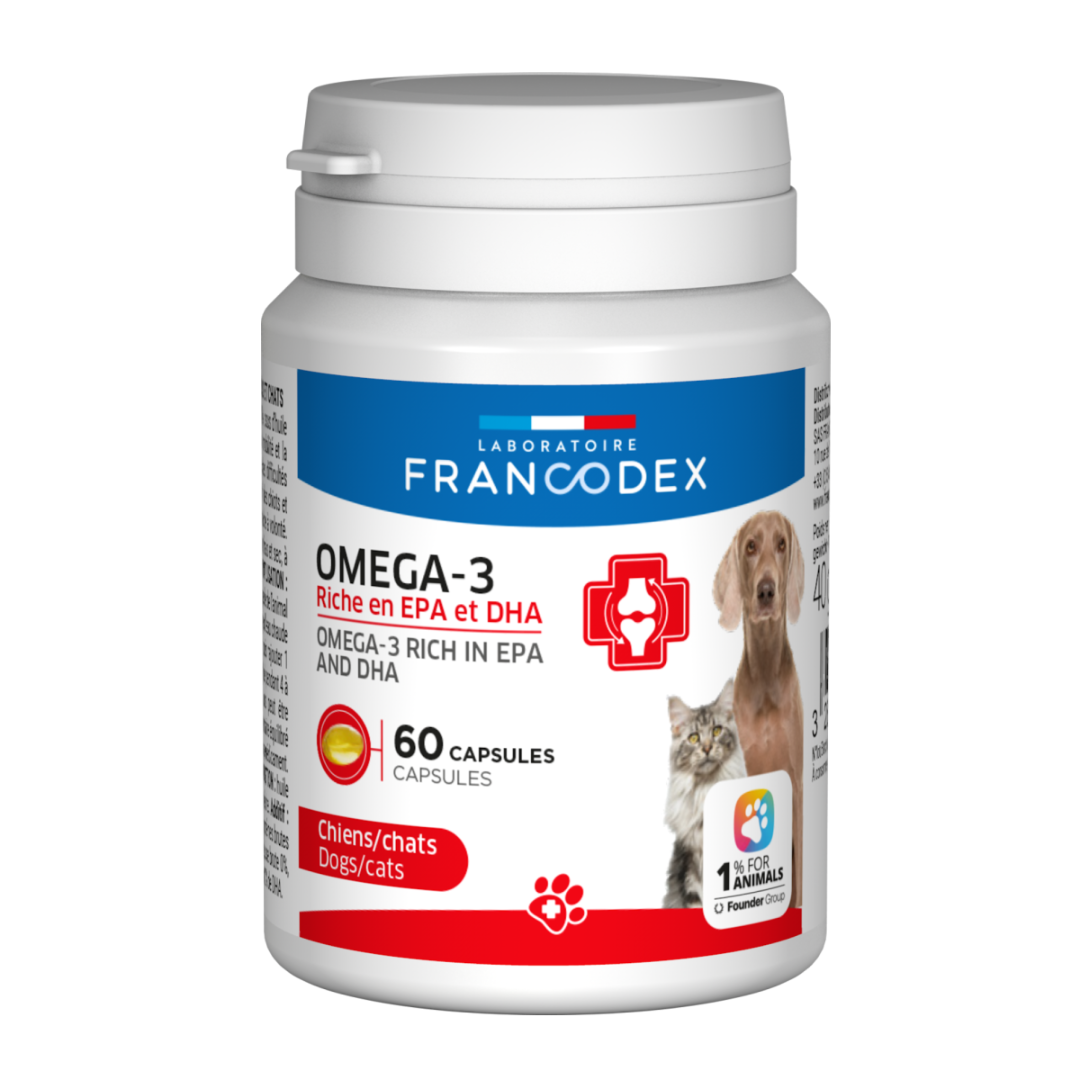
- Omega-3 — supports skin and coat, joints and heart. For example, Francodex Omega3 capsules.
- Coat and shedding support for cats — products with vitamins and fatty acids such as Beaphar Laveta Super that help the skin and coat during coat change.
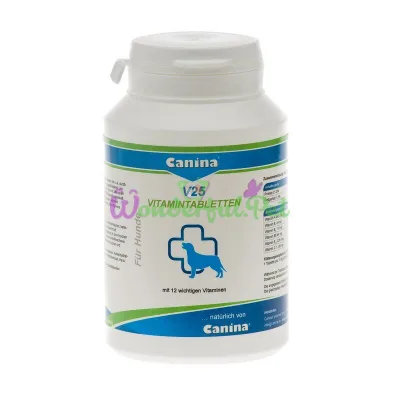
- Multivitamins — for pets on home-made diets: Canina V25 for dogs or Canina Cat-Vitamin for cats.
- Joint supplements — with glucosamine, chondroitin and MSM, for example 8in1 Excel Glucosamine + MSM.
All supplements are in the vitamins and mineral supplements section.
Why not give vitamins "just in case"
- Fat-soluble vitamins A and D build up in the body: an excess causes poisoning and bone and kidney problems.
- Calcium in large-breed puppies: extra calcium disrupts proper bone and joint growth. Puppies on a complete puppy food don't need added calcium.
- Two supplements at once may duplicate each other — check the ingredients.
- Human supplements must not be given to pets: the doses and some ingredients (for example xylitol in chewable vitamins) are dangerous.
How to choose and give supplements
- Decide what you need: coat, joints, a home-made diet, age. There is no universal "healthy" supplement.
- Choose a product made for your species: dog and cat supplements differ.
- Dose by your pet's weight as stated on the pack and don't exceed it.
- Give it as a course rather than indefinitely: usually 1–2 months, then assess the result. For the coat, results show after 4–6 weeks at the earliest, once new hair has grown.
- If your pet has a chronic condition or takes medication, agree the supplement with your vet.
Signs your pet may be missing something
A dull, brittle coat, dandruff, heavy out-of-season shedding, lethargy, poor appetite or eating non-food items are reasons to take your pet to the vet rather than buying vitamins at random. These symptoms can be caused not only by vitamin deficiency but also by parasites, skin or metabolic diseases or an unsuitable diet. Sometimes the best solution is not a supplement but switching to a good-quality complete food: browse dry dog food and dry cat food.
Wonderful.pet stocks vitamins, omega-3, joint supplements and pastes for dogs and cats, with Nova Poshta delivery across Ukraine.
Frequently Asked Questions
Does my pet need "autumn" vitamins?
Pets don't need special seasonal vitamins. If your pet eats a complete food, in autumn it is enough to support the coat during shedding, for example with a course of omega-3, and only if needed.
Can I give my dog human vitamins?
No. The doses are designed for people, and some ingredients, such as xylitol, are dangerous for dogs.
How soon will coat supplements show results?
Usually after 4–6 weeks: the coat renews gradually and the result shows in the new hair.
Does a puppy need calcium?
Not if it eats a complete puppy food. Extra calcium is especially harmful for large-breed puppies.