
To keep your dog's paws healthy in the cold season, wash them with warm water after every walk and dry them thoroughly, especially between the toes. Before walking on streets treated with de-icers, coat the pads with a protective wax or balm, and for dogs with sensitive paws or long walks on salted pavements boots are a good option. In long-haired dogs trim the hair between the pads short so snowballs don't freeze in it. If the pads crack, apply a healing balm, and see a vet if your dog limps or has swelling or bleeding.
What harms paws in autumn and winter
- Damp and mud. Moisture and dirt between the toes irritate the skin and create conditions for inflammation and fungal infection.
- De-icers and salt. They eat into the pads and cause dryness and cracks. Dogs lick the residue off at home, which can upset their stomach.
- Ice and crusty snow. Sharp edges of ice and frozen crust cut the pads.
- Snowballs freeze onto the hair between the toes, make walking difficult and rub the skin.
- Dry indoor air during the heating season dries out the pads.
How to wash paws after a walk
- Keep a towel and a basin or a paw-washing cup by the door.
- Wash the paws with warm, not hot, water: hot water dries the skin.
- If the paws are very dirty or you have walked on treated streets, use a mild dog shampoo and rinse well. Suitable products are in the shampoos and conditioners section.
- Dry each paw and the spaces between the toes thoroughly — moisture left there leads to irritation.
- Check the pads for cuts, splinters, cracks and redness.
Wax and balm: protection and repair
Paw products work in different ways:
| Product | When to apply | What it does |
|---|---|---|
| Protective wax | Before a walk | Forms a film that protects against de-icers, ice and snow build-up |
| Moisturising balm | After the walk and washing | Softens the pads and prevents dryness and cracks |
| Healing balm | For small cracks and dryness | Helps the skin recover |
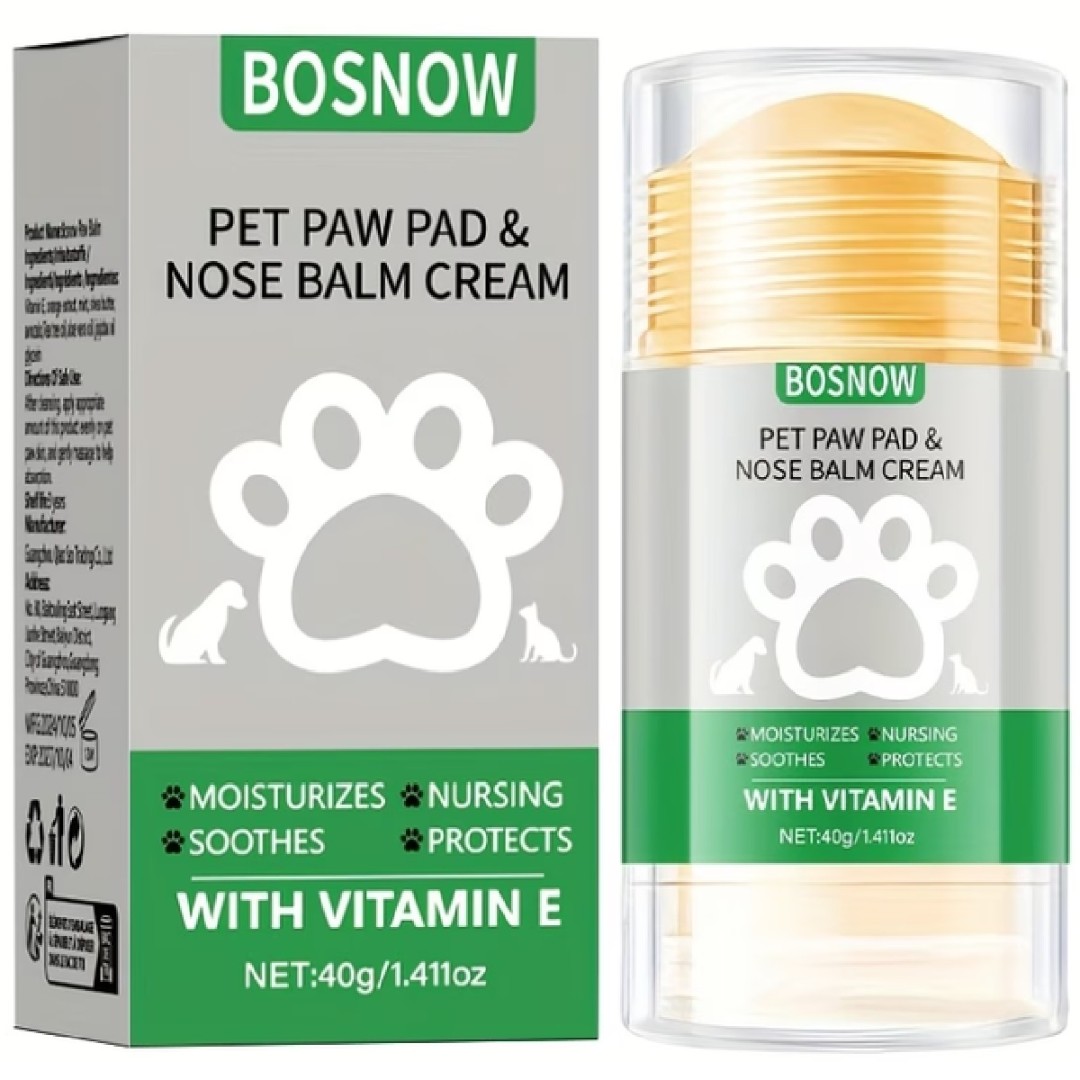
A handy all-rounder is the Bosnow paw and nose balm with vitamin E — it also works for a dry nose. To protect the pads before a walk there is Beaphar Feet Balsam and Smartis paw wax. Apply a thin layer and rub it in so your dog doesn't lick it off straight away; distract it with a toy for a couple of minutes.
Dog boots
Boots are useful for dogs that walk a lot on treated streets, dogs with sensitive or already damaged pads, and senior dogs. Models such as Trixie Walker Care protect against salt, ice and mud. Choose the size by the width of the front paw while your dog is standing: trace the paw on paper and measure the widest point. Introduce boots gradually, at home, with treats. Boots and cold-season clothing are in the clothing and accessories section.
Trimming hair and nails
- Hair between the pads in long-haired dogs (Spitz, Shih Tzu, Cocker Spaniel, Golden Retriever) should be trimmed level with the pads: less snow and mud sticks to it and the dog has better grip.
- Nails wear down more slowly in winter because walks are shorter. Long nails stop the dog placing its paw correctly and make it slip on ice and tiles. Trim them as they grow.
When to see a vet
- your dog limps or won't put weight on a paw;
- the paw is swollen, hot to the touch, has pus or a bad smell;
- deep cracks are bleeding;
- your dog keeps licking its paws and the skin between the toes is red;
- vomiting or diarrhoea appear after a walk on treated streets.
Products for paw, skin, eye and ear care are in the eye, ear and skin hygiene section, and medicated products in medicated cosmetics. Nova Poshta delivery across Ukraine.
Frequently Asked Questions
Do I need to wash my dog's paws after every walk?
In autumn and winter, yes: water washes off mud and de-icers. Warm water is enough; shampoo is only needed when the paws are very dirty. The key is to dry them well.
Can I use baby cream on my dog's paws?
It's better to use products made for animals: dogs lick cream off their paws, so the ingredients must be safe to swallow.
What if my dog won't wear boots?
Introduce them gradually and only at home, with treats. If your dog still won't accept boots, use a protective wax before walks and always wash the paws afterwards.
Why does my dog limp after a winter walk?
Most often because of a small cut, a crack or irritation from de-icers. Check the paw; if the limp doesn't go away within a day or the paw is swollen, take your dog to the vet.



