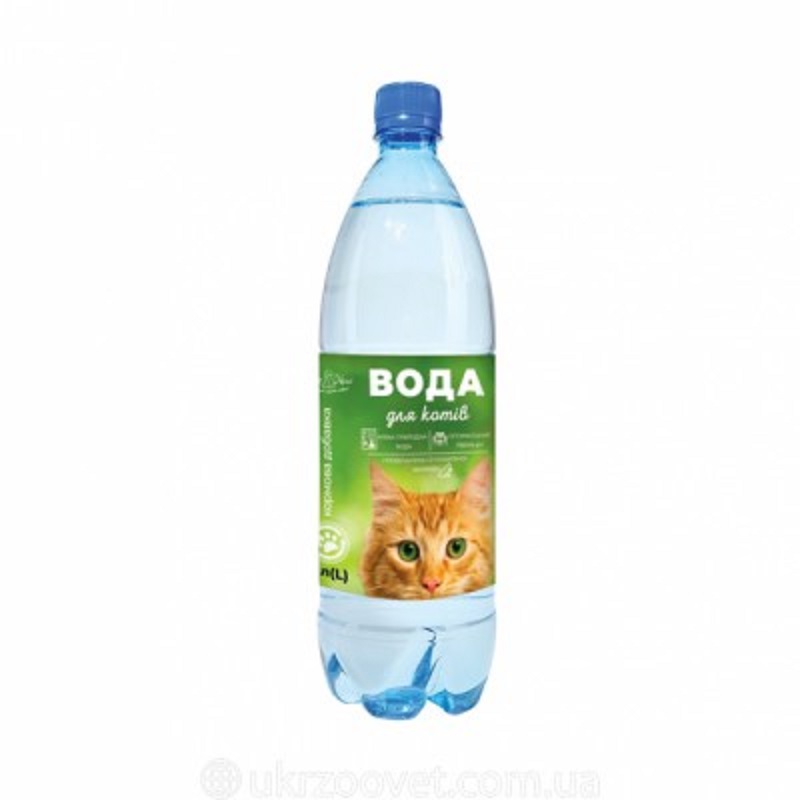
Zoohels Water, 1 l is a drinking-water supplement for cats from the Ukrainian maker UZVPP (ZooHels range). It's used for prevention and as an aid in treating urinary tract disorders involving urinary stones. According to the manufacturer, drinking it helps establish a favourable urine pH, slows bacterial growth and inhibits struvite crystal formation by reducing the availability of phosphate ions. The ascorbic acid it contains has antioxidant properties.
Why drinking matters for cats with stones
Cats naturally drink little: their ancestors got most of their water from prey. When a cat eats dry food and drinks little, the urine becomes concentrated, making crystals and stones more likely. That's why vets almost always advise increasing fluid intake for cats with urinary stones. More on how much to drink in how much water a cat should drink, and on the disease itself in urinary stones in cats: diet and prevention.
Ingredients
Each 100 ml contains the active ingredients ascorbic acid (0.001 g) and silver nanoparticles (0.25 mg); the rest is water. It comes in a 1,000 ml PET bottle. A sediment is acceptable. Shelf life is 12 months.
Key specs
| Parameter | Value |
|---|---|
| For | cats |
| Purpose | prevention and support for urinary stones |
| Active ingredients | ascorbic acid, silver nanoparticles |
| Daily dose | 60–150 ml, set individually |
| Volume | 1 l |
| Storage | 5–25 °C, in the dark |
| Manufacturer | UZVPP (ZooHels), Ukraine |
Pros
- Ready to use. No mixing — just pour it into the bowl.
- Helps cats drink more. A key part of stone prevention.
- Against struvite. According to the manufacturer, it slows crystal formation.
- An antioxidant. Contains ascorbic acid.
- Course use. Can be used to prevent recurrences.
- Affordable. An inexpensive Ukrainian supplement.
Cons
- Not a treatment. Only an aid alongside a therapeutic diet and therapy.
- Not for every stone type. The description covers struvite; oxalates need a different approach.
- Not with acidifiers. Don't combine with urine-acidifying products.
- No fixed regimen. The dose and course length are set individually.
How to give it
The average daily dose is set individually and can range from 60 to 150 ml. It's usually poured into the water bowl in place of some or all of the ordinary water — agree the plan with a vet who knows your cat's urine test results. To prevent recurrences, it's given in courses whose length and frequency are set for each animal. Don't give urine-acidifying products while using it. Store the bottle somewhere dry and dark at 5–25 °C, out of children's reach.
What else matters with urinary stones
The basis of treatment and prevention is a special diet chosen by a vet according to the stone type, such as Brit Veterinary Diet Struvite for struvite. Wet food, several water bowls or a fountain and urinary support products also help — see our reviews of AnimAll VetLine Anticystitis and Candioli Cystocure. If your cat keeps visiting the tray and passing little, strains, or has blood in the urine, see a vet urgently: a blocked urethra in male cats is life-threatening.
Who it suits
Cats prone to urinary stones and struvite crystals — to prevent recurrences and as an addition to vet-prescribed treatment. More products are in the vitamins and mineral supplements section.
Verdict
Zoohels Water is a simple, ready-to-use drinking supplement for cats with urinary stones: it helps increase fluid intake and, according to the manufacturer, slows struvite crystal formation. A good helper in preventing recurrences. But it's not a treatment: the diet, tests and dosing plan are for the vet to decide.
FAQ
How much should I give per day?
From 60 to 150 ml; the dose is set individually.
What's in it?
Ascorbic acid and silver nanoparticles in water.
Can it replace ordinary water?
Agree how to replace water with your vet.
Does it help with oxalate stones?
The manufacturer's description covers struvite; for oxalates, consult a vet.
Can it be combined with urine acidifiers?
No, they shouldn't be given while using it.
Is a sediment normal?
Yes, the manufacturer says a sediment is acceptable.
Can cats have it after urinary surgery?
Only as prescribed by the vet managing the treatment.
How long does it keep?
12 months at 5–25 °C.