Urolithiasis is the formation of crystals and stones in the urinary tract. Early signs: the cat visits the litter box often and passes small amounts, strains, has blood in the urine, cries in the box, urinates outside it or licks its genitals. If a male cat strains but no urine comes out, it's an emergency: the urethra is blocked, and without a vet the cat can die within 1–2 days. Treatment and prescription food are chosen only by a vet after a urine test; for prevention, water, a healthy weight and the right food matter most.
Signs: when to see a vet
| Sign | What to do |
|---|---|
| Frequent trips to the box, small clumps, blood in urine | Vet within 24 hours |
| Urinating outside the box, licking, crying in the box | Vet within 24 hours |
| Straining with no urine or just drops; vomiting, lethargy | Clinic immediately — it's a urethral blockage |
| No urine for more than 12 hours | Clinic immediately |
Male cats have a long, narrow urethra, so blockages happen far more often in males than in females. Don't try to treat this at home.
Types of stones
- Struvite (magnesium ammonium phosphate) forms in alkaline urine. It can often be dissolved with a special prescription diet within a few weeks.
- Calcium oxalate forms in acidic urine and can't be dissolved by diet, so stones are removed. Diet helps prevent them from coming back.
That's why prescription food is chosen only on the basis of a urine test and ultrasound: an anti-struvite diet can favour oxalates. Cats also commonly get idiopathic cystitis — inflammation without stones, linked to stress. The symptoms are similar, so diagnosis is essential.
Who is at risk
- neutered males and spayed females;
- overweight and inactive cats;
- cats that drink little, especially on dry food;
- stressed cats: moving, new animals, conflicts, a dirty litter box;
- some breeds — Persian, British Shorthair, Himalayan.
Diet for urinary stones
If a diagnosis has been made, your vet will prescribe a therapeutic diet — for example, a struvite-dissolving food such as Brit Veterinary Diet Struvite. It's fed strictly as prescribed and with no table food, otherwise it doesn't work. All prescription foods are in veterinary diets for cats.
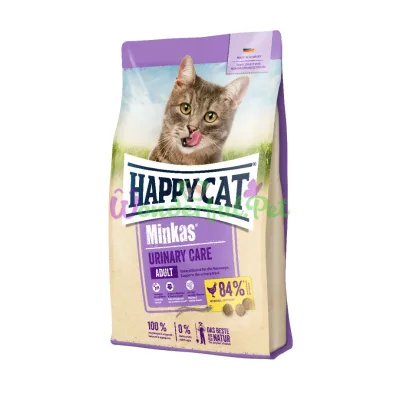
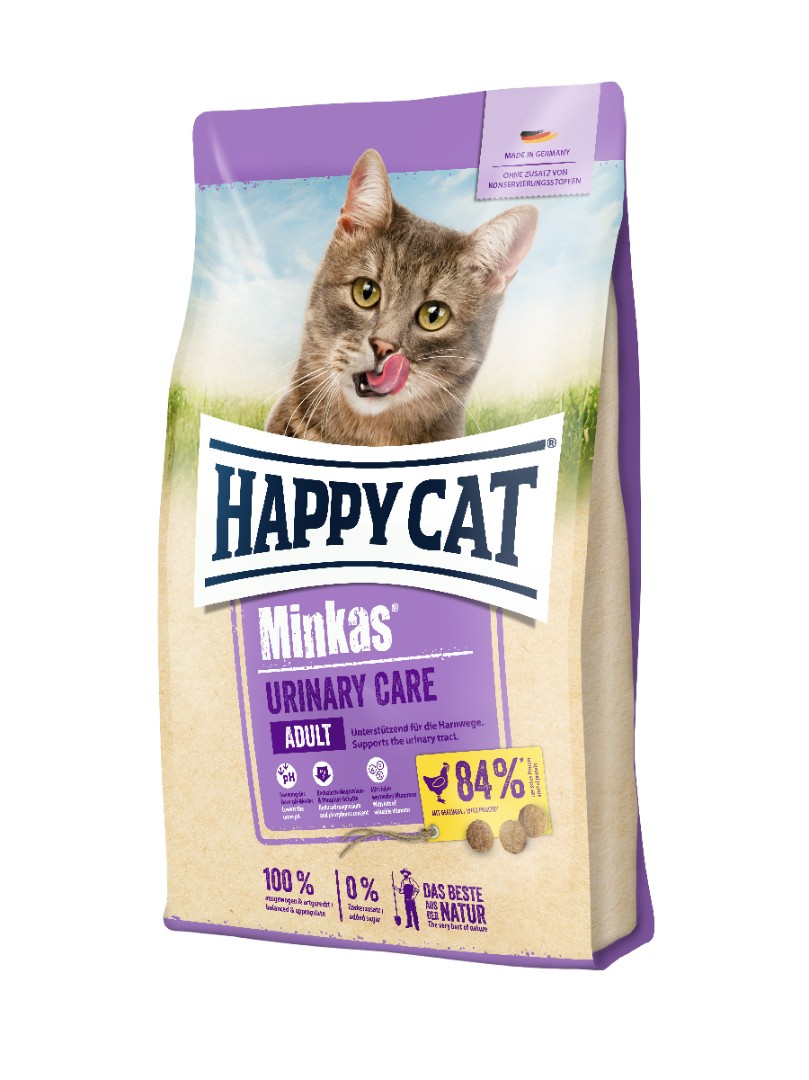
For prevention in healthy at-risk cats, foods labelled urinary care are suitable: balanced in minerals and supporting the right urine pH, such as Happy Cat Minkas UrinaryCare. Many foods for neutered cats already take this into account — see food for neutered cats and our article how to choose food for a neutered cat.
Your vet may also recommend urinary support supplements, such as AnimAll VetLine Urinary paste. This is support, not treatment: with symptoms, an examination comes first.
Water is the key to prevention
The more a cat drinks, the more dilute its urine and the fewer crystals form. How to increase water intake:
- Add wet food to the diet — it's 75–80% water.
- Put several water bowls in different rooms, away from food and the litter box.
- Use wide bowls — cats dislike their whiskers touching the sides.
- Try a fountain: many cats prefer running water.
- Change the water daily and wash the bowls.
Bowls and water fountains are in cat bowls. More on daily needs in how much water a cat should drink.
What else helps
- A healthy weight — correct portions, play and activity.
- A clean litter box — the cat shouldn't hold it because the box is dirty.
- Less stress — hiding places, high perches, a stable routine, separate bowls and boxes for each cat.
- Regular tests — for at-risk cats, a urine test every 6–12 months is useful.
Frequently Asked Questions
Can urinary stones in cats be treated with food?
Struvite stones often dissolve on a prescription diet; oxalate stones don't. Only a test shows the stone type, so the vet chooses the food.
Can a cat with urinary stones eat dry food?
Many prescription diets come in dry form, but wet food and plenty of water work better. Your vet will choose the plan.
Why is a urethral blockage dangerous?
Urine can't get out, toxins and potassium build up in the blood, and the kidneys and heart are affected. Without help, a cat can die within 1–2 days.
Does a healthy cat need urinary food?
Only if it's at risk — for example, neutered, overweight or drinking little. Others do well on a good complete food.