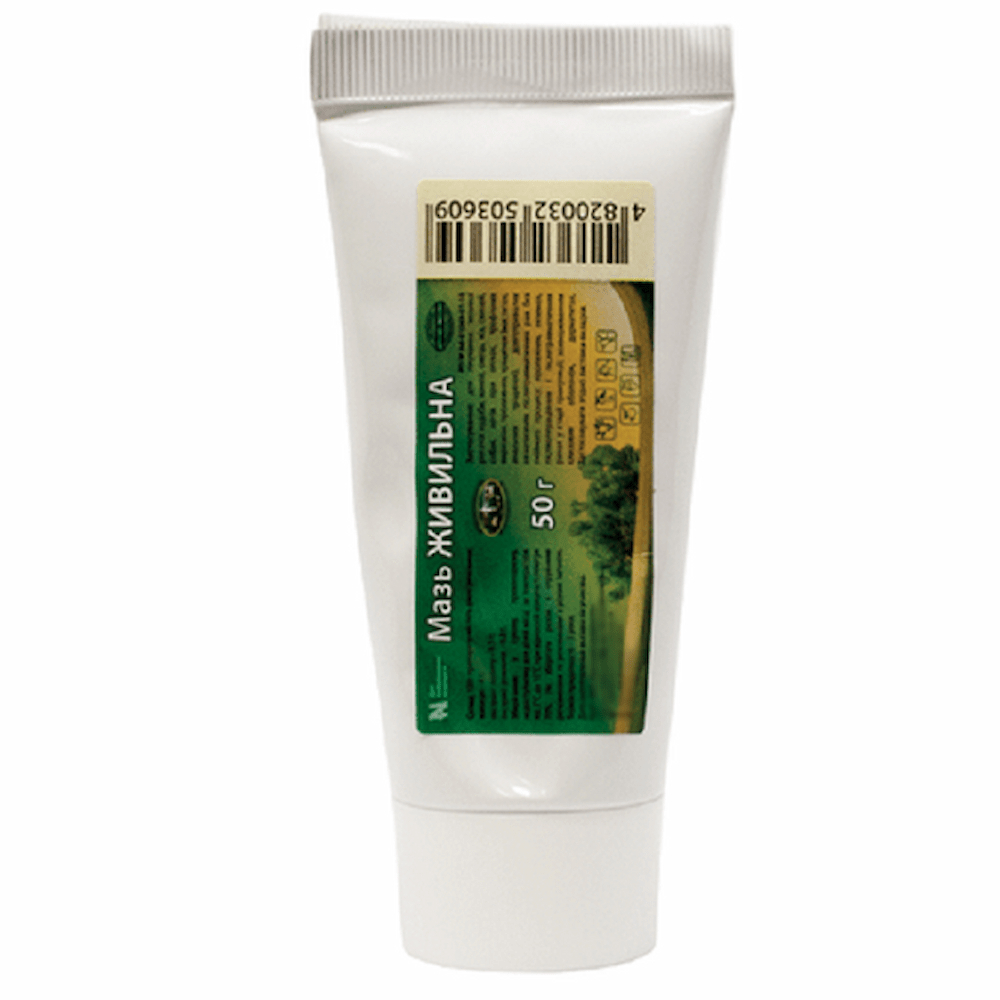
UZVPP Zhyvylna ointment 50 g is a veterinary wound-healing ointment from the Ukrainian manufacturer UZVPP. It's a thick, smooth ointment, yellow to brown, with a faint characteristic smell. It's used in the combined treatment of injuries in dogs and cats, as well as cattle, horses, sheep, goats and pigs: cut, torn, bruised and chronic wounds, burns and cracks, including anal fissures.
Ingredients and how it works
100 g of ointment contains 2 g of turpentine oil and 1 g each of thick chamomile and calendula flower extracts. The base is beeswax, pine resin, liquid paraffin and petroleum jelly. Turpentine oil has counter-irritant, anti-inflammatory, antiseptic and pain-relieving effects, warms the tissue, widens blood vessels and improves blood flow. Chamomile, thanks to chamazulene and alpha-bisabolol, calms inflammation and acts against bacteria and fungi. Calendula is rich in carotenoids and flavonoids and boosts granulation and skin regrowth. The ointment forms a protective barrier around the wound and is practically not absorbed into the bloodstream.
Key specs
| Parameter | Value |
|---|---|
| Active ingredients (per 100 g) | turpentine oil 2 g, chamomile extract 1 g, calendula extract 1 g |
| Base | beeswax, pine resin, petroleum jelly |
| For | dogs, cats, farm animals |
| Dose | 2–5 g per 5 × 5 cm of skin |
| Pack | 50 g tube (also 30 and 100 g) |
| Storage | 2–25 °C, 3 years |
Pros
- Natural ingredients. Turpentine, chamomile and calendula in a wax and resin base.
- Three actions. Antiseptic, anti-inflammatory and wound-healing.
- A protective barrier. The layer of ointment protects the wound edges, which matters especially for large and chronic wounds.
- Barely absorbed. Works locally with no systemic effect.
- Versatile. Wounds, burns, cracks — in pets and farm animals.
- Very affordable. One of the cheapest wound-healing ointments.
Cons
- Not for a fresh, dirty wound. It's used in the second phase of wound healing, once the wound is clean.
- Pets may lick it off. A protective cone or bandage is needed.
- Possible irritation. Long-term use can cause itching, redness and rash.
- Distinct smell and greasy texture. It marks fur and furniture — best used under a dressing.
How to apply
Clean the area first: clip the fur and remove discharge, debris and dead tissue. Apply a thin layer so that it extends at least 0.5 cm beyond the edge of the wound. Use 2–5 g per 5 × 5 cm. If the spot is hard to bandage, an adhesive plaster or glued dressing can be used. Change the dressing daily or every other day; with heavy discharge more often, but not sooner than 2 hours. Keep the ointment out of the eyes; if it gets in, rinse with plenty of running water. Dogs and cats should wear a neck cone or gauze dressing so they can't lick it off.
When to use the ointment and when to see a vet
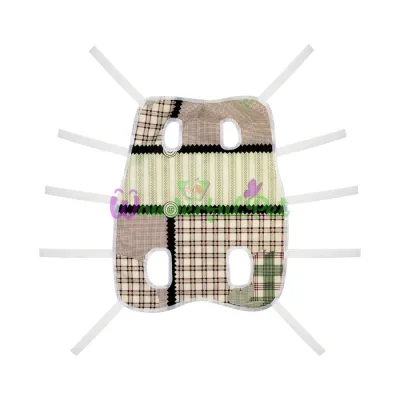
Zhyvylna is good for the healing stage: when the wound is already clean, without pus or heavy swelling, and needs to close. Deep, torn or bite wounds, and wounds with pus, heavy bleeding or swelling, should be seen by a vet first — they may need stitches, flushing and antibiotics. In winter the ointment is handy for cracked paw pads caused by de-icing salt and frost — see our article on paw care in autumn and winter. If the wound is on the body, a post-operative recovery suit is a comfortable alternative to a cone.
Who it suits
Dogs, cats and farm animals with healing wounds, grazes, burns and cracks — an inexpensive staple for the home first-aid kit. If you need an ointment with the antiseptic chlorhexidine, see our Unisan review. More products are in the medicated care section.
Verdict
Zhyvylna ointment is a simple, proven and very affordable remedy: turpentine, chamomile and calendula speed up healing, protect the wound and calm inflammation. Use it on cleaned wounds under a dressing, make sure your pet doesn't lick it, and take deep or infected wounds to the vet first.
FAQ
What's in Zhyvylna ointment?
Turpentine oil (2 g per 100 g) and thick chamomile and calendula extracts (1 g each) in a base of wax, resin and petroleum jelly.
Can it be used on a fresh wound?
It's used in the second phase of wound healing, after the wound has been cleaned; a fresh dirty wound should be cleaned and seen by a vet first.
How much should be applied?
2–5 g per 5 × 5 cm of skin, extending 0.5 cm beyond the wound edge.
How often should the dressing be changed?
Daily or every other day; with heavy discharge more often, but not sooner than 2 hours.
Does it help with cracked paws?
Yes, it's used for skin cracks; make sure the dog doesn't lick it off.
Can it be used on cats?
Yes, but always with a cone or dressing so the cat can't lick it off.
How should it be stored?
In the closed tube in a dry, dark place at 2–25 °C; shelf life is 3 years.