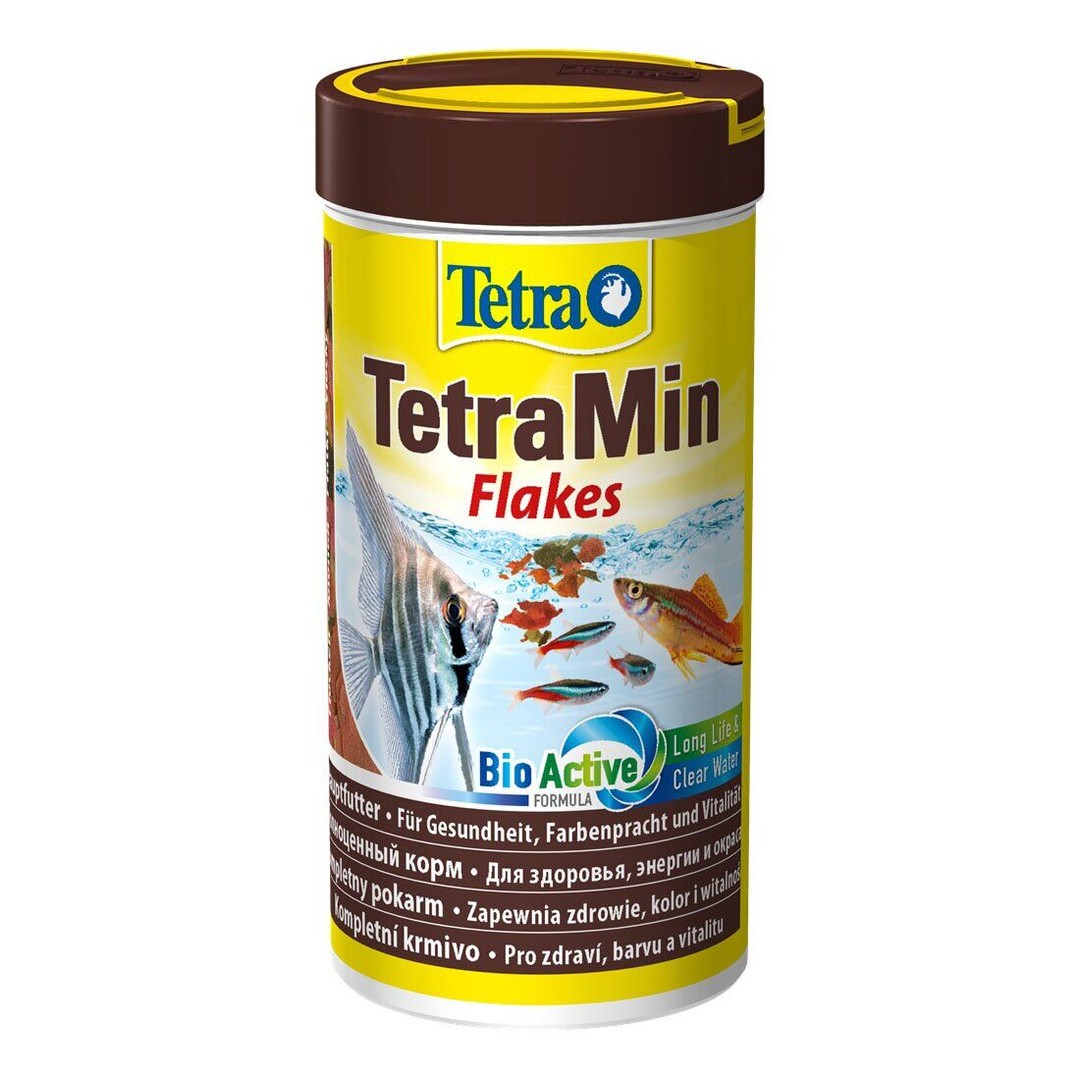
TetraMin, 100 ml is a staple flake food from the German brand Tetra for complete everyday nutrition of ornamental fish. It's a carefully chosen blend of highly nutritious ingredients, vitamins, minerals and trace elements. The tub contains seven different flake types made from more than 40 raw materials. The flakes float and sink slowly, so the food reaches fish feeding at the surface and in mid-water. The BioActive formula and prebiotics support fish health and nutrient absorption.
How the food works
Flakes are the most versatile food format. They crumble easily between your fingers, so they suit both large and small fish, and the different flake types in one tub add variety. Slow sinking gives fish at different levels time to feed. The prebiotic — oligofructose (1%) — improves digestion, and well-digested food produces less waste, which, according to the manufacturer, helps keep the water clear. More about food formats in aquarium fish food: how to feed.
Ingredients
Fish and fish by-products, cereals, yeasts, vegetable protein extracts, molluscs and crustaceans, oils and fats, sugars (oligofructose 1%), algae, minerals. Analysis: protein 46%, fat 11%, fibre 3%, moisture 6%. Per kilogram it adds vitamins A (37,680 IU) and D3 (1,990 IU), manganese, zinc and iron, plus colourants and antioxidants.
Key specs
| Parameter | Value |
|---|---|
| For | all ornamental fish |
| Format | a blend of 7 flake types |
| Protein / fat | 46% / 11% |
| Fibre / moisture | 3% / 6% |
| Features | BioActive, prebiotics |
| Volume | 100 ml |
Pros
- Versatile. Suits most ornamental fish.
- Variety. Seven flake types from 40+ raw materials.
- High in protein. 46% makes a good dietary base.
- Prebiotics. For digestion and food absorption.
- Sinks slowly. Food reaches surface and mid-water feeders.
- A handy size. 100 ml gets used up before the food loses its vitamins.
Cons
- Not for bottom feeders. Catfish and corydoras need sinking tablets.
- Contains colourants. Listed among the additives.
- Generic ingredients. Fish and cereal percentages aren't given.
- No instructions on the product page. Amounts and frequency have to come from general rules.
How to feed
The general rule for flakes is to give as much as the fish eat in 2–3 minutes, 1–3 times a day. Remove any leftovers that sink to the bottom, as they spoil the water. Give large fish whole flakes and crumble them for small fish. You can have a fasting day once a week. Overfeeding is the most common beginner mistake: uneaten food rots, raises ammonia and makes the water cloudy. Keep the tub closed and dry, and don't store it above the tank.
How to round out the diet
TetraMin works as a staple food, but for variety alternate it with granules, chips or frozen foods. Add sinking tablets for bottom feeders and a spirulina food for herbivores. Large cichlids and discus are better off with specialised foods such as Tetra Discus. If you're just setting up a tank, read an aquarium for beginners: what to buy and our review of the starter bacteria Rikka AKVA START.
Who it suits
Most tropical ornamental fish — guppies, mollies, tetras, barbs, danios and gouramis — and beginners looking for a reliable staple food. More foods are in the fish food section.
Verdict
TetraMin is a proven, versatile flake food: seven flake types, 46% protein, prebiotics and BioActive for everyday feeding of most fish. A good dietary base. The downsides are that bottom feeders need a separate food and the recipe includes colourants.
FAQ
Which fish is it for?
All ornamental fish that feed at the surface and in mid-water.
How much protein does it contain?
46%, with 11% fat.
How many times a day should I feed?
Usually 1–3 times a day, in portions the fish eat within 2–3 minutes.
Do the flakes sink?
The flakes float and sink slowly.
Is it suitable for catfish?
Bottom feeders are better off with sinking tablets.
What is BioActive?
Tetra's formula for supporting fish health and a long life.
Can fry be fed with it?
Yes, the flakes can be crushed into a fine powder, but special starter foods are better for fry.
How should the food be stored?
Tightly closed, somewhere dry, and not above the tank.