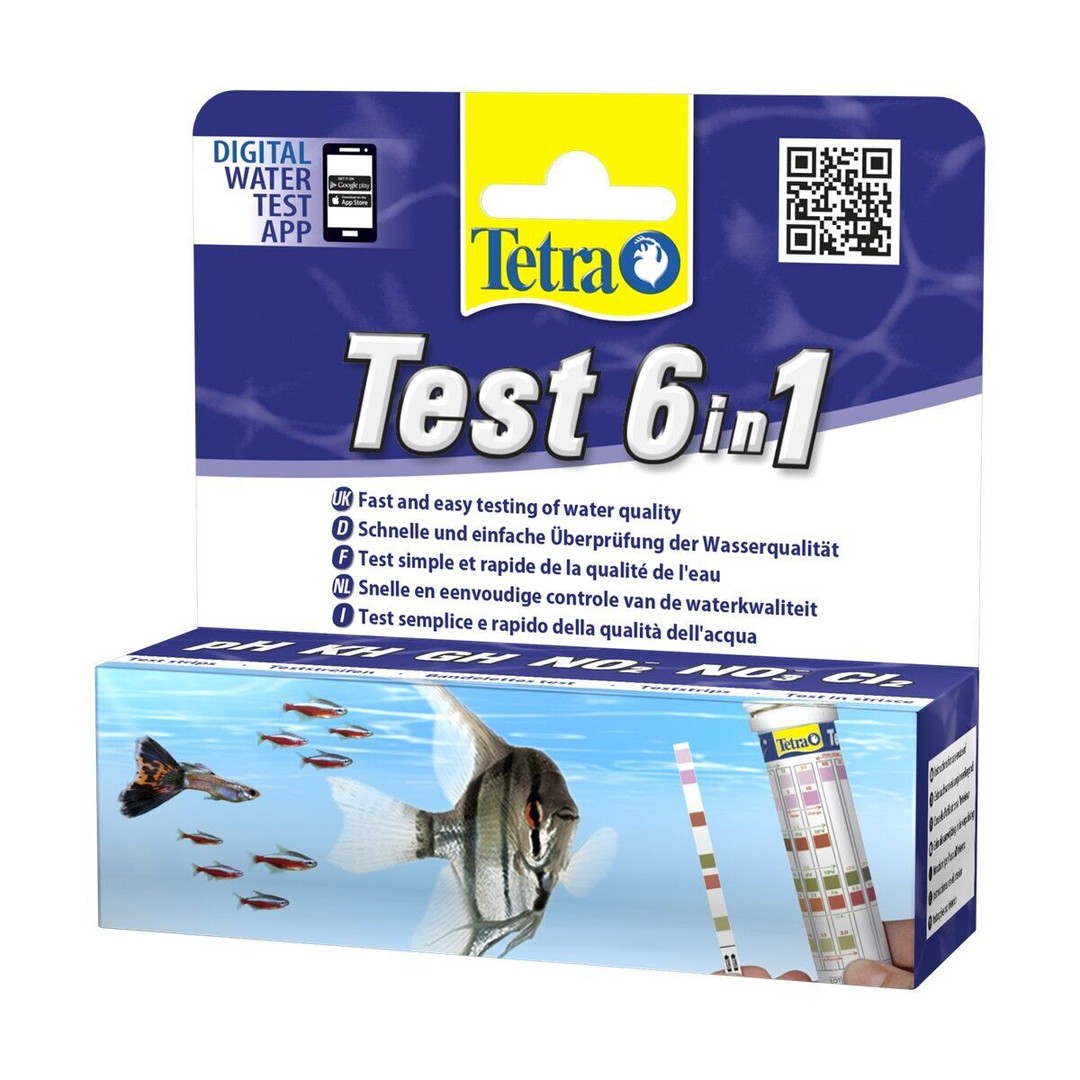
Tetra Test 6in1 are indicator test strips from the German brand Tetra for quickly checking aquarium water quality. One strip shows six parameters in just 60 seconds: pH, carbonate hardness (KH), general hardness (GH), nitrite (NO2), nitrate (NO3) and chlorine (Cl2). According to the manufacturer, it makes checking water quick and easy, helping you provide the best conditions and avoid many problems. It suits routine checks and setting up a new tank.
Why test the water
Fish live in water, and its chemistry directly affects their health. Nitrite is toxic even in small amounts, excess nitrate fuels algae, and swings in pH and hardness cause stress. Testing lets you spot a problem before fish fall ill. It matters most in the first weeks after setting up a tank — more in aquarium for beginners: what to buy.
Key specs
| Parameter | Value |
|---|---|
| Type | indicator test strips |
| Parameters | pH, KH, GH, NO2, NO3, Cl2 |
| Test time | 60 seconds |
| Aquarium type | freshwater |
| Brand | Tetra, Germany |
Pros
- Six parameters. On one strip.
- Fast. Results in 60 seconds.
- Simple. No reagents to mix.
- Shows chlorine. Useful at water changes.
- Nitrite and nitrate. Biofilter monitoring.
- Beginner-friendly. A clear colour chart.
Cons
- No ammonia. The strips don't measure it.
- Less accurate than liquid tests. Fine as a guide.
- Sensitive to moisture. Keep the tube tightly closed.
- Strip count isn't stated on the site.
What values are normal
The manufacturer gives these guidelines: pH between 6.5 and 8.5; carbonate hardness KH of 3–10 °dH, which stabilises pH; general hardness GH between 6 and 16 °dH, which affects fish, plants and microorganisms. Nitrite (NO2) should be close to zero, showing the filter is working properly. Nitrate (NO3) indicates how "fresh" the water is and how likely algae are. Chlorine (Cl2) shouldn't be present at all, as it harms bacteria and fish.
How to use it
Take a water sample from mid-tank in a clean container. Remove one strip with dry hands and close the tube immediately. Dip the strip for the time stated in the instructions, shake off excess water and compare the colours with the chart, sticking to the stated timing. Keep a record to see trends.
If nitrite is above zero
Nitrite above zero signals that the biofilter isn't coping: the tank hasn't cycled yet, it's overfed or overstocked. Change part of the water, feed less and add beneficial bacteria, such as Tetra Bactozym. Retest after a day or two.
Chlorine and water preparation
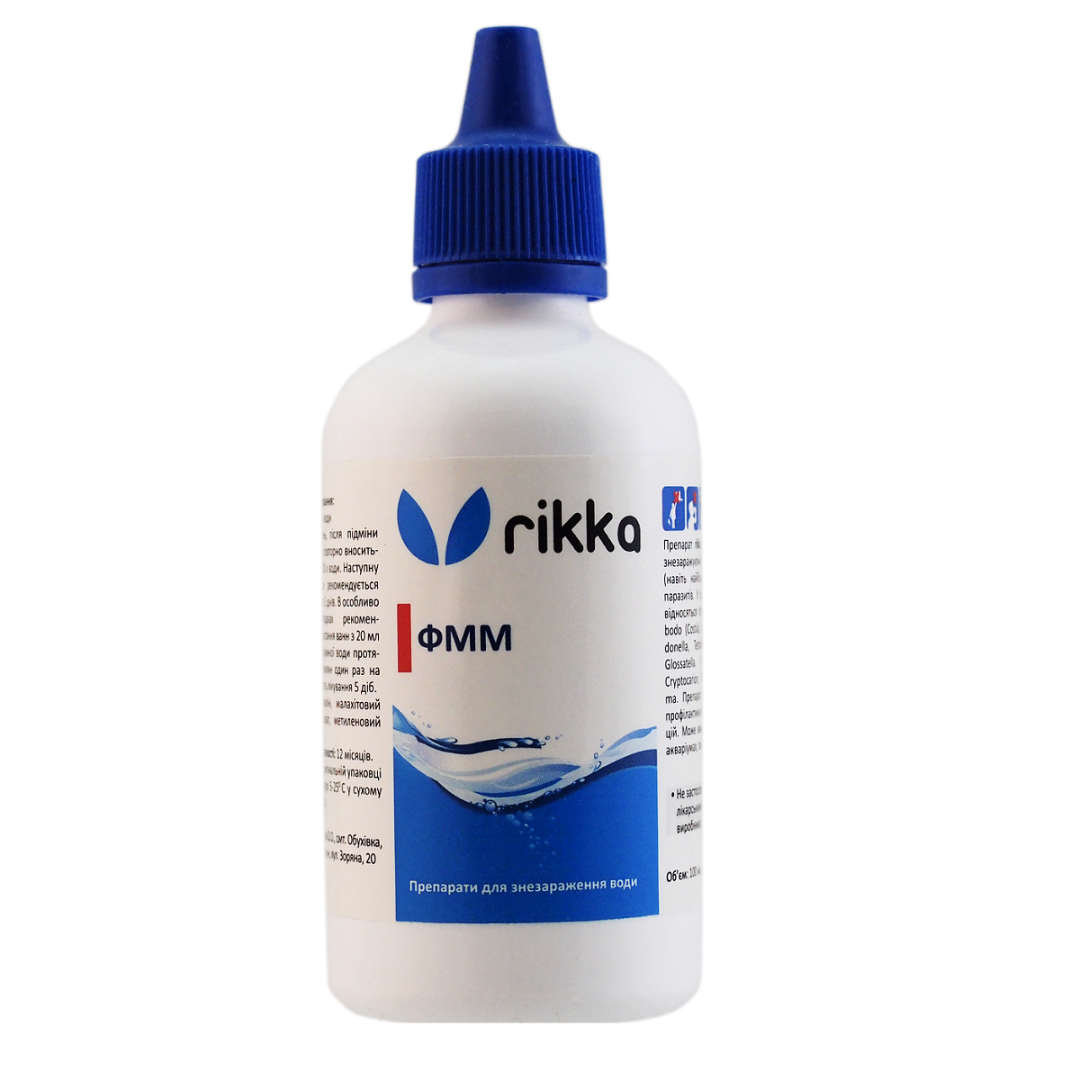
Tap water contains chlorine, which kills fish and bacteria. Treat water with a conditioner before a water change — for example Rikka Quick Start — and check with a strip that no chlorine remains.
How often to test
When setting up a new tank, test every 2–3 days until nitrite drops to zero and stays there. In an established tank, a weekly test or one at each water change is enough, plus whenever your fish behave differently.
Storage
Keep the tube tightly closed somewhere dry at room temperature, and don't touch the strips with wet hands — moisture ruins the indicators. Don't use strips past their expiry date.
Who it suits
Freshwater aquarium owners — especially beginners and anyone setting up a new tank — for quick routine water checks. More products are in the fish medicines and water care section; on feeding, see how to feed aquarium fish.
Verdict
Tetra Test 6in1 strips show six aquarium water parameters in 60 seconds: pH, KH, GH, nitrite, nitrate and chlorine. They're quick and simple, ideal for routine checks and new tanks. The downsides are no ammonia reading, lower accuracy than liquid tests and sensitivity to moisture.
FAQ
Which parameters does it test?
pH, KH, GH, nitrite, nitrate and chlorine.
How long does a test take?
60 seconds.
What pH is normal?
6.5–8.5, according to the manufacturer.
What should nitrite be?
Close to zero.
Does it measure ammonia?
No.
How often should I test?
Every 2–3 days when setting up, then weekly in an established tank.
How should I store the strips?
In the tightly closed tube, somewhere dry.