
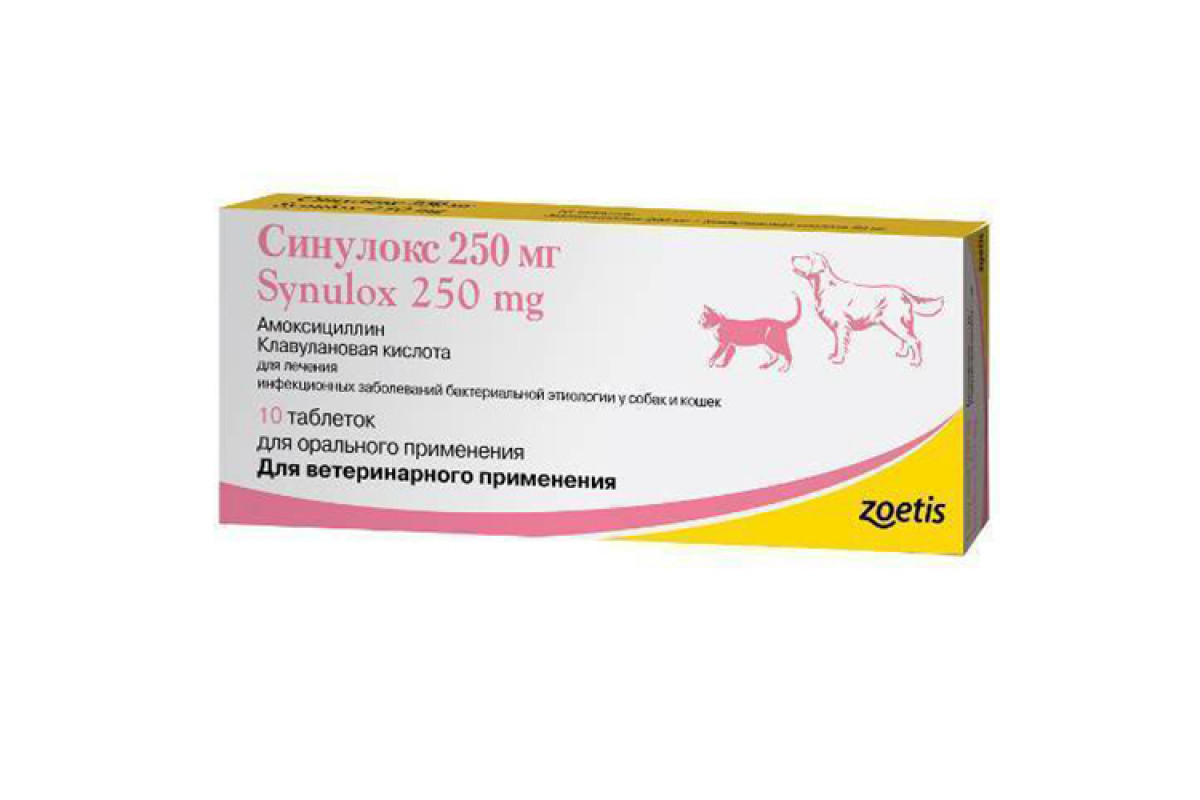
Synulox 250 mg, 10 tablets is an antibiotic from Zoetis for dogs and cats. Each tablet contains 200 mg amoxicillin and 50 mg clavulanic acid. Amoxicillin is a broad-spectrum semi-synthetic penicillin, and clavulanic acid protects it from beta-lactamases, the enzymes resistant bacteria use to destroy penicillins. The pink tablets have a score line, so they're easy to halve.
Which infections it treats
Per the instructions, Synulox is used in dogs and cats for bacterial infections of:
- skin and soft tissue — abscesses, pyoderma, anal gland inflammation;
- the mouth — gingivitis, stomatitis;
- the respiratory tract;
- the urogenital system;
- the gut (enteritis).
It acts on streptococci, staphylococci, E. coli, Salmonella, Pasteurella, Klebsiella and other bacteria, including beta-lactamase-producing strains. It isn't indicated for Pseudomonas infections.
Dosage
| Parameter | Value |
|---|---|
| Dose | 12.5 mg per kg twice a day |
| Example: 10 kg | ½ tablet twice a day |
| Example: 20 kg | 1 tablet twice a day |
| Example: 26–35 kg | 1.5 tablets twice a day |
| Usual course | 5–7 days |
| Chronic skin disease, chronic cystitis | 10–28 days |
| Respiratory disease | 8–10 days |
For hard-to-treat infections, especially respiratory ones, the vet may double the dose to 25 mg/kg twice daily. Give the tablet by mouth or crumbled into food.
Pros
- Protected amoxicillin. Clavulanic acid helps against resistant bacteria.
- Broad spectrum. Skin, mouth, airways, urinary tract and gut.
- Tablets instead of injections. Treatment can be done at home.
- Easy to split. There's a score line.
- Few side effects. Usually well tolerated at the right dose.
Cons and what to keep in mind
- Vet prescription only. The antibiotic is chosen for the infection.
- Deadly for rodents and rabbits. Never for rabbits, guinea pigs, hamsters or gerbils.
- Possible allergy. Sensitive animals may react.
- Not for Pseudomonas. It doesn't work against it.
- High strength. For cats and small dogs, 250 mg tablets have to be split.
Why rabbits and rodents must not get it
In rabbits, guinea pigs, hamsters and gerbils, digestion depends on a special gut flora. Penicillins wipe it out, harmful bacteria take over and a severe, often fatal bowel inflammation follows. That's why the instructions forbid Synulox for these animals and allow it only with great caution in other small herbivores. If you have a rabbit or guinea pig, store the tablets where they can't reach them by accident. Treat such pets only with a vet experienced in exotics; care guides are in pet rabbit care and guinea pig care.
Using an antibiotic properly
Give the tablets strictly every 12 hours and finish the whole course, even if your pet improves on day two or three, because an undertreated infection comes back and bacteria become resistant. Don't substitute human amoxicillin-clavulanate without a vet's calculation, as doses differ. Report vomiting, diarrhoea, a rash or facial swelling to your vet. Mouth infections also call for dental care; see how to brush your dog's and cat's teeth.
Who it suits
Dogs and cats with bacterial infections of the skin, soft tissue, mouth, airways, urinary tract and gut, as prescribed by a vet; the 250 mg tablets are especially convenient for medium and large dogs. Other medicines are in the veterinary pharmacy.
Verdict
Synulox 250 mg is a reliable broad-spectrum antibiotic combining amoxicillin and clavulanic acid for dogs and cats. It works for many common infections but must be prescribed by a vet, needs a full course and is strictly forbidden for rabbits and small rodents.
Frequently Asked Questions
How do I calculate the Synulox dose?
12.5 mg per kg twice a day: a 20 kg dog gets 1 tablet of 250 mg twice daily.
How many days should it be given?
Usually 5–7 days, longer for chronic conditions, as the vet prescribes.
Can cats take it?
Yes, it's for dogs and cats, dosed by weight.
Can a rabbit or guinea pig take it?
No, Synulox is contraindicated for them.
Can it be given with food?
Yes, the tablet can be crumbled into food.
What's in one tablet?
200 mg amoxicillin and 50 mg clavulanic acid.

