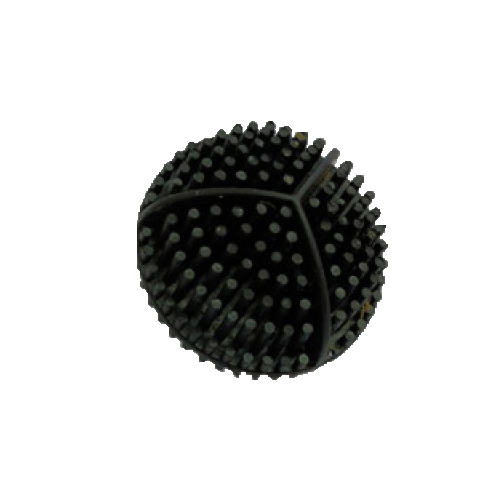
Resun bio-balls, black, 40 mm are a biological filtration media sold individually and in bulk. According to the description, the Resun Bio-ball L substrate is used as the main media in pond filters. The balls are made of clean black plastic, and their complex structure provides a large surface for the growth of beneficial nitrifying bacteria. The media is completely pH-neutral, so it suits any aquarium water. Each ball is 40 mm in diameter.
How bio-balls work
Each ball consists of many thin plates and ribs where bacteria settle. Water flows freely through the balls without stagnating, so the bacteria get oxygen and nutrients. They convert toxic ammonia into nitrite and then into less dangerous nitrate. The balls hardly trap mechanical dirt, so they are placed after a sponge or floss to stay clean longer.
Key specifications
| Parameter | Value |
|---|---|
| Type | biological filter media |
| Model | Resun Bio-ball L |
| Diameter | 40 mm |
| Material | plastic |
| Colour | black |
| Effect on pH | neutral |
| Sold | individually and in bulk |
Pros
- Large surface. Plenty of room for beneficial bacteria.
- pH-neutral. Does not change water parameters.
- Do not clog. Water flows freely.
- Durable material. Plastic does not break down or need replacing.
- Sold individually. Buy exactly as many as you need.
- For ponds and aquariums. Suitable for any water.
Cons and what to watch
- Large size. 40 mm suits pond, canister and DIY filters; they will not fit a small internal filter.
- Biology only. No mechanical filtration — a sponge is needed before them.
- Surface area not given. The card does not say how many square metres a litre of balls provides.
- You need to work out the number. You will have to estimate the filter volume yourself.
Where to use them
The manufacturer calls bio-balls the main media for pond filters. They also suit large canister filters, sumps and wet/dry filters with a separate bio chamber. In small aquariums up to 60 litres, the sponge of an internal filter, such as Resun 35 ppi, which also hosts bacteria, is usually enough.
How many balls you need
The number depends on the volume of the filter's bio chamber: fill it almost completely while leaving room for water to flow. It is easy to measure the chamber, estimate how many 4 cm balls fit in one layer and multiply by the number of layers. Since the balls are sold individually, it is easy to buy any you are short of.
Start-up and bacteria
New balls are just plastic: bacteria take several weeks to colonise them. Bacterial products such as Tetra Bactozym help speed this up. In the first weeks after start-up, do not add many fish at once, and check ammonia and nitrite with tests.
Maintenance
Bio-balls need almost no maintenance. If a lot of sludge builds up, rinse them in aquarium or pond water rather than under the tap: chlorine in tap water kills bacteria. Never clean all the filter media at once, or the filter will lose most of its colony.
Filter layout
The classic sequence is coarse and medium sponge first, then bio-media — balls or ceramics — and finally fine floss for clarity, such as JBL Symec. What else you need for an aquarium is covered in an aquarium for beginners: what to buy.
Ponds and seasons
In a pond the bacterial colony depends on temperature: in summer it works actively, while in autumn and winter, with cold water, its activity drops. So in spring it is best to start a filter with bio-balls in advance, before you begin feeding the fish heavily, and not to overfeed them in the first warm weeks. If the filter is switched off in winter, do not let the balls dry out completely — keep them moist so the colony recovers faster in spring.
Who it suits
Bio-balls suit owners of ponds, large aquariums and DIY filters who need reliable media for biological filtration. Other media are in the fish equipment section.
Verdict
Resun 40 mm bio-balls are plastic media with a large surface for nitrifying bacteria: pH-neutral, clog-free, practically everlasting and sold individually. The downsides are a large size that does not fit every filter, no mechanical filtration and no surface area figure in the card.
FAQ
What is the ball diameter?
40 mm.
Which filters do they suit?
Pond, large canister and DIY filters.
Do they affect pH?
No, the media is neutral.
How are they sold?
Individually and in bulk.
Is a sponge needed before the balls?
Yes, the balls do not provide mechanical filtration.
How do I clean them?
In aquarium or pond water, not tap water.
Do they need replacing?
No, the plastic lasts a long time.