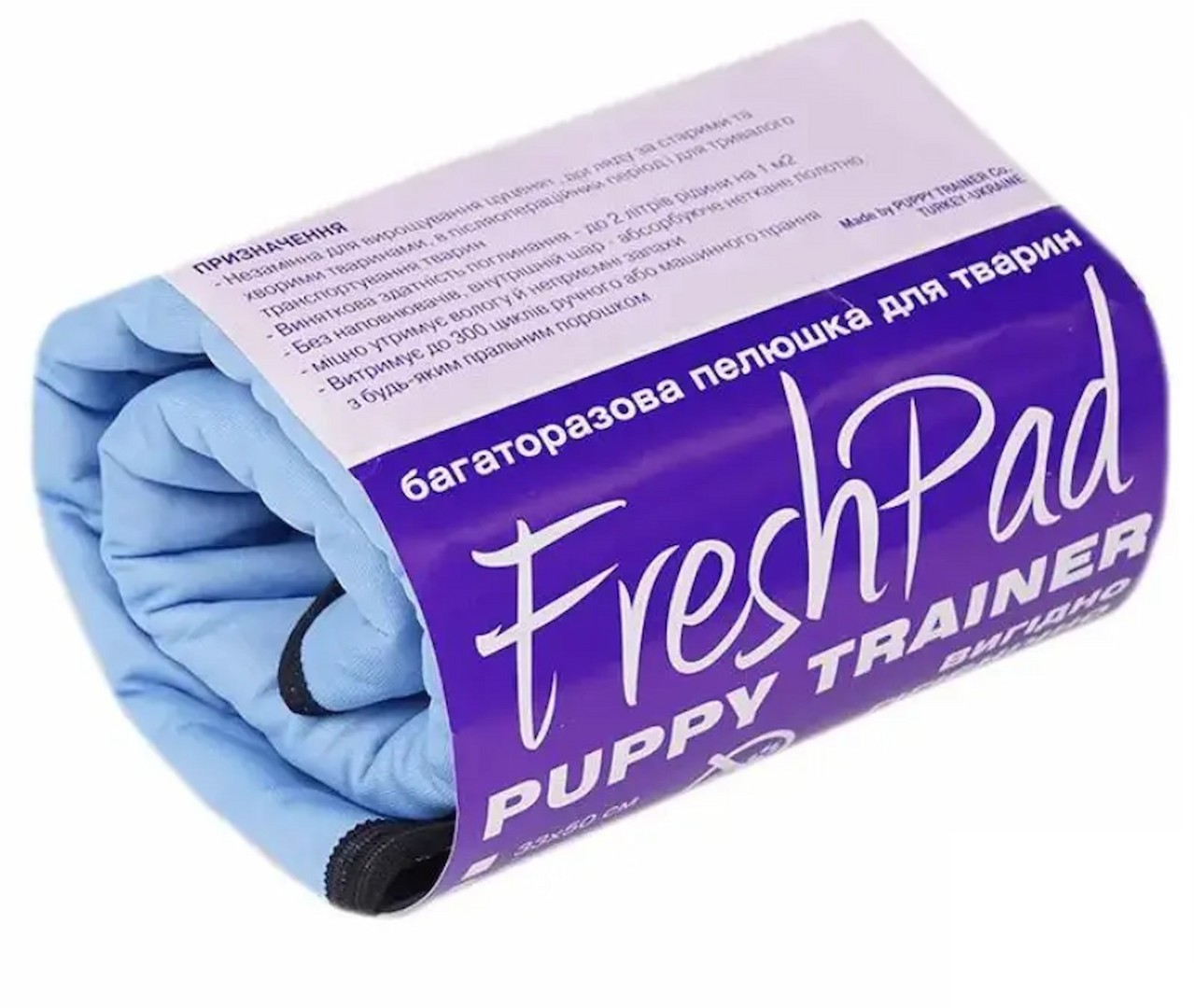
Puppy Trainer Fresh Pad No. 1, 33×50 cm is a reusable dog pad made of microfibre and polyester. The microfibre top quickly absorbs moisture and keeps the surface dry, while a waterproof backing protects floors and furniture from leaks. According to the manufacturer, one pad absorbs up to 400 ml, and built-in antibacterial ions inhibit bacteria and eliminate odours. It's machine washable at up to 60 °C and can be tumble-dried on low.
Reusable or disposable
Disposable pads are convenient: use and throw away. But with a puppy that goes many times a day, or a senior dog with incontinence, they run out fast and add up. A reusable pad costs more than one pack of disposables but lasts for months, and mountains of cellulose and plastic don't end up in the bin. It's easiest to have two or three reusable pads so one is in use while another is in the wash.
Key specs
| Parameter | Value |
|---|---|
| Size | 33×50 cm (No. 1) |
| Material | microfibre, polyester |
| Absorbency | up to 400 ml |
| Backing | waterproof |
| Odour control | antibacterial ions |
| Washing | up to 60 °C, tumble-dry on low |
Pros
- Reusable. Saves money on disposable pads.
- Less waste. More eco-friendly than disposables.
- Fast absorption. Microfibre keeps the surface dry.
- Leak-proof. A waterproof backing.
- Odour control. Antibacterial ions, according to the manufacturer.
- Easy care. Machine washable at up to 60 °C.
Cons
- A small size. 33×50 cm suits puppies and toy dogs.
- Up to 400 ml. May not be enough for one go from a large dog.
- Needs washing. You'll want several pads to rotate.
- No brand named. The manufacturer isn't given on the product page.
How to use it
Lay the pad microfibre side up in a permanent spot — a toilet area, crate or carrier. For a puppy, choose a spot away from the bowl and bed and take the pup there after sleeping, eating and playing; a detailed plan is in how to train a puppy to use a pad and the toilet. After use, shake off any solids, rinse and wash the pad. Don't use fabric softener, as it reduces the microfibre's absorbency.
Caring for a reusable pad
Wash it at up to 60 °C to remove bacteria and odour more effectively. Tumble-dry on low or air-dry; hot drying can damage the waterproof backing. If odour starts to linger, soak the pad in cool water with a little vinegar or a pet odour remover before washing. Check the backing from time to time: once it cracks, the pad will start to leak.
How many pads to keep
For a puppy that goes many times a day, it's handy to have three or four reusable pads: one in the toilet area, one in the wash and one drying. For a senior dog with incontinence, two or three under the bed are enough. That way you always have a dry spare, and you can wash them once a day along with your pet's other things.
How to choose a pad
For puppy training, disposable pads with an attractant and sticky tabs are handy — for example, AnimAll Puppy Training Pads — while a reusable pad works well as a permanent fixture once the puppy knows where to go. For travel and crates, eco-friendly disposables such as Croci Super Nappy ECO also work. For senior dogs with incontinence, a reusable pad under the bed saves a lot of money — caring for them is covered in senior dogs: diet and care.
Who it suits
Owners of puppies and toy dogs, senior dogs with incontinence, and anyone who wants to spend less on disposable pads. More products are in the dog toilet accessories section.
Verdict
The Puppy Trainer Fresh Pad No. 1 is a reusable microfibre pad with a waterproof backing that absorbs up to 400 ml and washes at 60 °C. An economical, eco-friendly alternative to disposables. The downsides are the small 33×50 cm size and the need for several pads to rotate.
FAQ
What size is the pad?
33×50 cm.
How much does it absorb?
Up to 400 ml of liquid.
What temperature should it be washed at?
Up to 60 °C.
Can it be tumble-dried?
Yes, on low.
Is it suitable for a large dog?
Its size and absorbency are aimed more at puppies and toy dogs.
Can it be used outdoors?
The manufacturer says it suits indoor and outdoor use.
Should I use fabric softener?
No, softeners reduce the microfibre's absorbency.