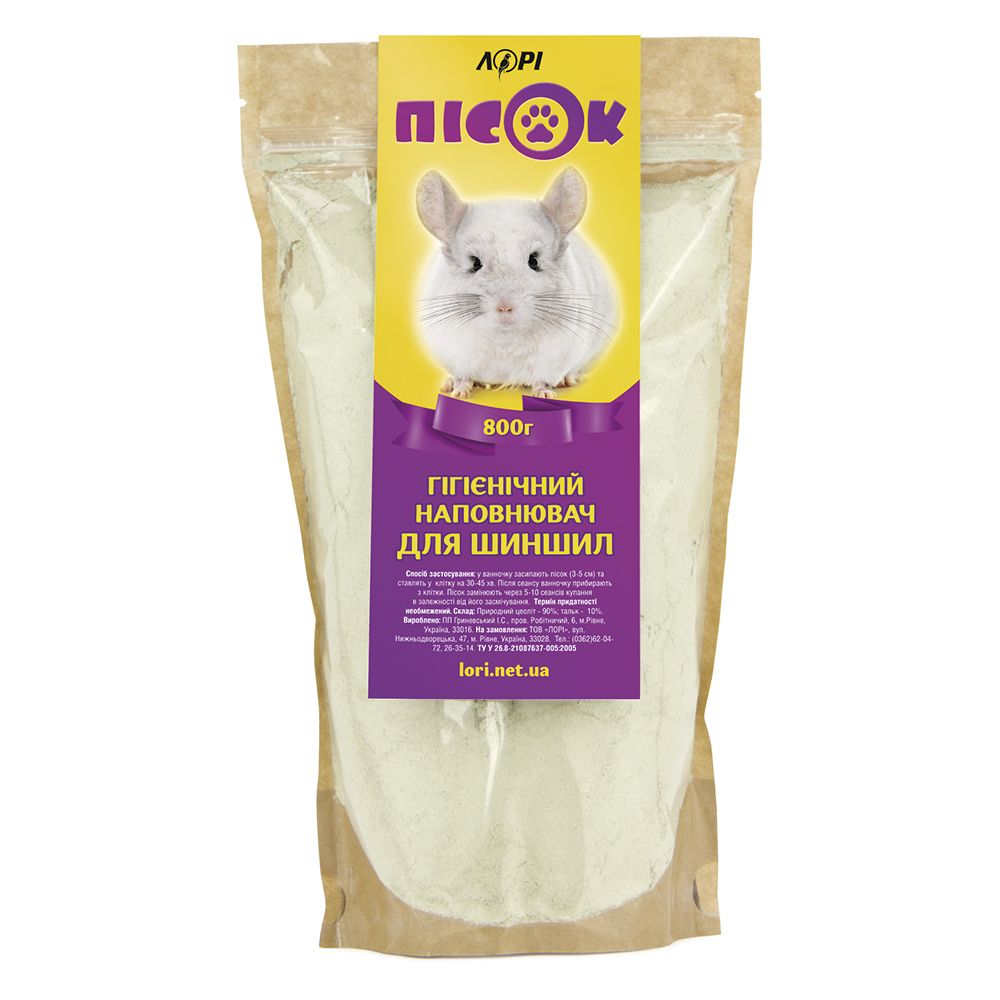
Lori chinchilla bathing sand, 800 g is a special sand for chinchilla fur care. According to the description, the ideal bathing material is volcanic dust: it cleans dense fur without damaging it, absorbs moisture and oil from the skin and has antiseptic properties. Since suitable rock is not found in the country of manufacture, the maker uses natural zeolite ground to volcanic dust fineness and adds talc, which improves skin and fur condition and makes the sand more comfortable. Pack weight is 800 g.
What the manufacturer claims
Lori honestly explains why the sand is made from zeolite rather than volcanic dust: it is the closest available material to the natural one. The focus is on a fine grain that penetrates dense fur and on its cleaning properties.
Key specifications
| Parameter | Value |
|---|---|
| Type | bathing sand |
| For | chinchillas |
| Base | natural zeolite |
| Grain | volcanic dust fineness |
| Additive | talc |
| Action | cleans fur, absorbs moisture and oil |
| Packaging | bag |
| Weight | 800 g |
Pros
- Fine grain. Penetrates a chinchilla's dense fur.
- Zeolite. A natural mineral that absorbs moisture and oil well.
- Honest description. The maker explains why it is not volcanic dust.
- Talc. Makes the sand softer.
- Handy pack. 800 g for several weeks of baths.
- Made for chinchillas. Not building or river sand.
Cons and what to watch
- Dusty. Fine grain and talc raise dust.
- Talc and breathing. Fine dust can irritate the eyes and airways.
- "Antiseptic properties". The claim is not explained.
- A stock-code title. The listing title contains wholesale details and a pack count of 10.
Why a chinchilla needs sand
Chinchilla fur is extremely dense: dozens of hairs grow from a single follicle. Water barely penetrates such fur and takes a long time to dry, so the animal may get chilled or develop a fungal skin infection. In the wild chinchillas bathe in volcanic dust; at home they use special sand. It absorbs skin oil and moisture and restores the fur's fluffiness.
How to set up a bath
Pour a 2–3 cm layer of sand into a bath house — a covered box or a tall container so the sand does not fly everywhere. Put the bath in the cage for 15–20 minutes 2–3 times a week, then remove it: if left permanently, the chinchilla will start using the sand as a toilet. In hot, humid weather baths can be more frequent.
When to change the sand
After each bath, sieve the sand to remove fur and droppings. Replace it completely every 1–2 weeks, or sooner if it gets damp, compacted or dirty. For one chinchilla a bag lasts roughly a month to six weeks, depending on layer depth and bath frequency.
Dust and health
Very dusty sand can irritate a chinchilla's eyes and airways. If the animal sneezes, rubs its eyes or has watery eyes after bathing, use a covered bath, shorten bath time and consult a vet. The sand is not suitable for chinchillas with open wounds or eye inflammation.
For degus
Degus also love sand baths, and this sand suits them in grain size. The routine is the same — a bath for a short time, not permanently in the cage.
Diet and housing
Bathing is only part of care. A chinchilla needs a roomy cage, such as the Priroda Chinchilla cage, unlimited hay and a specialised food — see the Versele-Laga Complete Chinchilla & Degu review and the chinchilla food collection. More in chinchilla care and feeding.
Storage
Keep the sand in a dry place in a closed bag: damp sand compacts and cleans fur less well.
Who it suits
The sand suits chinchilla and degu owners for regular dust baths and keeping fur fluffy. More products are in toilets, bedding and litter and for ferrets and rodents.
Verdict
Lori is a chinchilla bathing sand made from natural zeolite ground to volcanic dust fineness with talc, which cleans fur and absorbs oil. The downsides are dustiness and talc, which can irritate the eyes and airways, an unexplained "antiseptic" claim and wholesale details in the listing title.
FAQ
What is the sand made of?
Natural zeolite with added talc.
Is it volcanic dust?
No, it is zeolite ground to the same fineness.
How often should a chinchilla bathe?
2–3 times a week for 15–20 minutes.
Can the bath stay in the cage?
No, or the chinchilla will use it as a toilet.
Can a chinchilla bathe in water?
No, its fur dries poorly.
Is it suitable for degus?
Yes, degus also take sand baths.
When should the sand be changed?
Sieve after each bath and replace fully every 1–2 weeks.