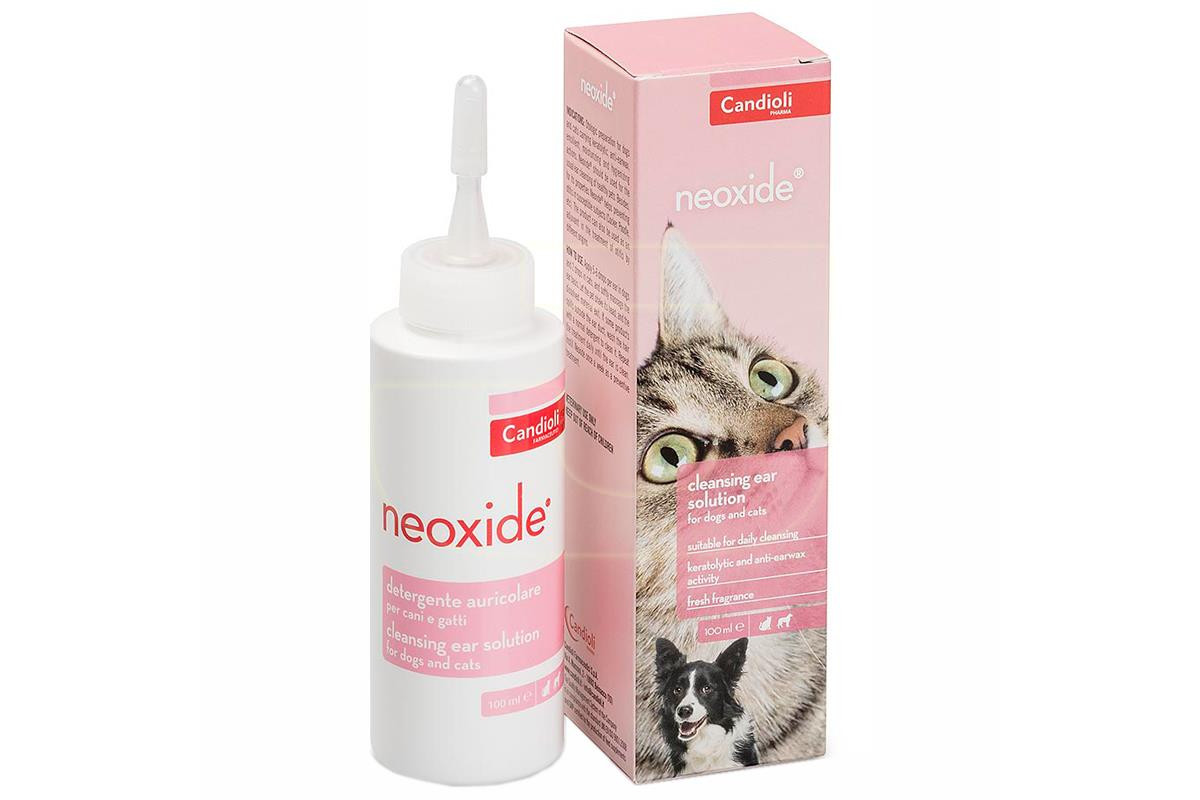
Candioli Neoxide, 100 ml are drops for cleaning and hygiene of dogs' and cats' ears, which the manufacturer recommends for preventing otitis and ear mite infestation. According to the description, regular use helps avoid irritation, suppuration and bad ear odour. The product softens, moisturises and disinfects the ear. Ingredients: chlorhexidine digluconate, salicylic acid, aloe extract (Aloe ferox), oleic acid, lactic acid, propolis, dipropylene glycol, glycerin and propylene glycol. Dosage: 5–6 drops per ear for dogs and 2 drops per ear for cats.
How the ingredients work
Chlorhexidine is an antiseptic that suppresses bacteria and yeast. Salicylic and lactic acids soften wax and flakes, helping them leave the ear canal. Aloe, glycerin and oleic acid soothe the skin, and propolis is traditionally used as a natural antimicrobial ingredient. The glycols act as solvents and help spread the product through the ear.
Key specifications
| Parameter | Value |
|---|---|
| Type | ear hygiene drops |
| For | dogs and cats |
| Antiseptic | chlorhexidine digluconate |
| Wax softening | salicylic and lactic acids |
| Soothing ingredients | aloe, oleic acid, glycerin, propolis |
| Dogs | 5–6 drops per ear |
| Cats | 2 drops per ear |
| Volume | 100 ml |
Pros
- Full ingredient list. All components are named.
- Antiseptic and acids. Clean and soften wax.
- Soothing additives. Aloe and glycerin are gentle on ear skin.
- Doses for dogs and cats. Stated separately.
- Economical bottle. 100 ml lasts long at a few drops per use.
- Against odour. Helps keep ears fresh.
Cons and what to watch
- Error in the description. It credits the product with an "anti-tumour" effect — an anti-swelling effect was most likely meant.
- Does not treat ear mites. For mite prevention, the drops do not replace acaricidal products.
- No frequency. The card does not say how often to use it.
- Not for inflammation without a vet. The acids may sting inflamed skin.
How to clean the ears
Apply the required number of drops, gently massage the base of the ear for 20–30 seconds to spread the product and let your pet shake its head. Then wipe the visible part of the ear with a cotton pad. Do not push cotton buds deep into the ear canal — you may push wax further in and injure the ear. A detailed guide is in how to clean your dog's and cat's ears and eyes.
If there is already a problem
Dark discharge resembling coffee grounds is a common sign of ear mites. Pus, a strong smell, pain and redness indicate otitis. In these cases hygiene drops alone are not enough: an examination and treatment prescribed by a vet are needed. Solutions such as VetExpert OtiFlush are sometimes used for flushing during treatment, while medicated drops such as Candioli Actea Oto are chosen by the vet.
How often to use it
The manufacturer does not give a frequency. Hygiene drops are usually used once a week or less, as needed. Dogs with floppy ears, thick ear hair or a love of swimming may need cleaning more often. If the ears are clean and odour-free, extra cleaning is unnecessary.
Cats
Two drops per ear are enough for cats. Cats' ears are usually cleaner than dogs', so they are cleaned less often. If your cat often shakes its head or scratches its ears, take it to the vet — ear mites are common in cats.
Getting your pet used to it
Warm the bottle in your hands before use. Start with short sessions and praise and reward your pet after each one. Restless cats are easier to handle wrapped in a towel with only the head showing.
Storage
Keep the bottle closed at room temperature, away from children. Do not touch the ear with the nozzle, so the product stays clean.
Who it suits
The drops suit dogs and cats for regular hygiene of healthy ears and to prevent wax build-up. Other products are in the eye, ear and skin hygiene section.
Verdict
Candioli Neoxide are ear hygiene drops for dogs and cats with chlorhexidine, salicylic and lactic acids, aloe and propolis: 5–6 drops per ear for dogs and 2 for cats, with a full ingredient list. The downsides are the "anti-tumour" error in the description, no frequency of use, and the need for medicated products from a vet in case of otitis or ear mites.
FAQ
How many drops should I use?
5–6 drops per ear for dogs, 2 drops per ear for cats.
What is in it?
Chlorhexidine, salicylic and lactic acids, aloe, oleic acid, propolis, glycerin and glycols.
Does it help with ear mites?
No, treatment needs acaricidal drops prescribed by a vet.
How often should I clean the ears?
No frequency is given; usually once a week or as needed.
Can it be used with otitis?
Only if prescribed by a vet.
Is it suitable for cats?
Yes, 2 drops per ear.
What volume is it?
100 ml.