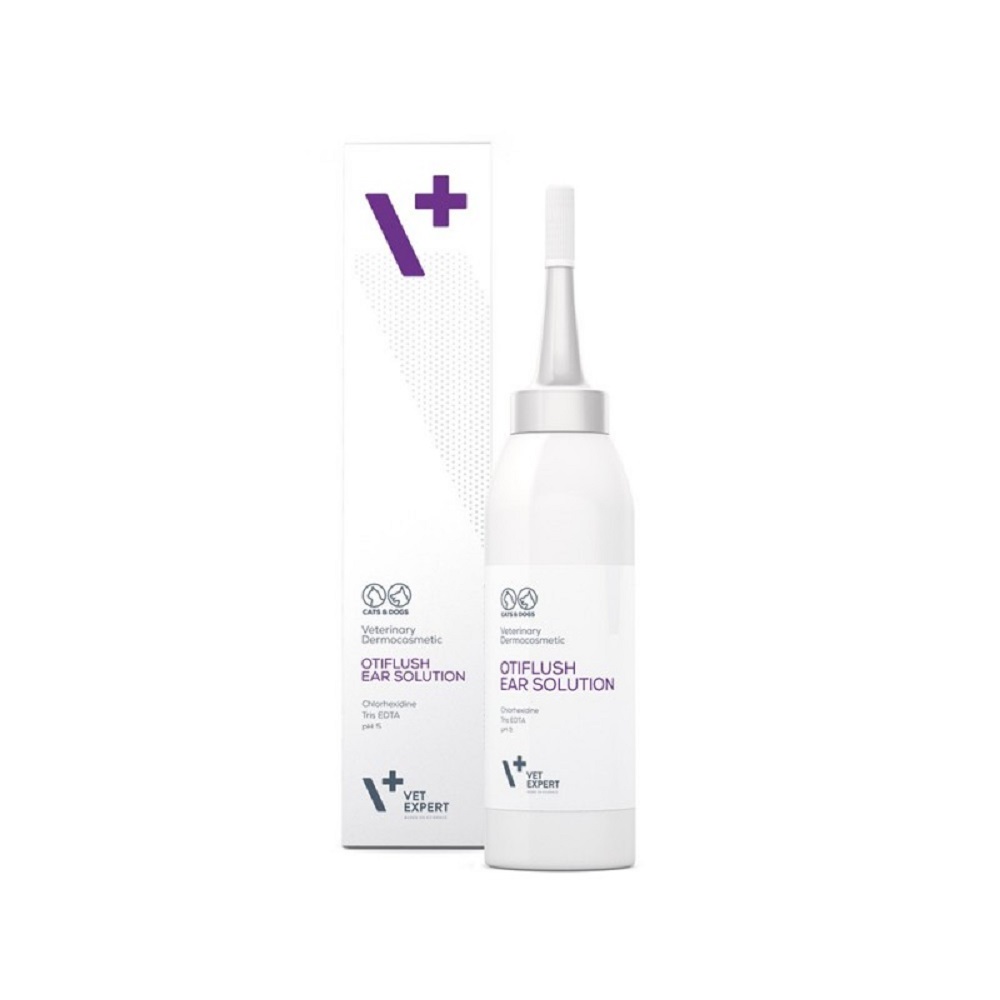
VetExpert OtiFlush, 125 ml is an ear solution for dogs and cats in a bottle with an applicator. It contains antifungal and antibacterial components — chlorhexidine and Tris-EDTA — and its pH of 5 matches the natural environment of the ear canal. The manufacturer says it can be used for bacterial and fungal ear infections, on its own for minor inflammation, and in more complex cases to complete the prescribed treatment. It is recommended together with VetExpert OtiHelp emulsion.
How to use it
Apply a small amount of OtiFlush to the surface of the external ear canal, gently massage the base of the ear and wipe away the excess with a soft pad. The applicator lets you reach the ear without touching the skin with the nozzle. After the procedure, let your pet shake its head — this brings out the dissolved wax. During inflammation the vet decides how often to repeat the procedure.
Key specifications
| Parameter | Value |
|---|---|
| Type | ear flushing solution |
| For | dogs and cats |
| Active components | chlorhexidine, Tris-EDTA |
| pH | 5 |
| Combine with | VetExpert OtiHelp emulsion |
| Pack | bottle with applicator |
| Volume | 125 ml |
Pros
- Chlorhexidine and Tris-EDTA. An antiseptic plus a component that boosts it.
- pH 5. Matched to the ear canal environment.
- Handy applicator. Easier to use on a wriggly pet.
- For dogs and cats. One bottle for different animals.
- Large volume. 125 ml lasts a long time.
- Works as a pair. With the brand's OtiHelp emulsion.
Cons and what to watch
- Bold claims. "Treats infections regardless of background" — the solution cleans and helps, but otitis must be diagnosed by a vet.
- Not with a damaged eardrum. If a ruptured eardrum is suspected, do not flush without an examination.
- No full composition. The concentrations are not stated.
- No prevention schedule. The card does not say how often to clean healthy ears.
When you need a vet
A bad smell from the ear, brown or purulent discharge, redness, pain when touched, constant scratching and head shaking are signs of otitis. The causes vary: bacteria, yeast, ear mites, allergy or a foreign body. Without an examination it is impossible to know what is going on, so take your pet to the vet first and use the solution according to their plan.
Regular hygiene
Healthy ears usually do not need frequent cleaning, but dogs with floppy ears, thick hair in the ears and those that swim a lot need regular hygiene. Do it gently, without pushing a cotton bud deep into the canal. A step-by-step guide is in how to clean your dog's and cat's ears and eyes, and vets' tips are in VetExpert: perfect ears for your pet.
OtiFlush and OtiHelp
The manufacturer suggests a pair: first clean the ear with OtiFlush, then apply OtiHelp emulsion. If the vet has prescribed other ear drops, such as Candioli Actea Oto, ask about the order and intervals between products.
How to get your pet used to it
Many animals dislike having their ears touched. Start by stroking the ears without any product, and praise and reward your pet. Warm the bottle in your hands before use — cold liquid in the ear is unpleasant. Cats are easier to handle wrapped in a towel.
Ears after bathing
Water that gets into the ear during bathing or swimming creates a warm, moist environment in which bacteria and yeast multiply quickly. That is why dogs that love swimming, especially those with floppy ears, benefit from gentle ear cleaning and drying after water activities. Before a bath you can plug the ear canal with a cotton ball, and afterwards dab the ear dry with a soft tissue.
Storage
Keep the bottle closed at room temperature out of reach of children. Wipe the applicator after each use so you do not carry dirt from the ear into the bottle.
Who it suits
The solution suits dogs and cats for ear cleaning and as part of otitis treatment prescribed by a vet. Other products are in the eye, ear and skin hygiene section.
Verdict
VetExpert OtiFlush is a chlorhexidine and Tris-EDTA ear flush with pH 5 for dogs and cats: a handy applicator, 125 ml, and designed to pair with OtiHelp. The downsides are bold claims about treating infections and the missing concentrations, and a suspected eardrum injury or marked otitis needs a vet examination.
FAQ
What is in it?
Chlorhexidine and Tris-EDTA, pH 5.
How do I use it?
Apply into the external ear canal, massage the base of the ear and wipe away the excess.
Does it treat otitis?
It helps as part of treatment, but otitis must be diagnosed by a vet.
Is it suitable for cats?
Yes, it is for dogs and cats.
What should it be combined with?
The manufacturer recommends VetExpert OtiHelp emulsion.
Can it be used with a ruptured eardrum?
Not without a vet examination.
What volume is it?
125 ml.