
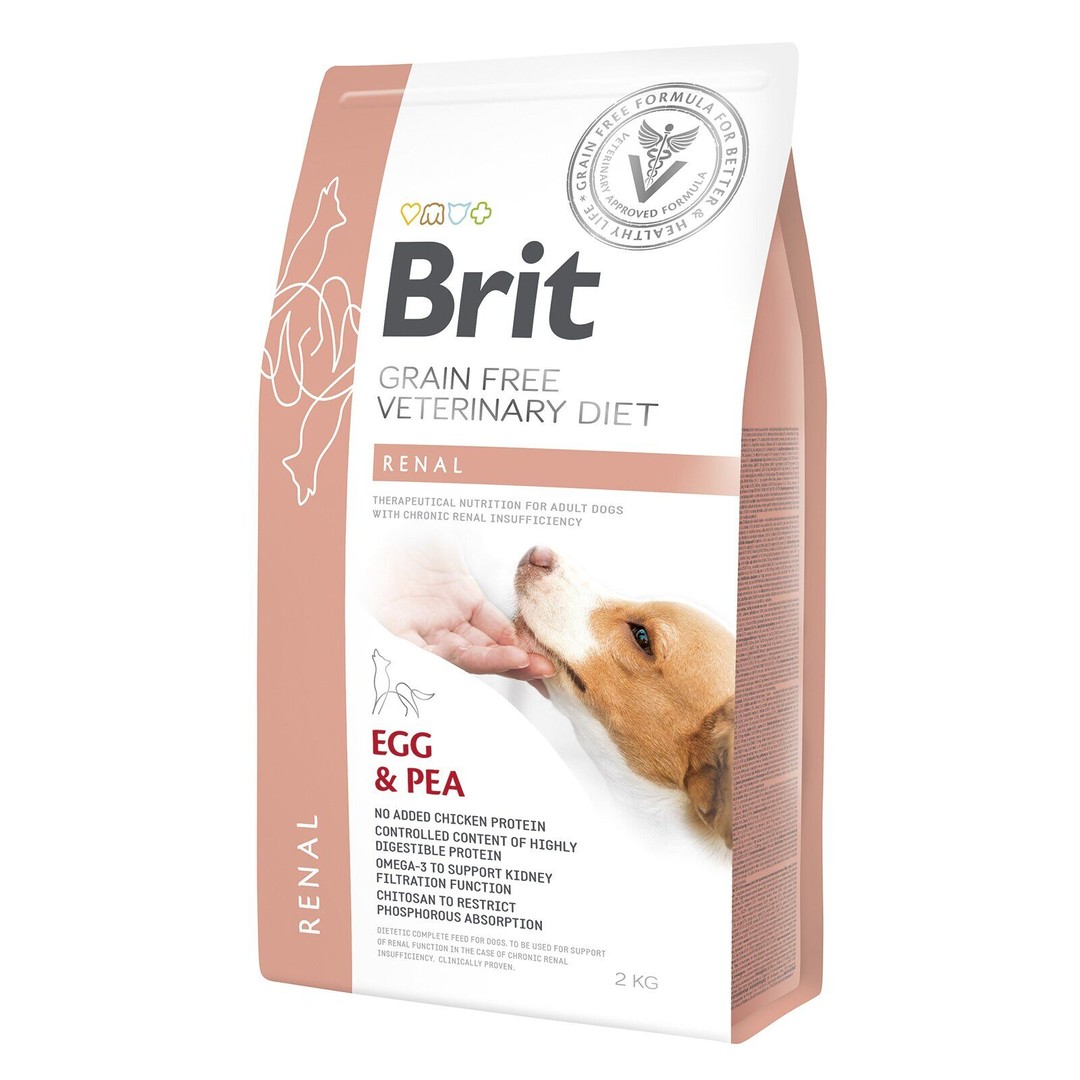
Brit GF Veterinary Diet Renal Dog, 2 kg is a dietetic food from the Czech brand Brit for dogs with chronic kidney disease (CKD). Its key feature is very low phosphorus (0.25%) and moderate protein (14%) from highly digestible sources: whole eggs and hydrolysed salmon protein. Chitosan binds phosphorus in the gut, potassium citrate helps prevent oxalates, and omega-3 from fish oil supports the kidneys. Fat is higher than usual at 17%, so the dog gets energy (389 kcal per 100 g) without loading the kidneys with protein.
What it is and who makes it
Brit is a Czech brand with a Veterinary Diet range. Renal is a diet to support kidney function in CKD, one of the most common diseases of older dogs. Vets consider a kidney diet a cornerstone of CKD treatment: it helps slow the disease and improve wellbeing.
Ingredients and analysis
Yellow peas (44%), chicken fat (12%), buckwheat, eggs (10%), apple pomace, hydrolysed salmon protein (7%), salmon oil (2%), hydrolysed chicken liver, minerals, eggshell (a calcium source), potassium citrate, psyllium, brown seaweed, chitosan, yeast extract, sea buckthorn and the probiotic Enterococcus faecium.
| Parameter | Value | Why |
|---|---|---|
| Protein | 14% | Fewer nitrogen waste products |
| Phosphorus | 0.25% | Slows kidney damage |
| Sodium | 0.2% | Blood pressure control |
| Fat | 17% | Energy without extra protein |
| Omega-3 | 0.6% | Anti-inflammatory |
| Energy | 389 kcal per 100 g | Weight maintenance |
Pros
- Low phosphorus. The key factor in slowing CKD.
- Quality protein. Eggs and hydrolysed salmon are easy to digest — less protein, but more valuable.
- Chitosan. Binds phosphorus in the gut and lowers uraemic toxins.
- Energy from fat. The dog doesn't lose weight even if it eats less.
- Grain- and gluten-free. Peas and buckwheat, plus prebiotics and psyllium for the gut.
Cons and what to keep in mind
- Prescription only. For dogs with confirmed CKD; healthy dogs won't get enough protein.
- Contraindications. Puppies, pregnant and nursing dogs.
- Lots of peas. 44% of the recipe is legumes.
- Acceptance. Dogs with a poor appetite may not like the new taste at first — switch gradually.
- Monitored course. Per the instructions, up to 6 months, after which the vet reviews blood tests and extends the diet.
Signs of kidney problems
The dog drinks and urinates a lot, loses weight, eats less, may vomit, has bad breath, is lethargic and has a dull coat. The disease often develops unnoticed for a long time, so older dogs should have yearly blood and urine tests — this allows the diet to start early. More in senior dog nutrition and care.
How to switch to a kidney diet
Dogs with CKD often eat poorly, so switch especially gradually over 7–14 days, slowly increasing the share of new food. Softening the food with warm water makes it smell stronger and adds fluid. Fresh water must always be available. Avoid meat and cheese treats during the diet — they add phosphorus and protein. A vet may also prescribe kidney support products such as Urolik.
How much to feed
Check the daily amount in the table on the bag by your dog's weight and adjust by body condition: with CKD it's important to prevent weight loss. Split it into 2–3 meals. More on portions in how much to feed a dog a day.
Who it suits
Adult and senior dogs with chronic kidney disease — as prescribed by a vet. If the dog also has a food allergy, the vet may choose another diet such as Brit VD Hypoallergenic. Other foods are in dry dog food.
Verdict
Brit Veterinary Diet Renal Dog is a well-designed kidney diet: low phosphorus and sodium, moderate quality protein, chitosan, omega-3 and energy from fat. It's prescribed for confirmed CKD with regular blood test monitoring, and is contraindicated for puppies and pregnant or nursing dogs.
Frequently Asked Questions
How much phosphorus is in Brit VD Renal?
0.25%, which is very low.
Why is it low in protein?
Excess protein adds load on diseased kidneys; the diet provides less protein, but highly digestible.
How long can it be fed?
Per the instructions, up to 6 months, then as the vet decides after tests.
Can a puppy eat it?
No, it's contraindicated for puppies.
Can it be softened?
Yes, with warm water.
Can I give treats?
Better not: regular treats add phosphorus and protein.

