
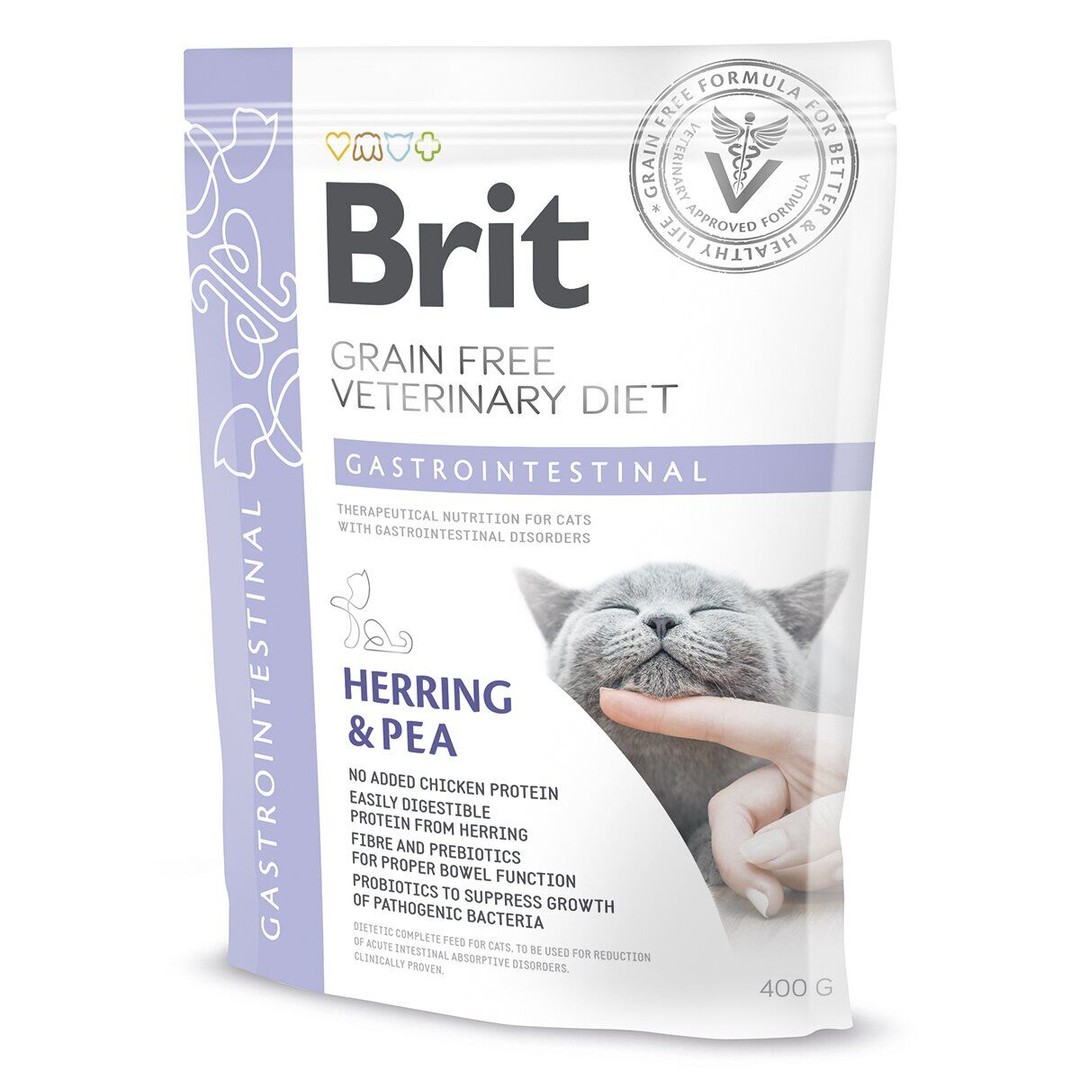
Brit GF Veterinary Diet Gastrointestinal Cat, 400 g is a grain-free dietetic food from the Czech brand Brit for cats with digestive disorders. Indications per the instructions: gastrointestinal upsets (diarrhoea, vomiting), recovery afterwards, pancreatitis, inflammatory bowel disease (IBD), maldigestion and malabsorption. The main proteins are easily digested dehydrated herring (40%), hydrolysed salmon protein (10%) and egg (6%). Energy: 384 kcal per 100 g.
What it is and who makes it
Brit is a Czech brand with a Veterinary Diet range. Gastrointestinal for cats is designed to settle the gut quickly and make up for impaired digestion. Its high energy density delivers the needed calories in a smaller volume, which matters when a cat eats little. It's contraindicated for kittens and pregnant or nursing cats.
Ingredients and analysis
Dehydrated herring (40%), yellow peas (18%), hydrolysed salmon protein (10%), chicken fat (9%), eggs (6%), buckwheat, apple pomace, salmon oil (2%), hydrolysed salmon gravy (2%), bamboo lignocellulose, minerals, brewer's yeast, psyllium, seaweed, MOS, beta-glucans, FOS, yucca and sea buckthorn. Probiotic: Enterococcus faecium.
| Parameter | Value |
|---|---|
| Protein | 34% |
| Fat | 17% |
| Fibre | 3% |
| Omega-3 / omega-6 | 1.1% / 2.5% |
| Calcium / phosphorus | 1.1% / 0.9% |
| Energy | 384 kcal per 100 g |
Pros
- Easily digested protein. Herring, hydrolysed salmon and egg.
- High omega-3. 1.1% for the gut lining.
- Probiotic and prebiotics. Enterococcus faecium, MOS, FOS, beta-glucans.
- Grain- and gluten-free. Peas and buckwheat.
- Energy in a small volume. Helpful when a cat eats little.
Cons and what to keep in mind
- Prescription only. A vet should find the cause of vomiting and diarrhoea first.
- Contraindications. Kittens and pregnant or nursing cats.
- Fish and chicken. Not suitable with allergies to them.
- Small bag. 400 g covers a short course.
How much and how to feed
Consult a vet before starting and before extending the course. Per the instructions, feed it for 1–2 weeks for acute intestinal upset, 3–12 weeks for digestive disorders, and until optimal weight is reached for chronic pancreatic insufficiency. Feed dry or softened with warm water. Split the daily amount into small portions through the day, which is easier on the stomach. Fresh water always. More on routines in how many times a day to feed a cat.
When vomiting and diarrhoea are dangerous
A single hairball vomit is usually nothing to panic about. But if vomiting repeats, the cat hasn't eaten for over a day, is lethargic, has blood in stool or vomit, a painful belly, or diarrhoea lasting more than 1–2 days, see a vet. Prolonged fasting is dangerous for a cat's liver. A therapeutic diet aids recovery but goes together with diagnosis and treatment. Also check the cat hasn't eaten something forbidden; see what not to feed a cat.
Switching to the diet and back
After an acute episode, switch to the diet straight away, then return to regular food gradually over 5–7 days by mixing. Give no treats or table food during the course, as they undo the diet's effect. If the cat refuses dry food, try softening it with warm water. More in how to switch your pet to a new food.
Who it suits
Adult cats with acute and chronic digestive disorders, pancreatitis, IBD and malabsorption, as prescribed by a vet. Dogs have their own version, Brit VD Gastrointestinal Dog. Other therapeutic foods are in veterinary diets for cats.
Verdict
Brit Veterinary Diet Gastrointestinal Cat is a grain-free herring, salmon and egg diet with omega-3, a probiotic and prebiotics for cats with GI problems. A good gentle diet during recovery, working alongside diagnosis and treatment by a vet.
Frequently Asked Questions
How long should a cat eat Brit VD Gastrointestinal?
1–2 weeks for an acute upset, 3–12 weeks for digestive disorders.
Can kittens eat it?
No, it's contraindicated for kittens.
What protein does it contain?
Herring, hydrolysed salmon and egg, plus chicken fat.
Does it contain grains?
No, it's grain-free.
Does it help with pancreatitis?
Pancreatitis is among its indications, as prescribed by a vet.
Can it be softened?
Yes, with warm water.

