
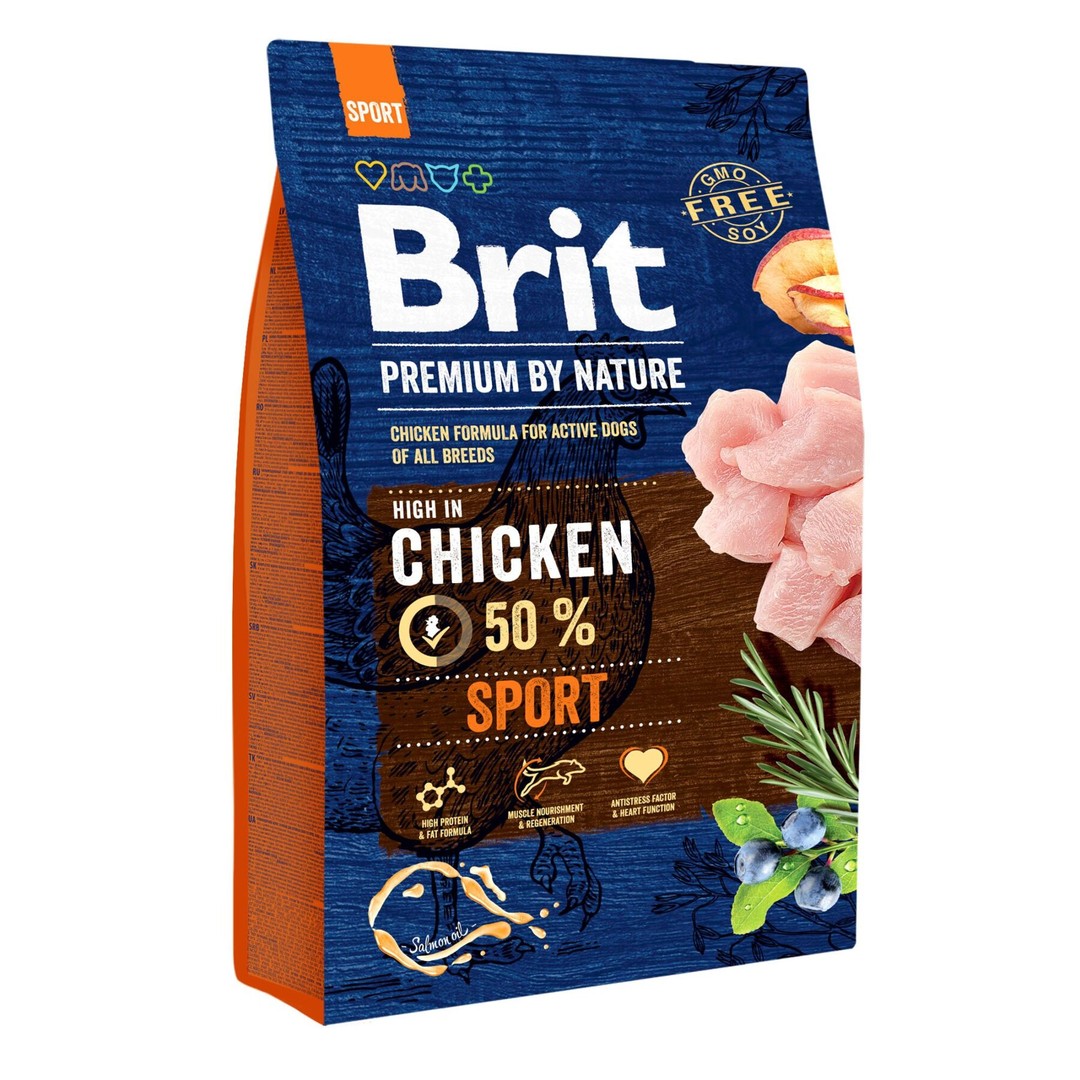
Brit Premium Sport, 3 kg is a complete dry food from the Czech brand Brit for adult dogs of all breeds with high energy needs: sporting, working, hunting and very active dogs. Chicken makes up 50% of the recipe — 30% dehydrated and 20% fresh deboned. It has 31% protein, 22% fat and 420 kcal per 100 g. It contains L-carnitine for fat metabolism, salmon oil, and glucosamine and chondroitin from natural sources for the joints.
What it is and who makes it
Brit is a Czech brand of dog and cat food. The Brit Premium range offers affordable chicken-based foods with whole grains. Sport is its most energy-dense recipe, designed for dogs that burn a lot of energy and need to recover quickly after exertion.
Ingredients and analysis
Chicken 50% (30% dehydrated, 20% fresh deboned), oats, chicken fat, wheat, corn, dried apples, salmon oil (2%), hydrolysed chicken liver, brewer's yeast, collagen, crustacean shells (a glucosamine source), cartilage (a chondroitin source), herbs and fruit, MOS and FOS prebiotics, yucca and chamomile.
| Parameter | Value |
|---|---|
| Protein | 31% |
| Fat | 22% |
| Fibre | 1.5% |
| Calcium / phosphorus | 1.5% / 1.1% |
| Omega-3 / omega-6 | 0.25% / 2.5% |
| L-carnitine | 100 mg/kg |
| Energy | 420 kcal per 100 g |
Pros
- Lots of meat. Chicken is half the recipe.
- High energy. 420 kcal per 100 g means smaller portions under heavy workloads.
- For recovery. L-carnitine, high protein and fat.
- For the joints. Glucosamine and chondroitin from natural sources.
- Price. More affordable than many sport foods.
Cons and what to keep in mind
- Too rich for house dogs. A dog on ordinary walks will gain weight quickly.
- Contains wheat and corn. Not for dogs sensitive to wheat.
- Chicken only. Not an option with a chicken allergy.
- Low omega-3. At 0.25%, fish oil can be added for joints and skin on a vet's advice.
How to feed an active dog
Adjust the amount from the table on the bag to the workload: more on training and hunting days, less on rest days. Split the daily portion into several meals. Don't feed a big meal right before or right after exercise — 2–3 hours before and an hour after is better. This lowers the risk of bloat in large dogs. Fresh water must always be available, and take water to training. More in how much to feed a dog a day.
When to switch to a sport food
A sport food is needed if a dog regularly runs, trains, works or hunts for several hours a day and loses weight on regular food. Many dogs need it seasonally — during hunting season or competition training — and return to regular food the rest of the time. For joint support under heavy loads, you can add a course of a joint supplement such as Candioli Confis Ultra.
Treats during training
A dog in training can get a lot of treats, and their calories should be subtracted from the daily amount. It's handy to use part of the food portion as rewards. Which treats work well — see dog training treats.
Who it suits
Adult sporting, working, hunting, service and very active dogs of any breed, and — on a vet's advice — thin dogs with a good appetite that need to gain weight. Other foods are in dry dog food.
Verdict
Brit Premium Sport is an affordable energy-dense food with plenty of chicken, L-carnitine and joint support. It's good for dogs with real workloads, but too rich for house pets and unsuitable with a chicken or wheat allergy.
How to keep your dog in shape
A sporting dog's ribs should be easy to feel and its waist visible from above. Weigh your dog every 2 weeks during the active season. If it gains weight, cut the portion by 10%; if it loses weight at the same workload, increase it. When the hunting or competition season ends, switch your dog to regular food gradually over 7–10 days.
Frequently Asked Questions
How much chicken is in Brit Premium Sport?
50%: 30% dehydrated and 20% fresh deboned.
Is it suitable for an ordinary house dog?
Usually not — with low activity it's too rich.
Does it contain grains?
Yes: oats, wheat and corn.
Can the food be softened?
Yes, with warm water.
Can puppies eat it?
No, it's for adult dogs.
How many calories does it have?
420 kcal per 100 g.

