
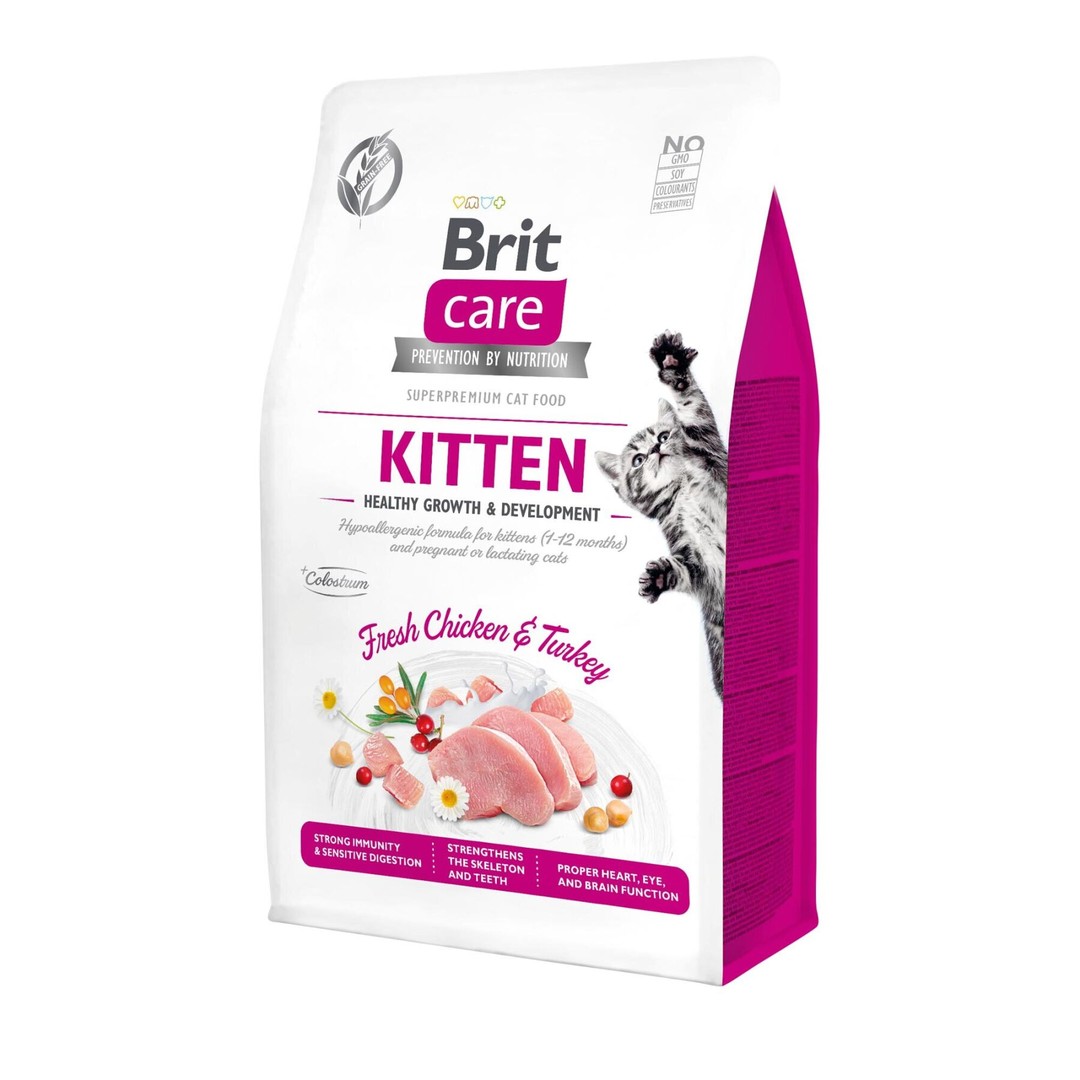
Brit Care Cat GF Kitten Healthy Growth & Development, 400 g is a grain-free dry food from the Czech brand Brit for kittens aged 1 to 12 months and for pregnant and nursing cats. It's based on dehydrated turkey (30%) and fresh chicken (26%), with peas and chickpeas instead of grains. It has 38% protein, 18% fat, colostrum for immunity, salmon oil, taurine (2,800 mg per kg) and vitamins and minerals for bone and tooth growth. Energy: 400 kcal per 100 g.
What it is and who makes it
Brit is a Czech brand of cat and dog food. The Brit Care range is grain-free and hypoallergenic, with probiotics and herbs. Kitten is designed for the rapid growth phase, when a kitten needs more protein, energy, calcium and taurine than an adult cat.
Ingredients and analysis
Dehydrated turkey (30%), fresh chicken (26%), poultry fat (12%), yellow peas (12%), chickpeas (8%), salmon oil (3%), hydrolysed chicken liver (2%), linseed (2%), dried apples (2%), brewer's yeast (1%), colostrum (0.5%), chamomile, sea buckthorn, cranberry, FOS and MOS prebiotics and yucca.
| Parameter | Value |
|---|---|
| Protein | 38% |
| Fat | 18% |
| Fibre | 1.5% |
| Calcium / phosphorus | 1.2% / 0.9% |
| Omega-3 / omega-6 | 0.5% / 2.2% |
| Taurine | 2,800 mg/kg |
| Energy | 400 kcal per 100 g |
Pros
- Lots of meat and protein. 38% protein for muscle growth.
- Colostrum. Immunoglobulins support a kitten's immunity.
- Taurine and salmon oil. For the heart, eyes and brain development.
- Grain-free. Gentler on sensitive digestion.
- For mum and kittens. Suits pregnant and nursing cats.
Cons and what to keep in mind
- Chicken-based. Not for kittens with a chicken allergy.
- Legumes. Peas and chickpeas make up 20%.
- Small pack. 400 g won't last a kitten long; a larger bag is better value for regular feeding.
- Calorie-dense. After a year, switch to adult food or the cat will gain weight.
How to feed a kitten
Kittens eat little and often: up to 3 months, 4–5 times a day; up to 6 months, 3–4 times; then 2–3 times. Check the daily amount in the table on the pack by age and weight. For very young kittens, the food can be softened with warm water. Water must always be available. More in what to feed a kitten and how many times a day to feed a cat.
Food for pregnant and nursing cats
In the second half of pregnancy and during lactation, a cat needs much more energy and calcium. Kitten food covers these needs, so the mother can eat it alongside her kittens. Feed a nursing cat freely and make sure water is always nearby. Once the kittens stop nursing, gradually move the mother back to adult food.
When to switch to adult food
Usually at 12 months. Neutered kittens can switch earlier to a neutered-cat food, such as Brit Care Sterilised Sensitive. Switch gradually over 7–10 days.
Who it suits
Kittens aged 1 to 12 months, including those with sensitive digestion, and pregnant and nursing cats. What else a kitten needs — see kitten shopping list; other foods are in dry kitten food.
Verdict
Brit Care Cat GF Kitten is a strong grain-free growth food: plenty of meat and protein, colostrum, taurine, salmon oil and minerals for bones. It suits kittens and nursing cats; with a chicken allergy, choose another recipe.
How to tell a kitten is growing well
A healthy kitten is active, playful, eats well and gains weight steadily — about 80–100 g a week in the first months. The coat is shiny, eyes are clean and stools are firm. Weigh your kitten weekly on kitchen scales. If weight stalls, or there's diarrhoea, a bloated belly or lethargy, see a vet: worms are a common cause, which is why timely deworming and vaccinations matter.
Frequently Asked Questions
From what age can Brit Care Kitten be fed?
From 1 month; for very young kittens the food can be softened.
Until what age?
Until 12 months, then switch to adult food.
Can a pregnant cat eat it?
Yes, it suits pregnant and nursing cats.
Does it contain grains?
No, it's a grain-free recipe.
How much protein does it have?
38% protein and 18% fat.
Why does it contain colostrum?
It contains immunoglobulins that support a kitten's immunity.

