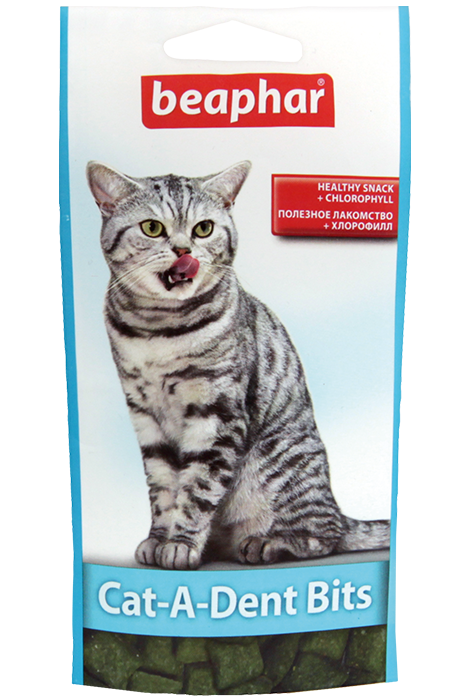
Beaphar Cat-A-Dent Bits, 35 g are treat bites for cats' dental care. According to the description, they mechanically remove plaque and polish the enamel, strengthen it and help resist decay, and they also get rid of bad breath. Ingredients: cereals, vegetable derivatives, minerals, chlorophyll, poultry and animal derivatives. The analysis: protein 29%, fat 8.7%, fibre 2.6%, ash 5.4%, moisture 9%. Per kilogram they add vitamin A (4480 IU), vitamin B1 (4 mg) and chlorophyll (1200 mg). There is no limit on how long they can be used.
How many to give
The manufacturer gives amounts by cat weight: up to 3 kg — 1 to 5 bites a day, 3 to 6 kg — 1 to 10, over 6 kg — 1 to 13. They can be given as rewards. Make sure your cat always has enough clean water. The bites are a treat, so if you give a lot of them, slightly reduce the main food.
Key specifications
| Parameter | Value |
|---|---|
| Type | dental treat, bites |
| For | cats |
| Active component | chlorophyll, 1200 mg/kg |
| Protein / fat | 29% / 8.7% |
| Fibre / ash | 2.6% / 5.4% |
| Moisture | 9% |
| Amount | up to 3 kg — 1–5, 3–6 kg — 1–10, over 6 kg — 1–13 bites/day |
| Pack size | 35 g |
Pros
- Help between brushings. The crunchy bite rubs against the teeth.
- Chlorophyll. Freshens breath.
- Clear amounts. By cat weight.
- No course limit. Can be given continuously.
- Cats like them. They work like a normal reward.
- Analysis given. Protein, fat, minerals and additives are listed.
Cons and what to watch
- Cereals first. Poultry is near the end of the list.
- Do not replace a brush. The bites will not remove tartar.
- Contains poultry. Not for cats allergic to chicken.
- Small pack. 35 g goes quickly at up to 10 bites a day.
How the bites help the teeth
When a cat bites into a crunchy treat, its surface rubs against the teeth and removes some soft plaque. Chlorophyll binds odours and freshens breath. This is good support, but not treatment: if your cat already has yellow tartar, red gums or bad breath, it needs a professional clean at the vet's. Home dental care is covered in how to brush your dog's and cat's teeth.
If your cat will not let you brush
Many cats firmly refuse a toothbrush. You can start with a finger brush such as Beaphar Finger Toothbrush, getting your cat used to it gradually and giving a bite as a reward after each session. That turns dental care into a pleasant ritual rather than a struggle.
Other Beaphar bites
Beaphar makes bites for other purposes too: Salmon Malt Bits help pass hair, and the Kitty's vitamin treats top up vitamins. If you give several kinds of treats, count the total so your cat does not overeat. Which treats are good for cats is covered in cat treats: which are healthy.
How to give them
Give the bites after meals or as rewards during the day. Do not soak them — the dental effect comes from the crunchy texture. If your cat swallows them without chewing, hand them out one at a time.
Storage
Keep the pack closed in a dry place: the treat is only 9% moisture and should stay crunchy. Soggy bites are useless for the teeth.
Water
The manufacturer specifically reminds owners about fresh water. Dry treats together with dry food increase a cat's need for fluid — make sure the bowl is always full.
Who it suits
The bites suit cats without poultry or cereal allergies, especially those that are hard to brush. Other treats are in the cat treats section.
Verdict
Beaphar Cat-A-Dent Bits are crunchy chlorophyll bites for cats' dental care, with clear amounts by weight, no course limit and 29% protein. The downsides are cereals in first place, poultry in the recipe and a small pack; the bites do not replace brushing or professional cleaning.
FAQ
How many bites should I give?
Up to 3 kg — 1–5 a day, 3–6 kg — 1–10, over 6 kg — 1–13.
What is in them?
Cereals, vegetable derivatives, minerals, chlorophyll, poultry and animal derivatives.
Can I give them continuously?
Yes, there is no limit on duration.
Do they remove tartar?
No, they only help remove soft plaque.
Why chlorophyll?
To freshen breath.
Are they suitable for chicken allergy?
No, they contain poultry.
How much is in a pack?
35 g.