
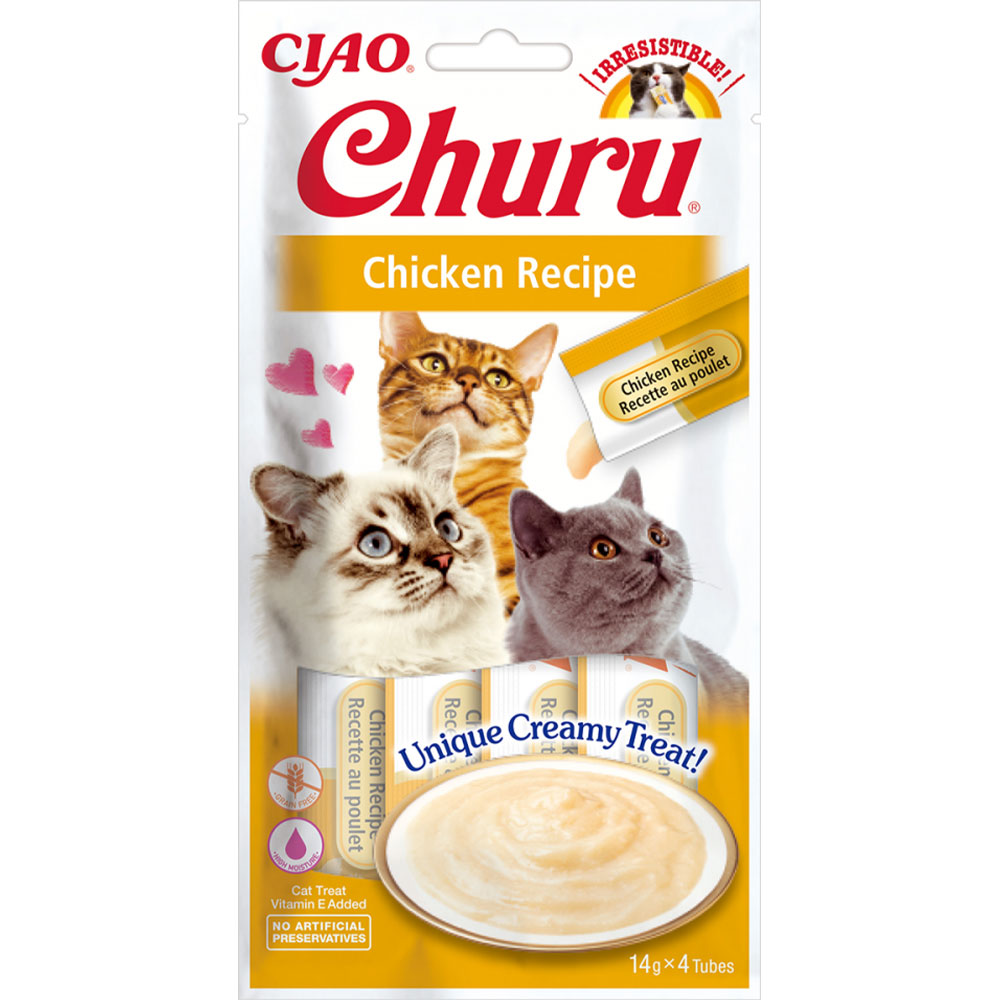
A good cat treat is one made for cats: creamy purée in sticks, crunchy bites, dental treats, catnip snacks or pastes with useful supplements. Give them in moderation — no more than 10% of daily calories, which means a few pieces or one stick a day. Food from your plate, milk, sweets, salty food and dog treats are best avoided. Treats work well as rewards: for coming when called, staying calm in the carrier, brushing and nail trimming.
Types of cat treats
| Type | Why it's useful |
|---|---|
| Creamy purée sticks | Cats love them; easy to hide a pill in, and they add a little fluid |
| Crunchy bites and snacks | Handy for training and games, easy to portion |
| Dental treats | A ridged shape helps reduce plaque |
| With catnip | Attract attention and energise — many cats respond to catnip |
| Malt pastes with supplements | Help pass swallowed hair, especially during shedding |
| Freeze-dried meat and fish | Single ingredient — good for cats with sensitive digestion |
Cats lick creamy purée like INABA Churu with chicken straight from the stick — a convenient way to give medicine too. For teeth try Trixie Denta Fun Dentinos, and during shedding the AnimAll VetLine Malt paste for hairballs. Crunchy catnip snacks such as Trixie PREMIO Catnip Chicken Bites work great in games.
How many treats to give
Vets advise that treats provide no more than 10% of daily calories. For an average 4 kg cat that is roughly 20–25 kcal a day — one creamy stick or 5–10 small bites; check the calories on the pack. If you give more, reduce the main food portion. Keep a particularly close eye on neutered cats: their metabolism is slower and extra treats quickly turn into extra weight. Suitable diets are in our food for neutered cats selection.
What never to give your cat
- Milk — upsets the stomach of many adult cats.
- Sausage, cheese, smoked and salty food — too much salt and fat.
- Onion, garlic, chocolate, grapes and raisins — dangerous for cats.
- Raw fish and raw meat — risk of parasites and bacteria.
- Dog treats on a regular basis — they are made for another species, and cats need their own nutrient balance, including taurine.
- Sweets — cats can't taste sweetness, and sugar only harms them.
Using treats wisely
- Training. Cats learn well: coming when called, giving a paw, sitting, going into the carrier. Use tiny pieces and give them right after the correct action.
- Carrier and vet. Put treats in the carrier at home and give one after the check-up — trips will become less scary.
- Grooming. A treat after brushing, ear cleaning or nail trimming helps your cat tolerate the procedure.
- Play. Hide bites around the flat or in a treat toy — cats need to hunt, especially indoor cats. Toys are in the cat toys section.
- Medicine. A pill is easy to hide in creamy purée or a soft treat.
Treats for kittens and senior cats
For kittens choose soft treats labelled for kittens and give very few — a growing body needs a complete food more. Senior cats with dental problems find creamy purées and soft pieces easier, and if your cat has kidney disease or diabetes, check any treats with your vet.
Creamy purées, crunchy snacks, dental treats and pastes for cats are in the cat treats section. Nova Poshta delivery across Ukraine.
Frequently Asked Questions
Can I give my cat a treat every day?
Yes, as long as treats make up no more than 10% of daily calories and you count them in the diet.
Why doesn't my cat react to catnip?
Sensitivity to catnip is inherited, and roughly a third of cats don't respond to it. Kittens under six months are usually indifferent too.
Can I give my cat dog treats?
An occasional piece won't hurt, but not regularly: the recipe is designed for dogs.
What can I treat my cat with if it's on a diet?
Choose low-calorie treats or set aside part of the daily food portion for rewards — your cat will still be happy.



